

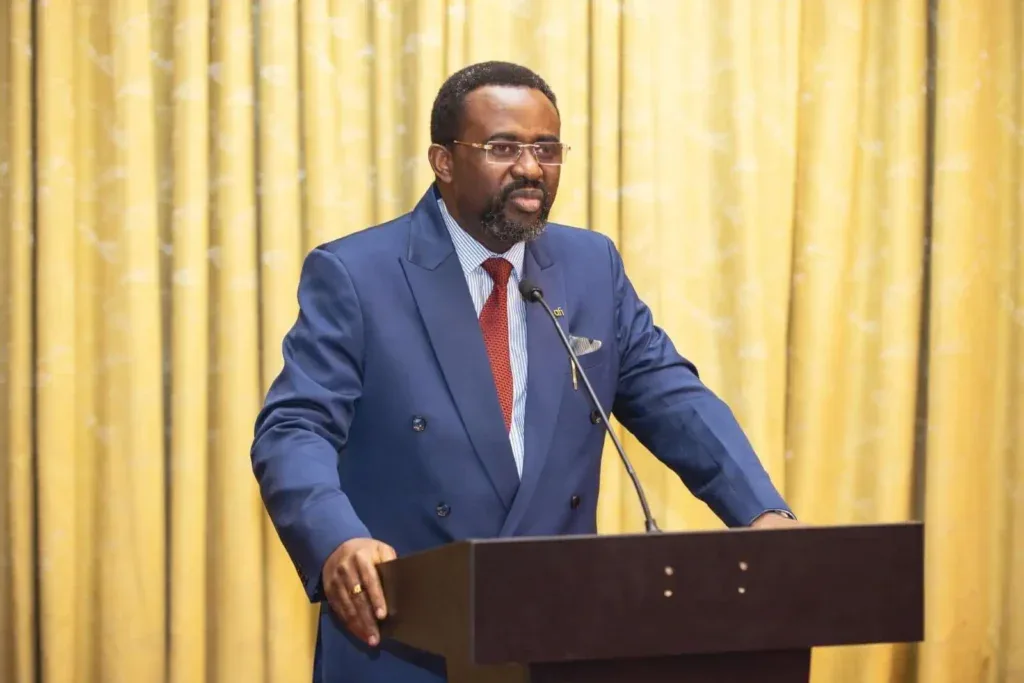
The Governor of the Bank of Ghana, Dr. Johnson Pandit Asiama, has revealed that ongoing geopolitical tensions in the Middle East have stalled efforts to lower interest rates to single-digit levels in Ghana. Speaking at the Ghana-UK Investment Summit 2026, Dr. Asiama expressed concern over the impact of the crisis on global markets and Ghana's economic prospects. This has significant implications for the Bank of Ghana's monetary policy decisions.
According to Dr. Asiama, the Bank of Ghana had anticipated a faster pace of monetary easing as inflation continued to trend downward. However, the conflict in the Middle East has thrown a monkey wrench into these plans, causing a ripple effect on global energy prices, shipping costs, and supply chains. These factors can feed into domestic inflation and affect the central bank's policy decisions.
The Governor emphasized that while Ghana's macroeconomic indicators have shown significant improvement in recent months, policymakers must remain cautious in order to preserve price stability and sustain the gains achieved in the economy. He noted that the Bank of Ghana has maintained a tight monetary policy stance to combat inflation and stabilize the economy, demonstrating its commitment to ensuring economic stability.
In recent years, Ghana's interest rates have been relatively high due to the country's inflation woes. But the recent improvements in inflation and exchange rate stability have raised expectations among businesses and investors for lower borrowing costs. Dr. Asiama's comments are likely to dash these expectations, at least for now, as the conflict in the Middle East casts a shadow over the global economy.
The Ghana-UK Investment Summit 2026 provided a platform for Dr. Asiama to engage with investors and stakeholders on the economic prospects of Ghana. His remarks come as Ghana continues to pursue economic recovery and stabilization efforts aimed at restoring investor confidence and supporting sustainable growth. This summit offered a valuable opportunity for Dr. Asiama to address the challenges facing the Ghanaian economy.
Dr. Asiama took over as Governor of the Bank of Ghana in 2022, bringing with him a wealth of experience in monetary policy and central banking. In his previous role, he worked closely with the Bank's Monetary Policy Committee to formulate policy decisions that would support economic growth while maintaining price stability. His expertise will be crucial in navigating the challenges posed by the Middle East crisis.
As the Governor of the Bank of Ghana, Dr. Asiama plays a crucial role in determining the country's monetary policy and the fate of its interest rates. His comments on the Middle East crisis and its impact on Ghana's economy provide valuable insights into the challenges facing the Bank of Ghana and the broader Ghanaian economy. The single-digit interest rate target remains a key objective of the Bank of Ghana.
The achievement of this target will depend on various factors, including the inflation rate, the exchange rate, and global economic conditions. The Middle East crisis has added a new layer of complexity to the Bank of Ghana's already challenging task of stabilizing the economy. It's unclear at this point whether Ghana will be able to achieve its interest rate target in the near future.
Ghana's economy has shown signs of recovery in recent months, with improvements in inflation and exchange rate stability. However, the Bank of Ghana's efforts to stabilize the economy are being put to the test by the ongoing crisis in the Middle East. The Bank will need to remain vigilant in its efforts to maintain price stability and support sustainable growth.
Key Facts
- Ghana's inflation rate has declined from 17% in 2022 to 10% in 2026, marking a significant improvement.
- The Bank of Ghana has maintained a tight monetary policy stance to combat inflation and stabilize the economy.
- The Ghana-UK Investment Summit 2026 provided a platform for Dr. Asiama to engage with investors and stakeholders on the economic prospects of Ghana.
- Dr. Asiama has been Governor of the Bank of Ghana since 2022, bringing his experience in monetary policy and central banking to the role.
- Ghana's interest rates have been relatively high due to the country's inflation woes, and Dr. Asiama's comments suggest that low interest rates may not be achieved in the near future.