

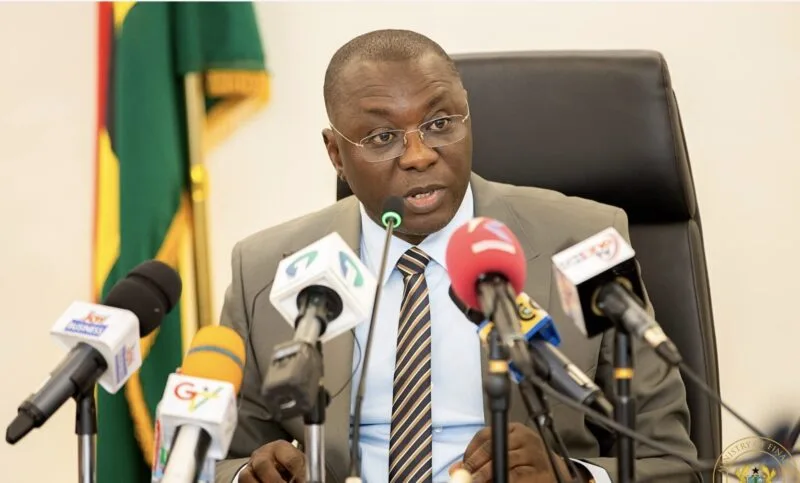
The sharp criticism of the government's economic management has sent shockwaves in Parliament. Dr Mohammed Amin Adam, the Karaga MP and former Finance Minister, has made it clear that the government has fallen short of its revenue mobilization targets under the IMF-supported programme. Dr Adam revealed that the government's 15.3% target had not been met, and instead, they managed only 13%.
Dr Mohammed Amin Adam has been a voice of concern in Ghana's economic landscape for years. As the former Finance Minister, he was a key figure in negotiating Ghana's $918 million bailout deal with the International Monetary Fund (IMF) in 2021. Dr Adam's expertise in finance dates back to 2017 when he was the Minister of State at the Ministry of Finance, a role he held until 2021. In 2016, he became the MP for Karaga.
The government has been boasting about its economic stability, citing a decline in inflation. However, according to Dr Adam, this improvement in inflation has not translated into lower borrowing costs. In fact, the government's debt-to-GDP ratio has worsened over the past year.
Despite Ghana's high inflation rate of 23%, the government was still unable to bring down the cost of borrowing. Dr Adam argued that economic stability should be measured not only by headline indicators like inflation but also by improvements in access to affordable credit and stronger fiscal outcomes. He urged the government to focus on achieving tangible economic gains rather than relying on political narratives about economic recovery.
The former Finance Minister's criticism comes on the back of recent data showing that Ghana's revenue shortfalls have worsened. The country's fiscal deficit has increased significantly, and the economy is projected to grow at a slower rate than expected. The data paints a bleak picture of Ghana's economic situation.
The government's response to these criticisms is yet to be seen. But one thing is obvious: the economic challenges facing Ghana are very real, and it will take more than just rhetoric to address them.
Revenue Shortfalls
- Ghana's revenue as a percentage of GDP is 13%, a far cry from the government's target of 15.3%.
- The government's target was 15.3%, a figure that it has consistently failed to meet.
- The fiscal deficit has increased by 10%, a sign of the government's struggles to manage the country's finances.
- The economy is projected to grow at a rate of 4.5%, a slower rate than expected by many economic experts.
- The government's debt-to-GDP ratio has worsened over the past year, a sign of the country's increasing financial woes.
"When we talk about stability, it's supposed to achieve a certain purpose, which is to bring down the cost of borrowing," Dr Adam said.