

Tour Exposes Electrochem's Transformation at Songor
The single sharpest fact in one or two punchy sentences. Who did what, where, when, and why it matters. Not a summary of everything — the one thing that makes someone stop scrolling. A reader who only reads this paragraph must understand what happened.
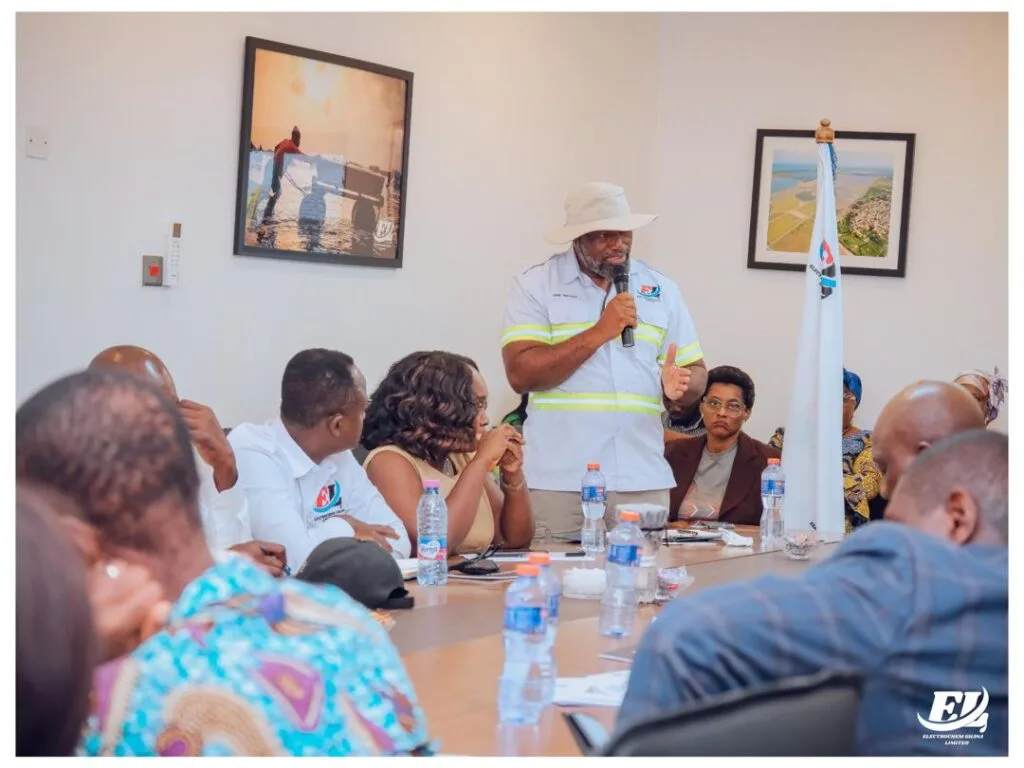
A recent stakeholder engagement and media tour at Electrochem Ghana Limited's facilities has shown the company's significant efforts in transforming the Songor Salt resource into a global player, creating jobs and boosting exports. The tour, which involved journalists, CSOs, Ada traditional leaders, and investment stakeholders, exposed the company's commitment to inclusive development, evident in the numerous projects implemented across the Ada community. These projects include community pans, water projects, roads, the Lolonyo public toilet facility, sports infrastructure, scholarships, widowhood support initiatives, health and safety campaigns, flood mitigation measures, and a GH¢4 million Women Support Scheme.
Electrochem inherited not only an opportunity but also a complex environment requiring substantial stakeholder management and community engagement when they started working at Songor. The company spent two years engaging stakeholders and another two years working directly with communities before production began. Millions of cedis were spent on several stakeholder compensations to facilitate a peaceful transition and implementation of the project. Despite these challenges, management persisted with a long-term strategy focused on sustainability and shared prosperity.
Electrochem's development footprint is now visible across Ada, with numerous projects that demonstrate a commitment to inclusive development rarely seen at this scale. The company requires at least US$60 million in additional capital to be fully operational and complete Phase One into mechanisation. The returns from such investment would extend far beyond company profits; it would also lead to creating jobs, boosting exports, supporting local industries, and elevating Ghana's standing within the global salt market.
Board Chairman Prof. Kofi Abotsi reiterated that investment decisions must remain aligned with the interests of the Ghanaian people and contribute meaningfully to national development. His remarks resonated strongly with stakeholders who view Electrochem as a model for responsible industrial growth.
The transformation of Songor has already begun. What remains is the collective courage of investors, policymakers, and development partners to provide the financial fuel needed to complete the journey. Future generations may well look back at this moment as the point when Ghana chose to invest in its own potential and transformed a natural resource into a lasting symbol of national progress.
### Key Facts
- Electrochem Ghana Limited has spent millions of cedis on stakeholder compensations.
- The company has implemented numerous projects across the Ada community, including community pans, water projects, roads, and scholarships.
- Electrochem requires at least US$60 million in additional capital to be fully operational and complete Phase One into mechanisation.
- The company has created jobs and boosted exports, contributing to Ghana's national development.
- The returns from such investment would extend far beyond company profits.
### What It Means for Ghana Electrochem's transformation of the Songor Salt resource has the potential to create jobs, boost exports, and support local industries. The company's commitment to inclusive development has set a new standard for responsible industrial growth in Ghana. With the collective courage of investors, policymakers, and development partners, Ghana can complete the journey and transform a natural resource into a lasting symbol of national progress.