

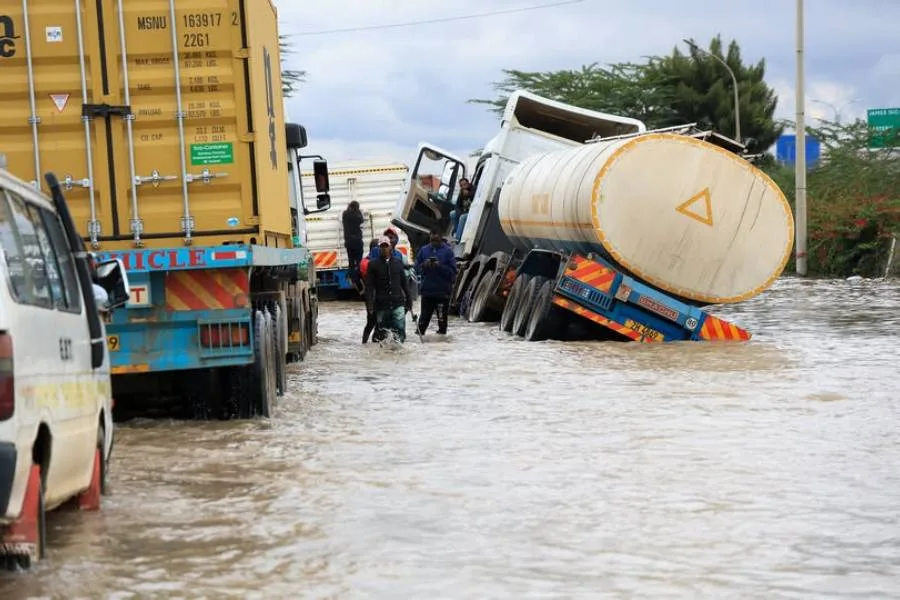
Flooding in Accra has been a recurring nightmare for over 30 years, with devastating consequences. I recall the first time I witnessed serious flooding in Accra in July 1995. It was during my vacation, and I was still on campus as I didn't want to travel back to my hometown in the Ashanti Region. My friend lived at Odawna, Adabraka, and I visited him the following morning after the flooding. His ground floor home had been destroyed, and he narrowly escaped to the first floor.
Unfortunately, his neighbor witnessed a man drowning during the peak of the flooding, and his body was later found.
The flooding problem in Accra has persisted despite multiple tragedies. On June 3, 2015, over 150 citizens lost their lives to floods in the city. Yet, the leadership has failed to act. The government has awarded numerous contracts to tackle the problem, but little has been achieved. In fact, the cost of these contracts has been staggering, with some reports suggesting they have been inflated by hundreds of millions of Ghanaian Cedis.
Meanwhile, residents continue to live in fear of the next flood, with many being forced to abandon their homes due to the constant flooding. The city's leadership has made promises to residents, but these have been broken time and again.
As someone who has lived in low-lying areas of Accra, I can attest to the devastating impact of flooding. In 1998, I rented a room at Laterbiokorshie, but the area was severely flooded during the rainy season. I was trapped in my room for over 24 hours, unable to come downstairs, let alone go to work. It was a harrowing experience that made me realize the urgent need for the city's leadership to take action. Yet, despite decades of inaction, residents continue to suffer.
The city's leadership has consistently claimed that they are taking steps to address the problem. However, these claims have been met with skepticism by residents. In fact, the government has been accused of corruption in the awarding of contracts related to flood control. This has led to a significant distrust of the government among residents. As a result, many have taken matters into their own hands, seeking solutions outside of the government.
The lack of action on the part of the government has far-reaching consequences. It not only puts lives at risk but also destroys property and infrastructure. The economic impact of flooding in Accra is significant, with businesses and homes being forced to close due to the constant flooding. Moreover, the psychological trauma experienced by residents can have long-term effects, including anxiety and depression. The government's inaction has failed to address these issues, leaving residents to fend for themselves.
In light of the government's failure, residents have taken to social media to express their frustration. The hashtag #AccraFloods has been trending on Twitter, with many calling for accountability from the government. Others have shared their own experiences of living through the floods, highlighting the need for urgent action. While the government may claim that they are addressing the problem, the reality on the ground suggests otherwise.
The flooding in Accra is a stark reminder of the government's failure to act. Despite multiple tragedies, the city's leadership has consistently shown that they are more concerned with lining their pockets than with protecting their citizens. As a result, residents continue to live in fear of the next flood, with little hope that the government will take action. It is up to the residents of Accra to demand change and seek solutions outside of the government.
Key Facts
- Over 30 years of flooding in Accra
- Over 150 citizens lost their lives in 2015
- Government contracts have been inflated by hundreds of millions of Ghanaian Cedis
- Residents have been forced to abandon their homes due to constant flooding
- The city's leadership has consistently failed to act
- Residents have taken to social media to express their frustration