

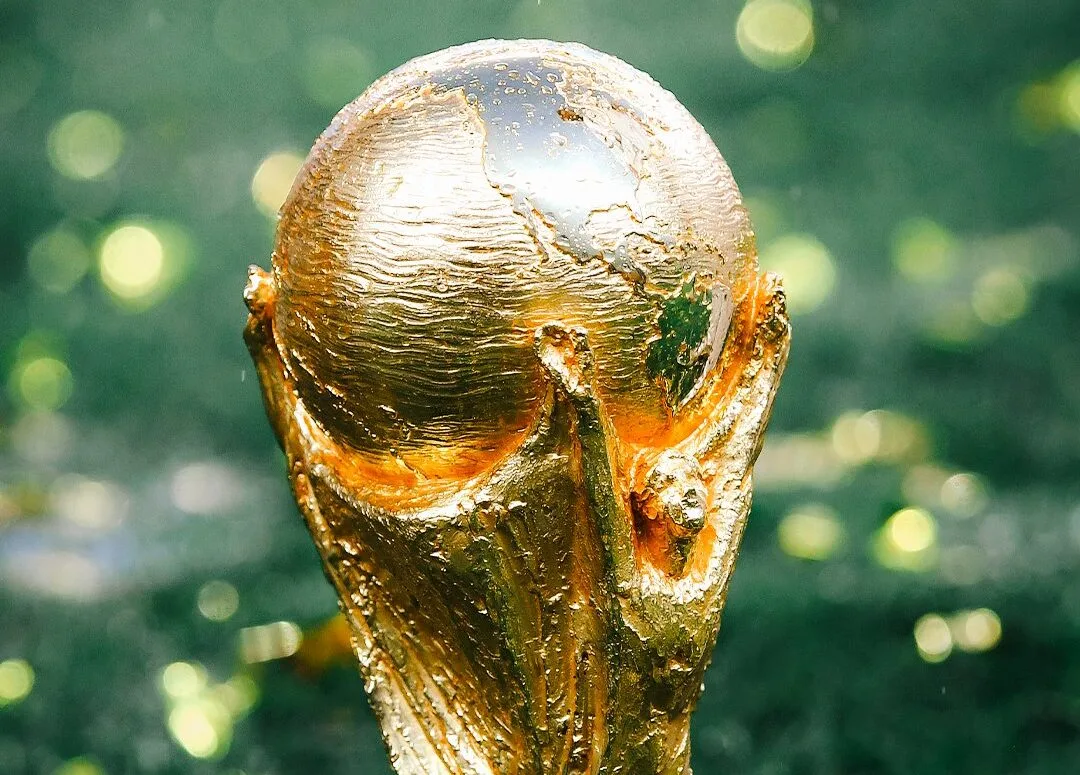
The 2026 World Cup kicks off today across the United States, Canada, and Mexico — and it's the biggest football tournament the world has ever seen. For the first time, 48 teams will compete, up from 32. For the first time, three countries are hosting together. And for the first time, the tournament will stretch across an entire continent, with 104 matches in total.
But beneath all the new numbers and record-breaking scale, the heart of the World Cup stays the same: it's where careers are made, legacies are defined, and history gets rewritten. Some teams come chasing destiny. Others want redemption. And for a generation of football icons — Lionel Messi, Cristiano Ronaldo, maybe even Kylian Mbappé — this tournament feels like one last shot at immortality.
The final will be played on 19 July at MetLife Stadium in New Jersey. One nation will lift the trophy. The rest will become part of football folklore.
The 48-team gamble
When FIFA approved the expansion from 32 to 48 teams, the debate was fierce. Supporters said the World Cup should reflect how football has grown globally. Critics warned that more teams would mean weaker matches and a diluted tournament.
So far, the new format has delivered something unexpected. For the first time, nations that once saw the World Cup as an impossible dream are now part of the conversation. Jordan carries the hopes of the Arab world. Uzbekistan represents the rise of Central Asian football. Cape Verde's qualification is one of African football's most remarkable stories. And Curaçao — a tiny Caribbean island — has completed a journey few thought possible a decade ago.
Their presence tells a bigger story: football is no longer controlled by the traditional powers alone. The game's centre of gravity is shifting, and the World Cup has become more global than ever.
History repeats itself — or does it?
The trophy has a habit of ending up in familiar hands. Brazil, Germany, Italy, Argentina, France, Spain, and England have won virtually every World Cup in modern history. Most experts expect one of those seven to win again.
Argentina faces the toughest task: defending the title. The image of Lionel Messi lifting the trophy in Qatar 2022 became one of the defining sporting moments of the century. Now the Albiceleste must prove that victory wasn't the end of an era, but the start of another. Defending champions often discover that repeating is harder than winning the first time. Every opponent raises their game. Every match becomes a final. Every weakness gets exposed.
Brazil carries the heaviest burden. Five stars sit above the badge, but none have been added since 2002. For a country that treats football as part religion, part identity, 24 years without a World Cup feels like an eternity. Every generation of Brazilian players inherits the same mission: bring the crown back.
France enters as the benchmark. No country consistently produces elite talent like Les Bleus. Their squad depth is unmatched, their experience is vast, and their confidence is intact. For the past decade, France has been the team every other nation measures itself against.
England's story remains football's longest-running obsession. Every tournament starts with optimism and ends with questions. Yet this generation has enough talent to believe the drought can end for real. The burden of history, however, is immense.
The group stage: 12 mini-wars
With 48 teams, the group stage is no longer a gentle warm-up. It's a compressed theatre of pressure, where reputation meets resistance, and ambition gets tested immediately. Across 12 groups of four, the tournament reveals its early identity: not a predictable procession, but a series of battles where one slip can send a giant home early.
What's at stake for
the legends
For Messi, this is almost certainly his last World Cup. At 39, he's already achieved everything — including the one trophy that eluded him until 2022. But Argentina's triumph in Qatar was emotional, historic, and complete. Now he returns not to prove anything, but to enjoy one final ride. The question is whether his aging legs can carry the weight of a nation's expectations one more time.
Cristiano Ronaldo, also 39, is in a different position. He has never won the World Cup, and Portugal has never come closer than the semi-finals. For Ronaldo, this tournament is about legacy — adding the one trophy that separates him from the all-time greats. Portugal has a strong squad, but the pressure on their captain is enormous.
Then there's Kylian Mbappé, at 27, already a world champion (2018) and a finalist (2022). He represents the future, but the future is now. France's squad is built around him, and he has the chance to become the first player since Pelé to win three World Cups before turning 30.
The new era of global football
The 2026 World Cup is more than a tournament. It's a statement: football belongs to the world. The expanded format, the three-host setup, the debut of nations like Cape Verde and Curaçao — all of it signals that the old order is changing. The traditional powers still dominate, but the gap is narrowing. The next four weeks will show whether the new guard can actually topple the old.
By the time the final whistle blows in New Jersey, we'll know which story this World Cup told: the last dance of legends, the rise of a new king, or the breakthrough of a footballing minnow. Either way, billions will be watching. And for one month, the world will speak one language: football.