

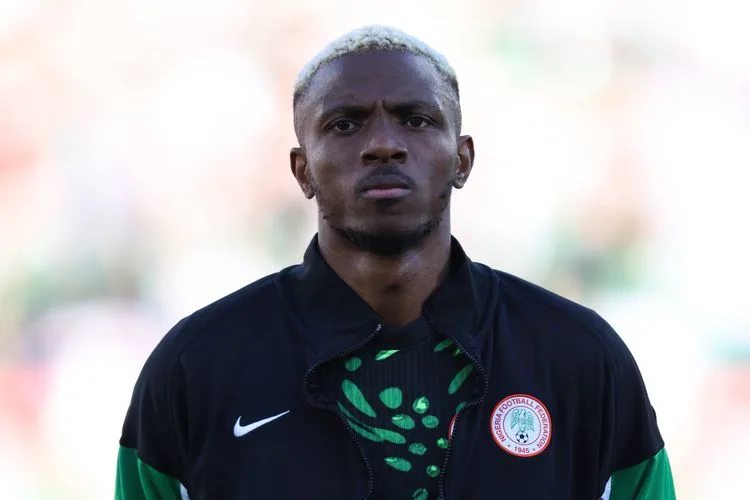
Victor Osimhen has finally broken his silence on Nigeria missing the 2026 FIFA World Cup — and he's not hiding how much it hurts.
Speaking during a social media livestream, the Super Eagles striker admitted the disappointment has been tough to swallow. "It's bad, not just for me but for the rest of the guys," Osimhen said. "We've missed out twice in a row. Sometimes life happens, so we just have to keep moving."
Nigeria's absence from this year's tournament stings even more because the World Cup expanded to 48 teams for the first time. Africa got nine automatic spots plus an extra playoff berth — more slots than ever before. Yet the Super Eagles still couldn't make it.
The road to the 2026 World Cup ended in the qualification playoffs. Nigeria finished second in their group, then lost to DR Congo in a continental playoff match that sealed their fate. That defeat meant a second straight World Cup without Nigeria — the last time the country played at the tournament was in 2018.
For Osimhen and several current squad members, that 2018 World Cup was before their time in the national team. The Napoli striker, now one of Africa's most feared forwards, has never played on football's biggest stage. Neither have other key players like Ademola Lookman or Samuel Chukwueze.
The 2026 tournament kicked off last week, with 48 nations competing across multiple host countries. Nigeria isn't among them, and the reality has clearly hit the players hard.
Osimhen's comments give fans a rare glimpse into how the squad feels about the failure. He didn't blame anyone or make excuses — just acknowledged the pain and said they have to move on.
Nigeria's World Cup struggles go beyond just these two missed tournaments. The Super Eagles have qualified for six World Cups overall, with their best performance being a Round of 16 finish in 1994, 1998, and 2014. But the back-to-back absences have raised questions about the state of Nigerian football.
The football federation has faced criticism over coaching instability, poor preparation, and administrative issues. Nigeria has gone through several coaches since 2018, including Gernot Rohr, Augustine Eguavoen, Jose Peseiro, and Finidi George — none of whom could get the team to the World Cup.
For Osimhen, the frustration is personal. At 27, he's in his prime years, and every missed World Cup is a lost opportunity to compete on the global stage. The next World Cup is in 2030, when he'll be 31 — still possible, but nothing is guaranteed.
"Sometimes life happens," he said. It's a simple line, but it carries the weight of a generation of Nigerian players who've watched their country fall behind despite producing top talent.
The 2026 World Cup will go on without Nigeria. But Osimhen's words make one thing clear: the players feel the absence just as much as the fans do.