

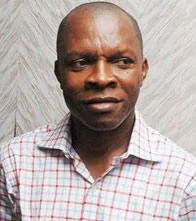
The United States has refused to let a Somali referee into the country to do his job — and FIFA president Gianni Infantino is telling the world to "chill, relax."
Omar Artan, a referee from Somalia selected by FIFA for an international assignment, was denied entry by US authorities. The decision has stunned the football world, not just because a referee was blocked, but because FIFA is supposed to have a government guarantee from every World Cup host guaranteeing entry for everyone connected to the tournament.
That guarantee is standard practice. FIFA demands it from every host nation. Qatar relaxed some of its laws in 2022 to make it work. But the US, which will co-host the 2026 World Cup alongside Canada and Mexico, has now broken that understanding — and Infantino's response has drawn sharp criticism.
"It's unfortunate what happened to Omar," Infantino said. "But again, we don't control everything. We try, we discuss, we see. Maybe it's good to just chill, relax. We try to solve everything. Sometimes screaming and shouting has the opposite effect. Don't believe me if you don't want but we always try to find solutions. We aren't the kings of the world."
Former FIFA president Sepp Blatter, who led the organisation from 1998 to 2015, didn't share Infantino's chill. He came out strongly against the US action and indirectly criticised his successor.
"No one is more official than the referee, and if a country refuses to allow a referee in, the World Cup shouldn't be held in such a country."
Blatter's point is simple: referees aren't tourists. They're as essential to a World Cup as players. If a host country blocks a referee, it breaks the fundamental contract between FIFA and the host.
This isn't just about one referee. It raises questions about whether the US can be trusted to honour its commitments for the 2026 World Cup. The tournament will be the biggest in history, with 48 teams and matches across three countries. If the US can block a Somali referee now, what else might it do when the World Cup arrives?
Infantino's critics say he's too close to US President Donald Trump to push back. The FIFA president has cultivated a relationship with Trump, and observers say that friendship is now compromising FIFA's independence.
Patrick Omorodion, a Nigerian sports journalist, wrote that under previous FIFA presidents like João Havelange or Sepp Blatter, such a situation would never have occurred. "During their time and others before them, their words were law and they were treated like presidents of countries," he noted. "Not anymore under Infantino's presidency when FIFA cringes under the threat of US president Trump."
FIFA's slogan used to be "For the Game. For the World." It later changed to "Football Unites the World." But the current crisis suggests that when the world's most powerful country pushes back, FIFA's unity slogan bends.
The Somali referee situation has reignited debates about FIFA's ability to enforce its own rules. The Olympic Charter, which governs all sports under the International Olympic Committee, mandates political neutrality and guarantees of non-discrimination. FIFA is supposed to uphold those principles. But when the host is the United States, the enforcement looks different.
For now, Omar Artan remains outside the US, unable to do the job FIFA selected him for. Infantino says he's working on a solution. But the football world is watching — and wondering whether FIFA still has the backbone to stand up for its own rules.
Key Facts
- FIFA was founded on May 21, 1904 in Paris, France, 122 years ago.
- Its first president was Frenchman Robert Guérin (1904–1906).
- Sepp Blatter served as FIFA president from 1998 to 2015, forced out by corruption charges.
- Gianni Infantino, Swiss-Italian, has been FIFA president since 2016.
- The US will co-host the 2026 World Cup with Canada and Mexico.
- Africa is FIFA's largest confederation, with 54 member associations.