

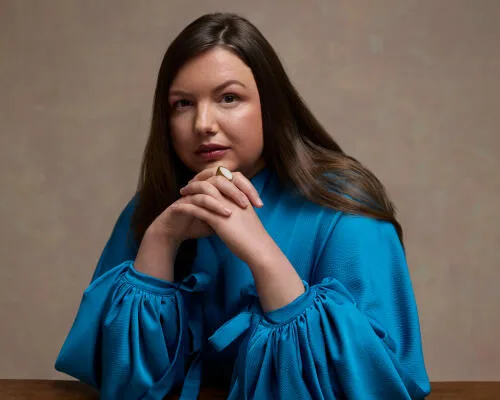
The single sharpest fact in Hannah Murray's story is that she was sectioned in an acute mental health unit after a psychotic episode triggered by her involvement with a wellness cult. This incident marked a turning point in her life, leading her to re-evaluate her experiences and ultimately write about them in her memoir, The Make-Believe. It's a story that highlights the dangers of the wellness industry and the importance of being critical of the groups and individuals that promise to 'heal' or 'transform' us.
Hannah Murray, the 36-year-old actress, has had a successful career in film and television, appearing in shows like Skins and Game of Thrones. However, behind the scenes, Murray was struggling with her mental health and the pressures of the entertainment industry. She didn't have the support system she needed, and she was drawn to the wellness cult, which promised her a sense of specialness and wisdom, but ultimately exploited her vulnerabilities and led to her downfall. The cult's promises seemed appealing at first, but they didn't deliver - they just took advantage of her.
Murray's introduction to the cult was through an 'energy healer' named Grace, who she met on the set of the film Detroit. Grace offered Murray a healing session, which Murray describes as feeling 'magical' and leading to a total release. However, Murray soon became embroiled in the cult's activities, attending classes and courses that promised to teach her how to 'heal' herself and others. She spent thousands of pounds on these courses, which were led by a man named Steve, who claimed to have magical powers. Murray didn't realize it at the time, but she was being manipulated
- Steve's claims weren't based on fact, they were just a way to control her.
As Murray delved deeper into the cult, her behavior became increasingly erratic. She was existing on very little sleep and was talking at 'a million miles a second.' She became convinced that she had special powers and that Steve was her spiritual guide. Her mental state deteriorated to the point where she was hallucinating and hearing Steve's voice in her head. She didn't know what was real and what wasn't - she was losing her grip on reality.
Murray's experience with the cult wasn't an isolated incident. Many young people, particularly those in the entertainment industry, are vulnerable to these types of exploitative groups. The wellness industry has become a lucrative business, with many individuals and organizations preying on people's desires for spiritual enlightenment and self-improvement. They're making a lot of money from people who are desperate for help - it's a system that's ripe for exploitation. Murray's story serves as a warning about the dangers of the wellness industry - it's not all it's cracked up to be.
Murray's story also highlights the need for greater awareness and understanding of mental health issues, particularly bipolar disorder, which is often stigmatized and misunderstood. It's a condition that can't be cured, but it can be managed - with the right treatment and support, people can learn to live with it. Murray's experience shows that it's not something to be ashamed of - it's just a part of who she is.
In her memoir, The Make-Believe, Murray recounts her experiences with the cult and her struggles with mental health. The book is a frank and often darkly funny exploration of the convergence of hedonism with the self-help industry. Murray's writing is raw and honest, offering a glimpse into the mind of someone who has struggled with madness and come out the other side. She's not afraid to talk about her experiences - she wants to help others who may be going through similar things.
“I thought I was the savior of the planet,' Murray says, reflecting on her experiences with the cult. 'I was on this hamster wheel of, 'Where's the thing that's going to make me feel special for ever?'' She was desperate for a sense of purpose”
— she didn't know who she was or what she wanted. She was lost, and the cult took advantage of that.
Murray's story is a testament to the human spirit's ability to survive and thrive in the face of adversity. Her experiences with the wellness cult were a low point in her life, but they also led her to re-evaluate her priorities and seek help. Today, Murray lives a quiet, low-key life, free from the pressures of the entertainment industry and the influences of the wellness cult. She's found solace in writing and has become an advocate for mental health awareness. She's not a professional, but she's learned a lot from her experiences - she wants to share that with others.
The Make-Believe is a memoir that will resonate with anyone who has struggled with mental health issues or felt vulnerable to the promises of the wellness industry. Murray's story is a cautionary tale, but it's also a message of hope and resilience. As she says, 'I realize now how pervasive it is. How often people you don't know will offer it as a remedy. You'll say, 'I'm not really sleeping,' and they'll say, 'Have you tried meditation?' It's everywhere, seen as an inherently positive solution.' Murray's experiences serve as a reminder to be critical of the groups and individuals that promise to 'heal' or 'transform' us, and to seek help from qualified professionals when struggling with mental health issues.
It's not always easy, but it's worth it - with the right help, people can get better.