

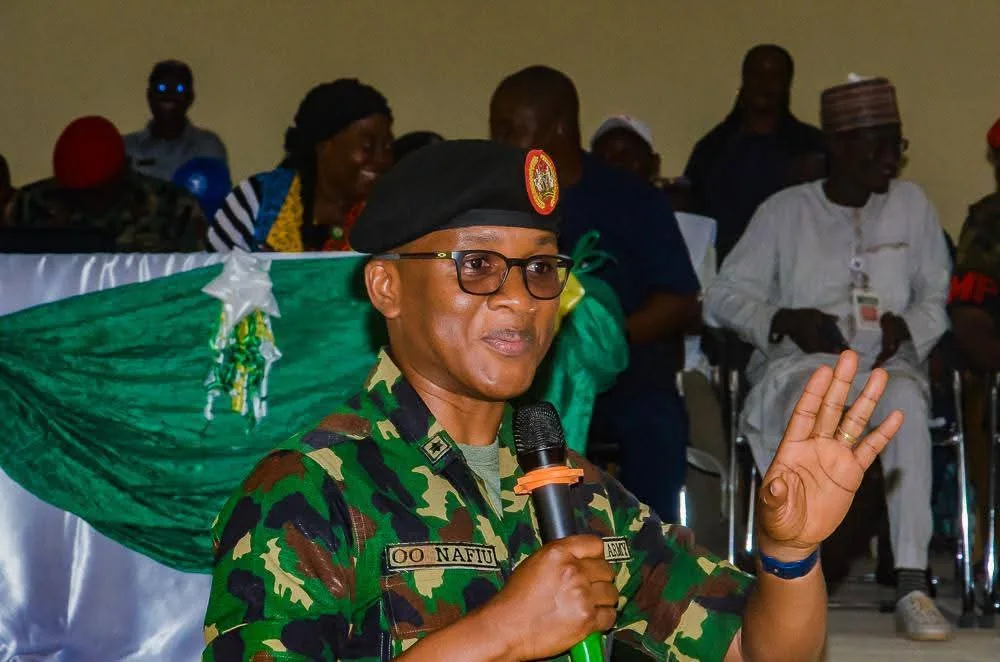
If you’re currently serving or about to start your national service, you might want to double-check what you post online. The Director-General of the National Youth Service Corps (NYSC), Brig.-Gen. Olakunle Nafiu, just dropped a reminder that being a corps member doesn’t mean you’ve suddenly stepped outside the laws of the Federal Republic of Nigeria. You’re still a citizen, and the same rules that govern everyone else’s online behavior apply to you too.
Nafiu explained that the NYSC isn't a legal shield for bad behavior. If you get dragged into a legal mess for cyberbullying or online misconduct, don't expect the scheme to start acting as your lawyer in court. "The police will arrest you with your NYSC identity card, and you will bear that responsibility," the DG noted during a recent interview in Abuja.
The fact that they’re corps members doesn't absolve them from being citizens bound by the laws of the Federal Republic of Nigeria.
While the scheme isn't funding private legal battles for individuals who go rogue on social media, they do have a mechanism for support. The Legal Aid Council can step in to provide pro bono services where necessary. This serves as a safety net for those who need guidance during investigations, but it isn't a get-out-of-jail-free card for people looking for trouble online.
This conversation comes as the NYSC prepares to exclusively mobilize "Generation Z" graduates by the end of this year. The leadership acknowledges that this demographic is inherently wired for content creation. They aren't trying to ban you from making videos or sharing your experiences; they just want you to do it with common sense. Reckless online behavior could cost you more than just a few followers.
The Logistical Reality of Medical Outreaches
Beyond social media guidelines, the DG highlighted some of the practical hurdles the scheme faces in its healthcare efforts. The First Lady, Sen. Oluremi Tinubu, donated mobile clinics designed to bring essential medical services like scans and basic tests directly to underserved rural communities. These units have changed the game for many who would’ve otherwise had to travel long distances for simple consultations.
Getting these units to where they’re needed most isn't as simple as driving a car down the road. They’re currently stuck in Abuja because the cost and technical requirements of moving them across the country are massive. You need flatbed carriers and specialized logistical support to move these heavy facilities to places like Lagos or other remote states.
For now, the reach is limited to nearby states like Kaduna, Nasarawa, and Niger. Expanding this service to the rest of the federation is a difficult task due to operational funding gaps. It’s a classic case of having the right equipment but struggling with the heavy lifting of logistics.
The NYSC continues to lean on corps members for ad hoc election duties. Brig.-Gen. Nafiu frames this as a form of patriotic service that strengthens democratic institutions. He argues that facilitating a credible election for millions of people is a more substantial contribution to the country than simply casting a single vote at the ballot box. This remains a mandatory part of the service structure that keeps the gears of Nigerian governance turning every election cycle.
Established in 1973, the scheme has spent decades evolving. This latest push to keep corps members within the bounds of digital law represents a necessary adaptation to a fast-moving world.