

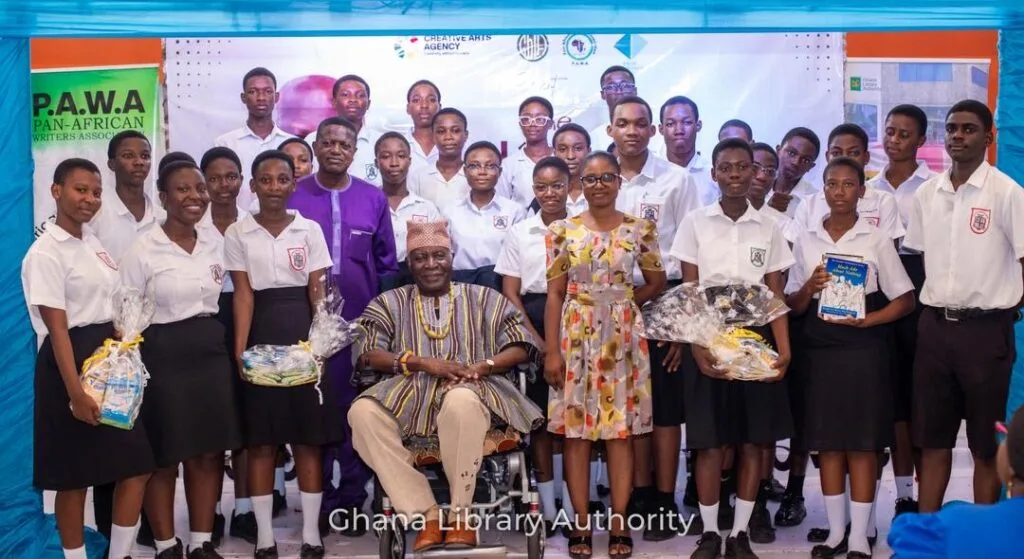
The National Children’s Library at Airport City turned into a battleground of words this week as students from six of Accra’s top senior high schools gathered to commemorate the life and work of the late Professor Ladé Wosornu. Students were pushed out of their comfort zones in more ways than one: it wasn't just about reading books; it was about performance, precision, and a deep dive into the soul of Ghanaian literature. Accra High School ultimately took the top spot, proving that when it comes to poetry, they're the ones to beat.
Professor Ladé Wosornu, a giant in the creative arts, has always been an advocate for preserving indigenous languages. The contest was built around his famous poem, “Raider of the Treasure Trove,” and tested students' ability to break it down in both English and Ga. By doing so, students were put to the test, answering complex questions that probed their understanding of his metaphors and cultural references. For the students, it was a rigorous test of their ability to hold onto their roots while navigating modern creative demands.
"The contest is designed to create a platform that encourages the appreciation and patronage of Ghanaian poetry among students, while preserving and promoting indigenous Ghanaian languages," say organisers of the Black Star Experience.
Accra Girls SHS fought hard to secure second place, while the team from Wesley Grammar SHS rounded out the top three. However, judging went beyond just the final score – it was also about the flair and delivery each group brought to the stage. Accra High School walked away with the Most Creative Group Award, while Wesley Grammar SHS was specifically recognised for their excellent command of the Ga language during their presentation.
Awura Oforiwaa stood out from the crowd, taking home the title of Student Spoken Word Artist of the contest. Her performance captured the spirit of the event, showing that the next generation of Ghanaian poets is already finding their voice. This competition is one branch of the broader Ladé Wosornu Literary Nest, a project first brought to public attention last year by Gideon Aryeequaye, the Acting Executive Secretary of the Creative Arts Agency.
Behind the scenes, the event was a massive logistical effort. Organised by the Creative Arts Agency Ghana in partnership with the Ghana Library Authority and the Pan-African Writers Association, they even had a bit of extra muscle from the Professor Ladé Wosornu Trust to ensure everything went off without a hitch. The goal of the “Grow the Artist-in-Me!” project is to move beyond the capital, with plans already in place to take the competition to a regional level before the eventual national finals.
This isn't just about students reciting lines in a quiet room; it's about building a culture where local literature is celebrated as enthusiastically as a football match at the Accra Sports Stadium. Other schools that stepped up to the plate included Ebenezer SHS, Labone SHS, and St Thomas Aquinas SHS. While they didn't walk away with the top three spots, the exposure to such a high-level creative platform is arguably the biggest win for the students involved.
Support for the event poured in from various sectors, showcasing that corporate Ghana is starting to see the value in arts education. The Ghana Tourism Development Company, the National Film Authority, and brands like Yumvita Ghana and Apple Man Ghana all threw their weight behind the debut contest. Breathing Art Studio also provided the necessary creative scaffolding to ensure the performances matched the high bar set by the Professor's own work.
Contestant Highlights and Awards
- Accra High School took home Overall Winner and Most Creative Group Award.
- Accra Girls SHS took second place and won the Best English Presentation Award.
- Wesley Grammar SHS secured third place and won the Best Ga Presentation Award.
- Awura Oforiwaa was crowned the Student Spoken Word Artist of the contest.
While this maiden event was restricted to Accra, the plan is to widen the net. Organisers intend to replicate this process across other regions, creating a pipeline where students from Kumasi to Tamale can engage with indigenous literature in the same way the students at Airport City did. For a country with such a rich history of oral tradition and modern storytelling, this is a long overdue investment in the next crop of voices.