

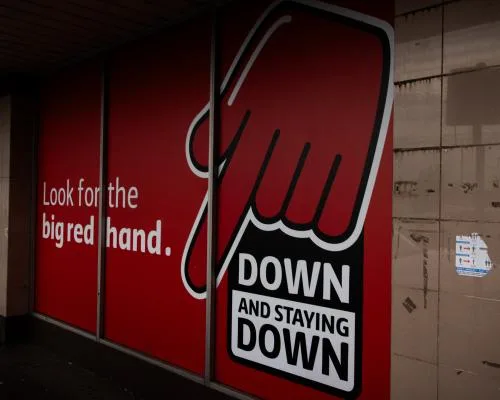
The federal court in Australia has ruled that Coles, the country's second-largest supermarket chain, misled shoppers with its 'Down Down' discount campaign. This ruling is a significant blow to Coles, which had argued that the discounts represented genuine savings during a period of high inflation. Coles can't deny that it's suffered a setback.
Coles sold 245 products at one price for a median period of a year, before increasing them to a second price for a median of just 28 days. Then, it reduced them to a third price, which was more expensive or equal to the first price. The strategy is known as 'was/is' comparative pricing. Coles advertised products to shoppers with 'Down Down' promotional tickets that displayed their new, supposedly discounted 'is' price next to the higher 'was' price. However, it didn't disclose on the tickets that the 'was' prices had been in place for only a short period.
The items were sold at a cheaper price before that. During its trial in February, Coles conceded that by the time it raised the price of an item from the original to the 'was' price, the supermarket had already planned and agreed with the supplier on what the new 'Down Down' price would be. It's clear that Coles didn't act transparently. Legal counsel for the supermarket argued that the promotional prices were genuine discounts offered to shoppers after an increase in wholesale costs charged by suppliers during a period of rising inflation.
Reading a summary of his judgment in a Melbourne court room on Thursday, Justice Michael O'Bryan agreed the price increases were done in an 'ordinary commercial way' and Coles had been meeting requests from suppliers. However, the judge upheld the Australian Competition and Consumer Commission's (ACCC) allegation that Coles falsely promoted 'discounts' on these products based on increased prices that had been available for too short a period. O'Bryan said if the average shopper had known the 'was' prices on the items' promotional tickets had been in place for such a short amount of time, they wouldn't have thought the discounts were genuine.
The ACCC sued Coles and rival Woolworths, accusing the supermarket giants of duping shoppers by using promotional programs to disguise price increases on hundreds of products. Justice Michael O'Bryan is yet to hand down his decision in the ACCC's similar case against Woolworths, which was heard in the federal court in Sydney in late April and early May. The outcome of this case will provide further insight into the supermarket industry in Australia.
The supermarket giant had engaged in misleading conduct, in contravention of the Australian Consumer Law, Justice O'Bryan said. This ruling has significant implications for the supermarket industry in Australia. It will be interesting to see how Coles and other supermarkets respond to this decision. They'll need to review their pricing and promotional practices.
There are no direct connections between this story and Nigeria, as it involves an Australian supermarket chain and regulatory body. However, it highlights the importance of consumer protection laws and the need for supermarkets to be transparent in their pricing and promotional practices. They can't afford to be opaque. The Australian Competition and Consumer Commission (ACCC) is the regulatory body responsible for enforcing the Australian Consumer Law.
The ACCC was established in 1996, and its role is to protect consumers and promote competition in the Australian marketplace. The ACCC has been actively involved in regulating the supermarket industry in Australia. This ruling is a significant outcome of its efforts. The 'Down Down' discount campaign was a key part of Coles' marketing strategy, and it was widely advertised in stores and online. However, the campaign has now been found to be misleading.
Coles will need to review its pricing and promotional practices to ensure that they comply with the Australian Consumer Law. It's a complex process, but they must do it. The ACCC will continue to monitor the situation.
Key Facts
- Coles sold 245 products at one price for a median period of a year, before increasing them to a second price for a median of just 28 days, before reducing them to a third price which was more expensive or equal to the first price.
- The 'was/is' comparative pricing strategy was used by Coles to advertise products with 'Down Down' promotional tickets.
- The Australian Competition and Consumer Commission (ACCC) sued Coles and Woolworths, accusing them of duping shoppers by using promotional programs to disguise price increases on hundreds of products.
- Justice Michael O'Bryan upheld the ACCC's allegation that Coles falsely promoted 'discounts' on these products based on increased prices that had been available for too short a period.
- The ruling has significant implications for the supermarket industry in Australia, and it will be interesting to see how Coles and other supermarkets respond to this decision.
As the supermarket industry in Australia continues to evolve, it's essential for consumers to be aware of their rights. They should report any suspected misleading or deceptive conduct to the ACCC. The ACCC will continue to play a crucial role in regulating the industry and protecting consumers. It won't tolerate any misleading practices.
In the coming weeks and months, Coles will need to review its pricing and promotional practices to ensure that they comply with the Australian Consumer Law. This may involve making changes to its 'Down Down' discount campaign. They'll need to provide clearer information to consumers about their pricing and promotional practices. It's not an easy task, but they must do it.
The ruling against Coles is a reminder that supermarkets and other businesses must be transparent in their pricing and promotional practices. Consumers have the right to accurate information. Businesses that fail to provide this information can face significant consequences. They won't be able to ignore the law.
The ACCC's case against Woolworths is still ongoing. It will be interesting to see how the court rules in this case. The outcome of this case will provide further insight into the supermarket industry in Australia. It will highlight the importance of consumer protection laws. The court's decision will have significant implications.
The federal court's ruling against Coles is a significant outcome. It highlights the importance of consumer protection laws in Australia. The ruling has significant implications for the supermarket industry. It will be interesting to see how Coles and other supermarkets respond to this decision. They'll need to take it seriously. The ACCC's efforts have paid off, and consumers will benefit from this ruling.