

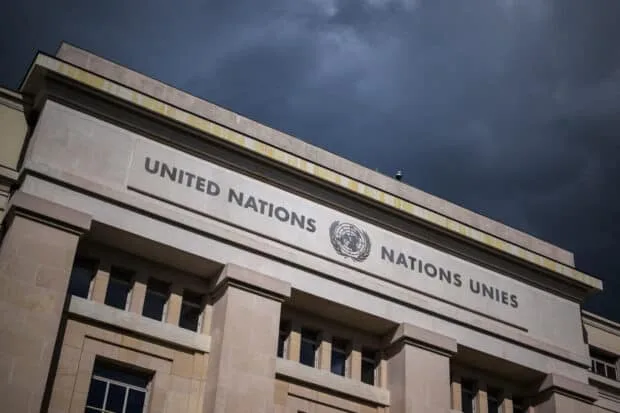
A 52-year-old man died after setting himself on fire in front of the United Nations headquarters in New York.
Law enforcement responded to a 911 call at about 6:30 p.m. and found a man with severe burns throughout his body, according to the New York Police Department.
The man was taken to the hospital and later pronounced dead.
Despite an investigation, the motive behind the act remains unclear.
The incident occurred after all scheduled meetings had ended for the day, and no UN business was affected.
A US spokesperson confirmed that the incident did not disrupt any ongoing activities.
Tibet has been a contentious issue with China, with the latter claiming the region has been part of its territory for over seven centuries.
However, many Tibetans say they were essentially independent for most of their history and have protested against Beijing's rule.
The International Campaign for Tibet reported over 150 self-immolations by Tibetans between 2009 and 2022.
China does not recognize the Central Tibetan Administration, the Tibetan government-in-exile.
The Dalai Lama's representatives have not had dialogue with Beijing since 2010.
A statement from the Chinese government acknowledged the incident, but did not provide further details.
The US State Department has urged China to engage in a dialogue with Tibetan leaders.
Tibetans in New York and around the world held vigils and protests to condemn the Chinese government's policies.
The incident highlights the ongoing tensions between China and Tibet.
The Tibetan community in the US remains divided on how to address the situation.
Some call for peaceful protests, while others advocate for more radical actions.
The debate surrounding the use of self-immolation as a tactic continues.
The act has sparked both outrage and sympathy from around the world.
The investigation is ongoing, but it is unclear what charges may be filed.
A memorial service for the deceased man is planned for the coming days.
The incident marks the latest in a long history of self-immolations in Tibet.
The number of incidents has increased in recent years.
Human rights groups have blamed the Chinese government for the rising number of self-immolations.
The Chinese government has denied any responsibility.
The incident is a stark reminder of the ongoing conflict in Tibet.
The Tibetan community continues to grapple with the aftermath of the incident.
Tibetans in the diaspora have called for solidarity with those in Tibet.
The incident has also sparked a debate among Tibetan leaders on how to handle the situation.
Some have called for a more peaceful approach, while others advocate for stronger actions.
The investigation is expected to shed light on the circumstances surrounding the incident.
The Chinese government's response to the incident will be closely watched.
The incident highlights the ongoing human rights concerns in Tibet.
The Tibetan community will continue to push for dialogue with the Chinese government.
The incident is a stark reminder of the complexities of the Tibet-China conflict.