

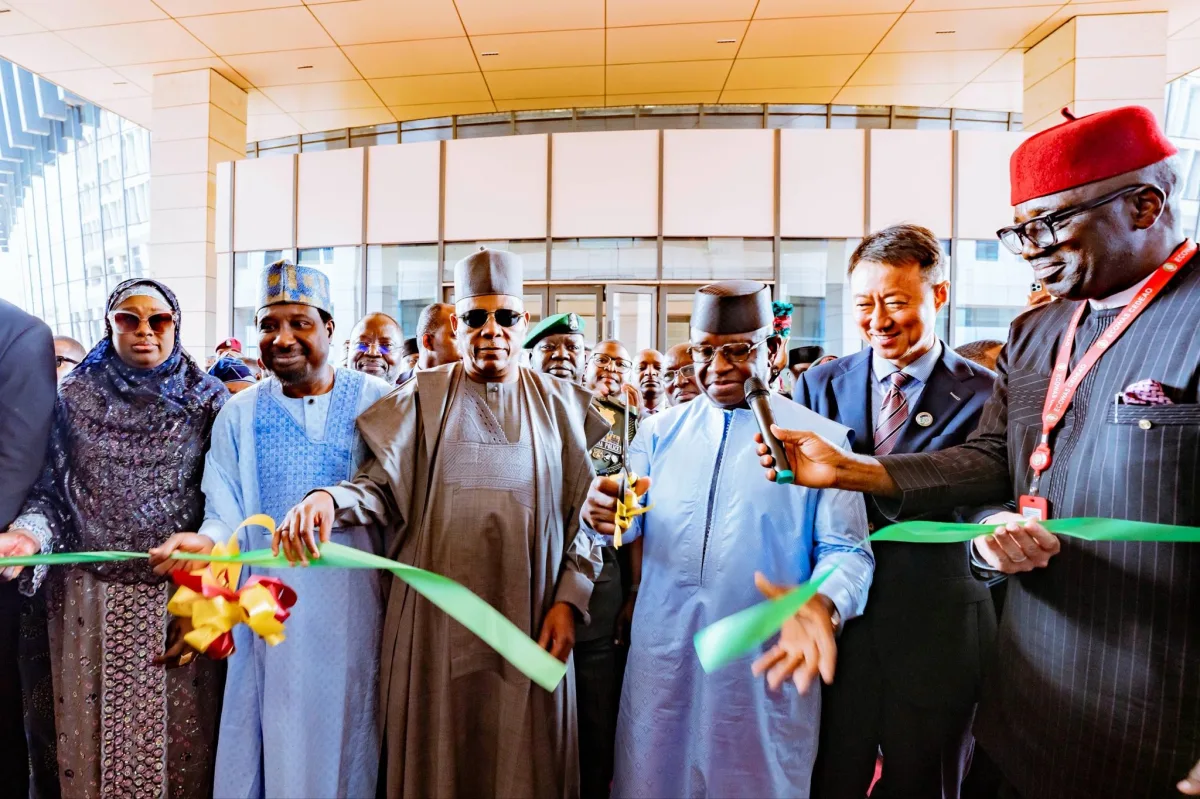
The opening of the new ECOWAS headquarters in Abuja on Thursday has been met with a renewed commitment to regional integration by President Bola Tinubu.
President Tinubu, who was represented by Vice President Kashim Shettima at the commissioning ceremony, described the new building as a symbol of renewal and confidence in the future of ECOWAS.
The president urged a shift from a regional market to a regional production base and called for practical economic transformation, saying, "The hour has come to transform our regional market into a regional production base."
According to him, the next stage of West African integration must shift from speeches and aspirations to economic transformation, driven by what is produced rather than consumed.
Tinubu also addressed the recent withdrawal of three member states from the bloc and said integration can no longer be viewed solely through an economic lens, but as a comprehensive framework for security, stability, development, and the welfare of peoples.
The president commended President Julius Bio of Sierra Leone, Chairman of the ECOWAS Authority of Heads of State and Government, for his leadership at a time of great need.
He also thanked the Government of China for financing the new complex, the Shaanxi Construction Engineering Group Company Limited, and Nigerian counterparts for their contributions to the project.
In a statement, President Bio said the landmark project affords member states the opportunity to renew their collective promise to the 450 million people of West Africa, and they must use it to build a more effective regional body.
President of the ECOWAS Commission, Omar Touray, expressed appreciation to the Government of China for the generous donation of the monument, which will stand as a symbol of regional partnership and integration and a centre for coordination and support.
The ECOWAS headquarters, described as the "Eye of Africa," has been constructed by the Chinese at a cost and timeframe not specified.
The new building is expected to serve as a symbol of the region's collective resolve to preserve the ideals that inspired the founding of the community more than five decades ago.
However, the region still faces several challenges, including terrorism, economic vulnerability, food insecurity, climate change, and the expectations of a growing youthful population.
Tinubu said ECOWAS has remained one of the most respected regional economic communities in the world, making significant progress in peace-building, democratic governance, economic cooperation, and the free movement of people, goods, and services.
The president, however, warned that the region must not ignore these challenges, saying, "We must no longer ignore the serious challenges still confronting us."
He also urged member states to shift their focus from consuming to producing, saying, "Our integration must increasingly be driven by what we produce rather than by what we consume."
The ECOWAS community has 15 member states, including Nigeria, Ghana, Côte d'Ivoire, Senegal, and other countries in the West African subregion.
The commissioning of the new headquarters marks a new chapter in the development of regional integration in West Africa.
The new building is a symbol of the ECOWAS community's commitment to its ideals and a reflection of its determination to build institutions that can endure.
The ECOWAS Authority of Heads of State and Government is led by President Bio of Sierra Leone, who has been at the forefront of efforts to strengthen regional integration.
The commissioning ceremony was attended by heads of state and government, diplomats, and other dignitaries from across the region.
In his remarks, President Bio said, "History does not remember generations for the buildings they construct, but for the lives they transform."
He commended President Tinubu for Nigeria's commitment to ECOWAS and described the nation as a "great anchor" of the West African bloc.
Bio also thanked the Government of China for its "generous donation" of the bloc's headquarters building.
The construction of the new headquarters has been a major project in the development of regional integration in West Africa.
It has taken several years and significant resources to complete the project, but it has finally come to fruition.
The new building is expected to serve as a symbol of the region's commitment to its ideals and a reflection of its determination to build institutions that can endure.
The commissioning ceremony marked a new chapter in the development of regional integration in West Africa.
The ECOWAS community has faced several challenges in recent years, including the withdrawal of three member states from the bloc.
However, the commissioning of the new headquarters has rekindled hope that the region can overcome these challenges and achieve its goals.
The new building is a symbol of the region's collective resolve to preserve the ideals that inspired the founding of the community more than five decades ago.
It is a reflection of the region's determination to build institutions that can endure and a symbol of its commitment to its ideals.
The commissioning ceremony was attended by heads of state and government, diplomats, and other dignitaries from across the region.
In his remarks, President Bio said the landmark project affords member states the opportunity to renew their collective promise to the 450 million people of West Africa.
The ECOWAS Commission is the secretariat of the ECOWAS Authority of Heads of State and Government, which is the supreme decision-making body of the community.
The commission is responsible for the day-to-day administration of the community and provides technical and administrative support to the Authority.
In his remarks, President Bio said the commission has delivered the project on schedule and within budget.
He commended the government and people of China for their generosity and thanked President Tinubu for his leadership on the project.
Bio also thanked the Nigerian government for its commitment to ECOWAS and described Nigeria as a "great anchor" of the West African bloc.
The construction of the new headquarters has been a major project in the development of regional integration in West Africa.
It has taken several years and significant resources to complete the project, but it has finally come to fruition.
The new building is expected to serve as a symbol of the region's commitment to its ideals and a reflection of its determination to build institutions that can endure.
The commissioning ceremony marked a new chapter in the development of regional integration in West Africa.
The ECOWAS community has faced several challenges in recent years, including the withdrawal of three member states from the bloc.
However, the commissioning of the new headquarters has rekindled hope that the region can overcome these challenges and achieve its goals.
The new building is a symbol of the region's collective resolve to preserve the ideals that inspired the founding of the community more than five decades ago.
It is a reflection of the region's determination to build institutions that can endure and a symbol of its commitment to its ideals.
The ECOWAS community has made significant progress in peace-building, democratic governance, economic cooperation, and the free movement of people, goods, and services.
However, the region still faces several challenges, including terrorism, economic vulnerability, food insecurity, climate change, and the expectations of a growing youthful population.
The ECOWAS community has 15 member states, including Nigeria, Ghana, Côte d'Ivoire, Senegal, and other countries in the West African subregion.
The commissioning of the new headquarters marks a new chapter in the development of regional integration in West Africa.
The new building is a symbol of the ECOWAS community's commitment to its ideals and a reflection of its determination to build institutions that can endure.
The ECOWAS Authority of Heads of State and Government is led by President Bio of Sierra Leone, who has been at the forefront of efforts to strengthen regional integration.
The commissioning ceremony was attended by heads of state and government, diplomats, and other dignitaries from across the region.
In his remarks, President Bio said, "History does not remember generations for the buildings they construct, but for the lives they transform."
He commended President Tinubu for Nigeria's commitment to ECOWAS and described the nation as a "great anchor" of the West African bloc.
Bio also thanked the Government of China for its "generous donation" of the bloc's headquarters building.
The construction of the new headquarters has been a major project in the development of regional integration in West Africa.
It has taken several years and significant resources to complete the project, but it has finally come to fruition.
The new building is expected to serve as a symbol of the region's commitment to its ideals and a reflection of its determination to build institutions that can endure.
The commissioning ceremony marked a new chapter in the development of regional integration in West Africa.
The ECOWAS community has faced several challenges in recent years, including the withdrawal of three member states from the bloc.
However, the commissioning of the new headquarters has rekindled hope that the region can overcome these challenges and achieve its goals.
"We must no longer ignore the serious challenges still confronting us," President Tinubu said.
According to a statement from the ECOWAS Commission, the commissioning ceremony was attended by heads of state and government, diplomats, and other dignitaries from across the region.
In his remarks, President Bio said the landmark project affords member states the opportunity to renew their collective promise to the 450 million people of West Africa.
The ECOWAS Commission is the secretariat of the ECOWAS Authority of Heads of State and Government, which is the supreme decision-making body of the community.
The commission is responsible for the day-to-day administration of the community and provides technical and administrative support to the Authority.
In his remarks, President Bio said the commission has delivered the project on schedule and within budget.
He commended the government and people of China for their generosity and thanked President Tinubu for his leadership on the project.
Bio also thanked the Nigerian government for its commitment to ECOWAS and described Nigeria as a "great anchor" of the West African bloc.
The construction of the new headquarters has been a major project in the development of regional integration in West Africa.
It has taken several years and significant resources to complete the project, but it has finally come to fruition.
The new building is expected to serve as a symbol of the region's commitment to its ideals and a reflection of its determination to build institutions that can endure.
The commissioning ceremony marked a new chapter in the development of regional integration in West Africa.
The ECOWAS community has faced several challenges in recent years, including the withdrawal of three member states from the bloc.
However, the commissioning of the new headquarters has rekindled hope that the region can overcome these challenges and achieve its goals.
The new building is a symbol of the region's collective resolve to preserve the ideals that inspired the founding of the community more than five decades ago.
It is a reflection of the region's determination to build institutions that can endure and a symbol of its commitment to its ideals.
The ECOWAS community has made significant progress in peace-building, democratic governance, economic cooperation, and the free movement of people, goods, and services.
However, the region still faces several challenges, including terrorism, economic vulnerability, food insecurity, climate change, and the expectations of a growing youthful population.
The ECOWAS community has 15 member states, including Nigeria, Ghana, Côte d'Ivoire, Senegal, and other countries in the West African subregion.
Key Facts
- The new ECOWAS headquarters is located in Abuja, Nigeria.
- The building was constructed by the Chinese at a cost not specified.
- The project was completed on schedule and within budget.
- The new headquarters is expected to serve as a symbol of the ECOWAS community's commitment to its ideals.
- The ECOWAS community has made significant progress in peace-building, democratic governance, economic cooperation, and the free movement of people, goods, and services.
- The region still faces several challenges, including terrorism, economic vulnerability, food insecurity, climate change, and the expectations of a growing youthful population.
- The ECOWAS community has 15 member states, including Nigeria, Ghana, Côte d'Ivoire, Senegal, and other countries in the West African subregion.