

The single sharpest fact in one or two punchy sentences. Who did what, where, when, and why it matters. Not a summary of everything — the one thing that makes someone stop scrolling. A reader who only reads this paragraph must understand what happened.
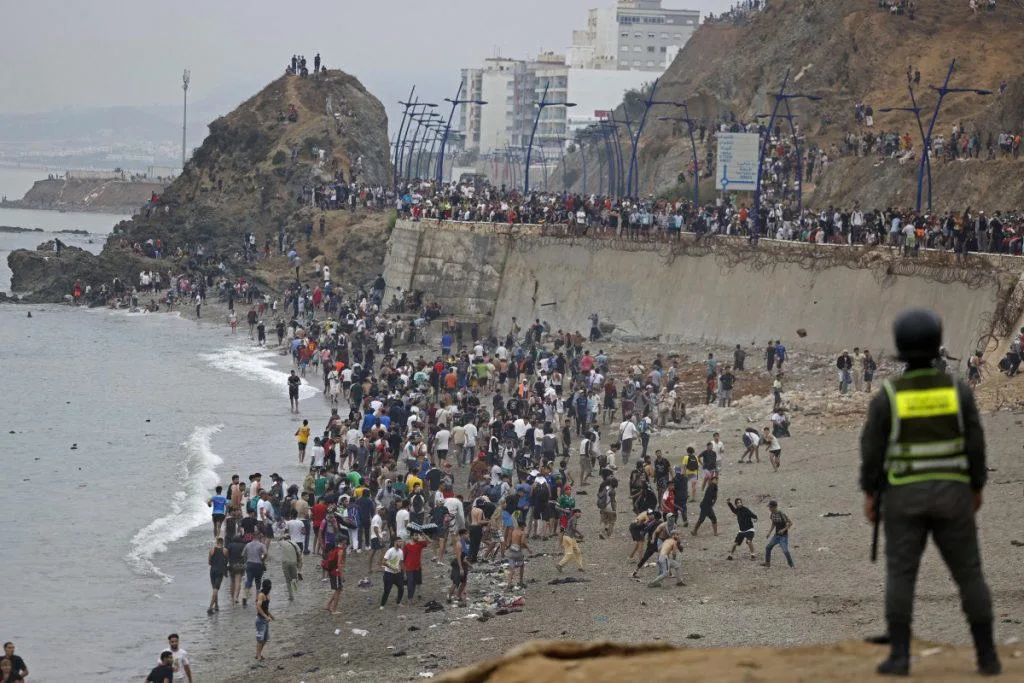
Thousands of migrants have crossed overnight from Morocco into Spain's north Africa Ceuta enclave, a police source said on Friday. In recent days, a total of around 40,000 migrants have crossed into the territory population 80,000, the source added. The sudden massive influx has sparked a crisis for Spain's government and prompted France to announce tighter checks on its border with Spain.
Madrid has sent troops to boost security in Ceuta. Sanchez and his interior minister were due to visit the enclave's Tarajal border on Friday, the government said. AFP reporters have seen hundreds of people — men, women and children — entering Ceuta by swimming around a border barrier with Morocco to enter the Spanish exclave, discarding flotation rings and clothes used in the risky passage.
Ceuta, a territory of 18.5 square kilometres (seven square miles), and similar enclave Melilla have Europe's only two land borders with Africa. Spain’s decision to host the leader of the Sahrawi independence movement, the Polisario Front, for medical treatment last year might be one reason for this massive influx, as it reignited a long-standing dispute between Morocco and Spain. In 2021, thousands crossed to take advantage of Rabat loosening border controls during this diplomatic dispute.
The crisis has sparked diplomatic fallout. Italy on Thursday called for Spain to be suspended from Europe’s open-borders Schengen zone, prompting Spain to summon Italy’s ambassador and accuse Rome of using the crisis for political gain. Two top officials within US President Donald Trump’s White House on Thursday also reiterated their anti-immigration politics using video of Ceuta.
Ebullient migrants on Thursday were walking through the streets of Ceuta, thanking the Spanish police and calling out: 'Bye bye Morocco, hello Spain.' Police and Civil Guards in Ceuta appeared to do little to intervene, although some officers attempted to direct the arrivals to the local migrant reception centre. Morocco's authorities had not yet issued an official statement on the flow of migrants, but a Moroccan official source told AFP on condition of anonymity that the two countries had spoken about the matter.
So far, 18 migrants have died attempting to reach the Spanish enclave. The situation in Ceuta has sparked international reactions, with France taking measures to tighten checks on its border with Spain. Sanchez’s visit to Algiers on July 20 — the first such visit by a Spanish head of government in four years — marked a thaw in relations with Algeria.
Key Facts
- Over 40,000 migrants have crossed into Ceuta in recent days
- 18 migrants have lost their lives attempting to reach the Spanish enclave
- Ceuta has a population of 80,000 and covers an area of 18.5 square kilometers
- France has announced tighter checks on its border with Spain
- Italy has called for Spain to be suspended from Europe's open-borders Schengen zone
The crisis is not limited to Spain and Morocco alone. The impact of this influx on Spain’s economy and its relations with other European countries remains to be seen. While Sanchez is heading to manage the crisis, the international community is watching closely.
And as the situation in Ceuta continues to unfold, one thing is clear: the lives of these migrants have been forever changed.