

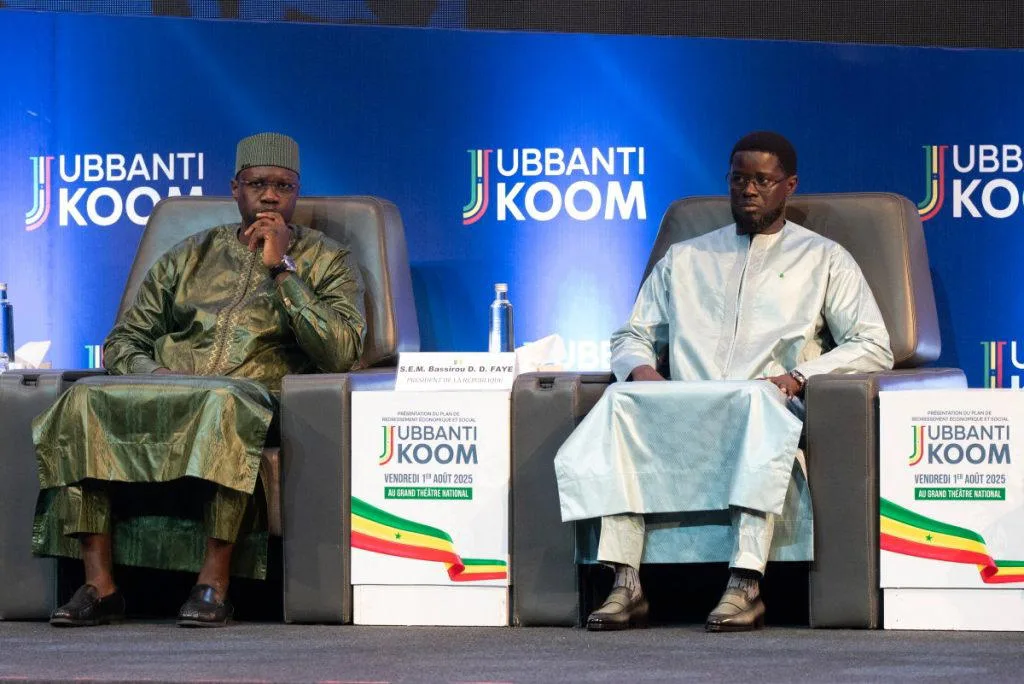
In a shocking move, Senegal's President Bassirou Diomaye Faye sacked Prime Minister Ousmane Sonko and dissolved the government on Friday, after months of tensions. This decision was announced on state television in a decree read out by presidential aide Oumar Samba Ba. The president's decision to sack the prime minister marks a major shift in the country's political landscape, as it's likely to have significant implications for Senegal's future.
The president's decision to sack the prime minister is a major development in the country's political landscape. Ousmane Sonko, the former prime minister, was a charismatic leader who generated a passionate following among Senegal's disaffected youth ahead of the 2024 elections. He struck a chord with his pan-Africanist rhetoric and tough stance on former colonial power France. Sonko's popularity won't fade quickly, as he's still got a strong support base.
Alhamdulillah (praise be to God). Tonight I will sleep soundly in the Keur Gorgui neighbourhood, Sonko posted on Facebook after his dismissal, referring to the Dakar district where he lives. This reaction suggests that Sonko is taking the sacking in stride and is confident in his support base. He doesn't seem too worried about his future, and that's because he's still got a lot of backing from his fans.
The relationship between Faye and Sonko has soured in recent months, making their governing alliance increasingly uncertain. At the start of May, Faye criticised Sonko's excessive personalisation within the ruling party. As long as he remains prime minister, he has my confidence. When that's no longer the case, there will be a new prime minister, Faye declared in a televised interview. This statement set the stage for the eventual sacking of Sonko.
It's clear that Faye didn't want Sonko in the role anymore, and he's made that clear.
The economic situation in Senegal is a major concern, with debt levels reaching 132 percent of its GDP, according to the International Monetary Fund (IMF). This makes Senegal the second-most indebted country in sub-Saharan Africa. The country's leaders have had to contend with this worrying economic situation since coming to power in 2024. They can't ignore it, and they won't be able to fix it overnight. It's a tough challenge, and they'll have to work hard to get the economy back on track.
The parliament approved a bill last month that opens the way for Sonko to run in the next presidential elections, slated for 2029. The reform amended Senegal's electoral code, which had stipulated that a defamation conviction made a candidate ineligible. This move suggests that Sonko still has a future in Senegalese politics, despite his sacking as prime minister. He's still got a chance to make a comeback, and that's because the law's been changed. It's now possible for him to run, and that's a big deal.
The sacking of Sonko came hours after he condemned what he described as a tyrannical West trying to impose homosexuality on the rest of the world, following the passage of a new law to toughen sentences for same-sex relations. This statement may have contributed to his dismissal, as it could be seen as a challenge to the president's authority. It's likely that Faye didn't appreciate Sonko's comments, and that's why he's been sacked. The president won't tolerate anyone questioning his authority, and that's clear.
In the coming days, it will be interesting to see how the situation in Senegal unfolds. The country is facing significant economic challenges, and the political landscape is uncertain. The sacking of Ousmane Sonko is a significant development that will have far-reaching implications for Senegal's future. It's not clear what'll happen next, but one thing's for sure: the country's facing a tough time ahead. They're dealing with a lot of challenges, and they won't be easy to overcome.
Key Facts
- Senegal's President Bassirou Diomaye Faye sacked Prime Minister Ousmane Sonko and dissolved the government.
- The decision was announced on state television in a decree read out by presidential aide Oumar Samba Ba.
- Ousmane Sonko was a charismatic leader who generated a passionate following among Senegal's disaffected youth ahead of the 2024 elections.
- The relationship between Faye and Sonko has soured in recent months, making their governing alliance increasingly uncertain.
- Senegal's debt levels have reached 132 percent of its GDP, according to the International Monetary Fund (IMF).