

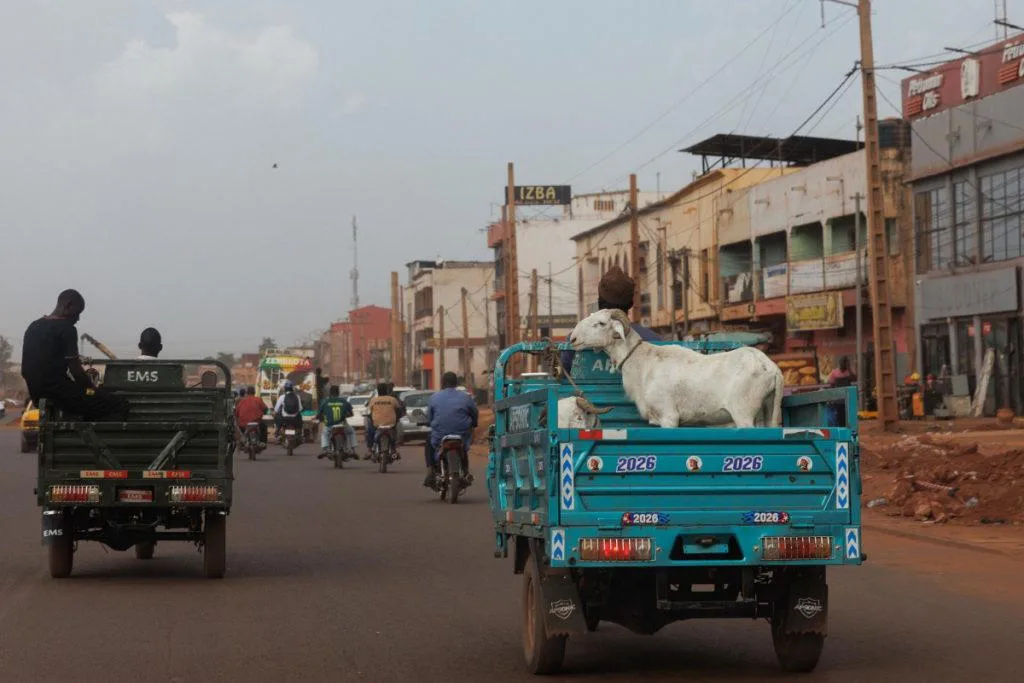
For the first time in 30 years, Alpha Amadou, a 40-year-old man from Mopti, won't be able to travel back to his village to celebrate Eid with his family. The main roads into Bamako have been blocked by Al-Qaeda's Sahel branch since late April, making it impossible for many people to travel. They can't use the main roads, and that's causing a lot of problems.
The blockade has had a significant impact on the transport sector, with many buses and trucks being torched. Many vehicles have been destroyed, and that's affecting the economy. The owner of a local travel agency said they've lost buses in recent incidents and are struggling to operate due to fuel shortages. They don't have enough fuel to run their buses, and that's a big problem.
Normally, they could transport more than 50,000 people from Bamako to other regions in a week for Tabaski. However, this year, they're not planning any trips, said a manager at another transport company. They won't be able to provide their usual services, and that's disappointing for many people.
The disruption to transport is also affecting the livestock trade, which is essential for the traditional Tabaski sacrifice. Herders and traders are struggling to bring animals to Bamako, resulting in a shortage of sheep. The cost of transporting one animal has increased significantly, from 2,500 to 2,750 CFA francs to between 15,000 and 18,000 CFA francs. It's become very expensive to transport animals, and that's a big concern for herders and traders.
Bamako is also struggling with prolonged power outages and major shortages of drinking water. The city doesn't have a reliable power supply, and that's affecting everyday life. Festive outfits are remaining unfinished in tailors' workshops because they don't have power to work. Families are worried about storing food for the celebration, as they fear buying an expensive sheep only to lose it due to power cuts. They can't afford to lose their food, and that's a big worry.
The security crisis is creeping into daily life, and the city is struggling to cope. The authorities have announced the arrival of hundreds of fuel tankers in the capital, offering some hope of relief. However, for many, the road home for Eid has already shut. They won't be able to travel, and that's a big disappointment.
Key Facts
- Al-Qaeda's Sahel branch has imposed a road blockade on the main routes into Bamako since late April.
- The blockade has disrupted the traditional Tabaski sacrifice and the livestock trade.
- The cost of transporting one animal has increased from 2,500 to 2,750 CFA francs to between 15,000 and 18,000 CFA francs.
- Bamako is struggling with prolonged power outages and major shortages of drinking water.
The situation in Mali is a reminder of the ongoing security crisis in the Sahel region. The blockade has significant implications for the people of Mali, who are struggling to celebrate Eid with their families. The disruption to the livestock trade and the shortage of sheep are also affecting the traditional Tabaski sacrifice, which is an essential part of the Eid celebration. It's a difficult time for the people of Mali, and they're struggling to cope.
As the situation continues, it's essential to understand the context and the impact on the people of Mali. The jihadist blockade is not only affecting the transport sector but also the everyday life of the people. The power outages, water shortages, and the disruption to the livestock trade are all contributing to a difficult situation for the people of Bamako. They're facing many challenges, and it's hard for them to deal with everything.
In recent days, the authorities have taken steps to address the situation, including the arrival of fuel tankers in the capital. However, for many, the damage has already been done, and the road home for Eid has shut. The people of Mali are resilient and will find ways to cope with the situation, but the ongoing security crisis is a significant challenge for the country. They won't give up easily, and they'll try to find solutions to their problems.
The international community must take notice of the situation in Mali and provide support to the people affected by the jihadist blockade. The disruption to the traditional Tabaski sacrifice and the livestock trade is not only an economic issue but also a cultural one. The people of Mali deserve to celebrate Eid with their families, and it's essential to find a solution to the ongoing security crisis in the Sahel region. They need help, and they need it now.
The situation in Mali is complex and multifaceted, and it requires a comprehensive approach to address the security crisis, the economic challenges, and the cultural implications. The people of Mali are not just victims of the jihadist blockade; they're also resilient and resourceful individuals who are finding ways to cope with the situation. They're trying to adapt to the new reality, and they're looking for ways to overcome their challenges. It's essential to support them and provide the necessary assistance to address the ongoing crisis.
The jihadist blockade in Mali is a significant challenge for the people of the country. The disruption to the transport sector, the livestock trade, and the everyday life of the people is a reminder of the ongoing security crisis in the Sahel region. It's essential to provide support to the people affected by the blockade and to find a solution to the crisis. The people of Mali deserve to celebrate Eid with their families, and it's crucial to address the situation urgently. They're waiting for a solution, and they need it soon.
The international community can't ignore the situation in Mali, and it must take action to help the people of Mali.