

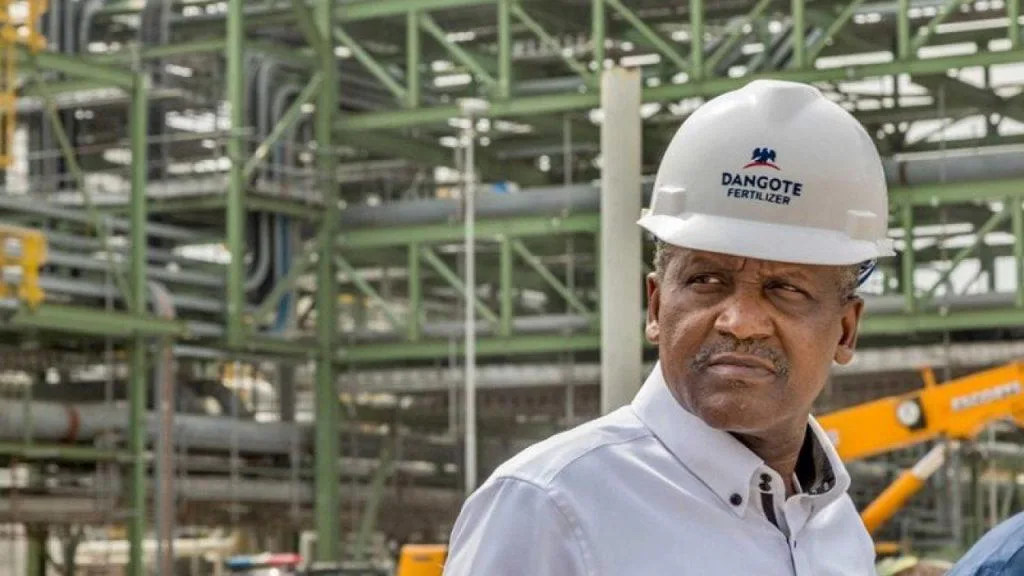
Aliko Dangote, President of the Dangote Group, has reaffirmed his commitment to boosting food security across Africa through large-scale fertiliser investments. He made this known while addressing journalists in Gode, Ethiopia's Somali region, during a high-profile visit hosted by Prime Minister Abiy Ahmed.
The Prime Minister personally received Dangote and accompanied him to inspect the site of the proposed fertiliser plant, where construction activities are already underway. Dangote noted that Africa's food insecurity challenges are largely due to limited access to key inputs. He said Africa holds immense agricultural potential, yet it's struggling with food insecurity due to limited access to fertiliser.
Africa's agricultural potential is immense, yet it continues to grapple with food insecurity. This is due to limited access to fertiliser. Dangote's investments aim to reverse this trend by boosting productivity, empowering farmers, and advancing a sustainable path to food self-sufficiency.
Dangote also announced a significant increase in the Group's investment in Ethiopia, rising from $2.5 billion to over $4 billion. The expanded scope includes critical infrastructure such as a 110-kilometre pipeline and a 120MW power plant. It also includes a polypropylene packaging facility and a two-million-tonne NPK blending plant, among other new components.
He described Ethiopia as a key strategic destination for Dangote Group's long-term investments. Our declared and signed investments in Ethiopia now exceed $4 billion. This makes Ethiopia the second-largest recipient of our investments in Africa, accounting for nearly nine per cent of our continental outlay between now and 2030.
Prime Minister Abiy Ahmed, in his remarks, described Dangote as a trusted partner. He commended the pace of work on the fertiliser project, which he said aligns with Ethiopia's broader development priorities. The project will significantly boost domestic fertiliser production and reduce dependence on imports. It will also provide critical support to millions of Ethiopian farmers.
The Dangote fertiliser initiative is widely seen as a transformative step toward reshaping Africa's agricultural landscape. It has the potential to enhance productivity, reduce import dependence, and drive inclusive economic growth across the continent. This investment will have a direct impact on the lives of farmers, creating jobs and stimulating local economies.
As a businessman, Aliko Dangote is known for his strategic investments in various sectors, including cement, sugar, and oil refining. His commitment to Africa's development is evident in his investments, which aim to create jobs, stimulate economic growth, and improve the standard of living for Africans. He's committed to Africa's development, and it's clear in his investments.
Dangote's vision for Africa's agricultural sector is ambitious, but it's achievable with sustained investment in fertiliser production and agricultural infrastructure. The continent has the capacity to feed itself and even export to the rest of the world. Our fertiliser investments across the continent are designed to unlock that potential and secure a prosperous future for our people. We can't achieve this without sustained investment, though.
The Ethiopian government has been working to improve the country's agricultural sector, which is a significant contributor to the country's GDP. The government has implemented various initiatives to boost agricultural production, including the provision of fertiliser subsidies to farmers. They're working to improve the sector, and it's showing results.
The Dangote Group's investment in Ethiopia is a significant boost to the country's agricultural sector, and it's expected to have a positive impact on the country's economy. The investment will create jobs, stimulate economic growth, and improve the standard of living for Ethiopians. It won't happen overnight, but it's a step in the right direction.
Aliko Dangote's commitment to boosting food security in Africa through fertiliser investments is a significant step towards achieving the continent's agricultural potential. His investment in Ethiopia is a testament to his commitment to Africa's development, and it's expected to have a positive impact on the lives of millions of people. It's a significant investment, and it won't go unnoticed.
Key Facts
- The Dangote Group is investing over $4 billion in Ethiopia.
- The investment includes a 110-kilometre pipeline, a 120MW power plant, and a two-million-tonne NPK blending plant.
- The fertiliser plant will create extensive employment opportunities and strengthen the industrial value chain.
- The project will significantly boost domestic fertiliser production and reduce dependence on imports.
- The Dangote Group's investment in Ethiopia is the second-largest in Africa, accounting for nearly nine per cent of the company's continental outlay between now and 2030.
The impact of this investment will be felt across the continent, as it will help to improve agricultural productivity, reduce poverty, and stimulate economic growth. It's a significant step towards achieving Africa's agricultural potential, and it's expected to have a lasting impact on the lives of millions of people. They're expecting big things from this investment.
The Dangote Group's investment in fertiliser production is a beacon of hope for the continent. It's a testament to the company's commitment to Africa's development, and it's expected to have a positive impact on the lives of millions of people. They're committed to making a difference, and it shows.
The Ethiopian government's support for the project is a significant factor in its success. The government has created a conducive business environment, which has attracted investors like the Dangote Group. They've made it easy for companies to invest, and it's paying off.
The Dangote Group's investment in Ethiopia is a win-win for both the company and the country. It will create jobs, stimulate economic growth, and improve the standard of living for Ethiopians. It's a significant step towards achieving Africa's agricultural potential, and it's expected to have a lasting impact on the lives of millions of people. They won't regret this investment, that's for sure.