

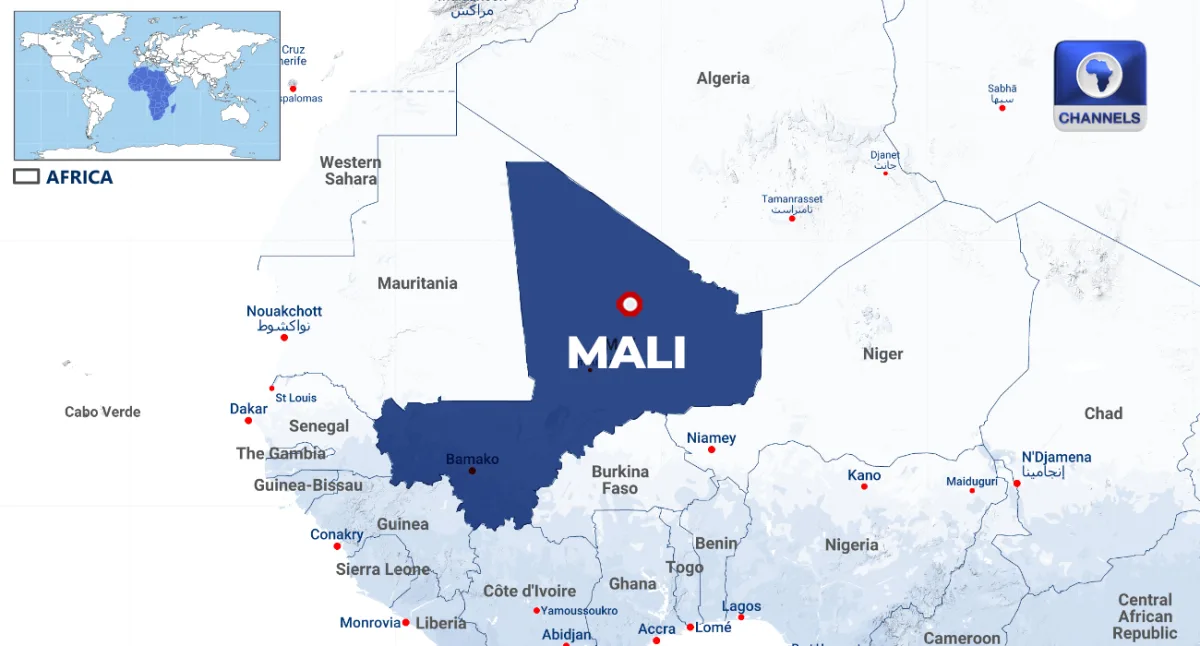
The Malian army's drone strikes on Sunday killed at least 10 civilians as they were preparing to celebrate a traditional mass wedding in the central region of San. This tragedy occurred amid a security crisis following large-scale coordinated attacks last month by Al-Qaeda-linked jihadists and Tuareg separatists.
It's not just the number of deaths that's shocking - it's the fact that these civilians were targeted as they were getting ready for a joyful occasion. A resident of the Tene locality where the strikes took place told AFP that '10 of our children' were killed. 'What was supposed to be a moment of joy in the village turned into immense sorrow,' he said, speaking on condition of anonymity.
The Malian army has been fighting against Al-Qaeda-linked jihadists and Tuareg separatists, who have been carrying out attacks in the country. In April, the Group for the Support of Islam and Muslims (JNIM) teamed up with Tuareg rebels of the Azawad Liberation Front (FLA) to target ruling junta positions. The coordinated deadly offensive on April 25 and 26 targeted strategic towns and killed the country's influential defence minister. A security source, who requested anonymity for safety reasons, confirmed the strikes.
The tragedy occurred as the villagers were preparing the second edition of this traditional collective wedding, a major cultural event for this community. The strikes targeted 'a procession of motorbikes following one another', he added. That's certainly what drew the attention of the drones.
'A wedding was about to take place when the drones killed at least 10 civilians. It's truly a time of mourning,' a local elected official told AFP. This quote highlights the devastating impact of the drone strikes on the community. The situation in Mali has been precarious since 2012, with the country facing a deepening security crisis driven by violence affiliated with al-Qaeda and the Islamic State group, as well as separatists and community-based criminal networks.
The recent attacks by Al-Qaeda-linked jihadists and Tuareg separatists have further destabilized the country. The Malian army will likely continue to fight against the jihadists and separatists, but the question remains - how can they avoid targeting civilians in the process? The international community will be watching closely to see how the situation unfolds.
- At least 10 civilians were killed in the drone strikes
- The strikes occurred in the central region of San
- The attack happened as villagers were preparing for a traditional mass wedding
- The Malian army has been fighting against Al-Qaeda-linked jihadists and Tuareg separatists
- The country has been facing a deepening security crisis since 2012
The Malian government will need to take steps to ensure that civilians are protected from such attacks in the future. They can't afford to keep making the same mistakes. This could involve improving intelligence gathering and ensuring that drone strikes are carried out with precision.
In the meantime, the people of Mali will be mourning the loss of their loved ones, and the international community will be calling for an end to the violence. It's a tragic reminder of the devastating impact of conflict on civilians. The people of Mali won't be able to celebrate joyful occasions like weddings without fear of being targeted by drone strikes.
As the situation continues to unfold, it's clear that the people of Mali deserve peace and stability. They deserve to be able to live their lives without fear of violence. The international community has a role to play in helping to bring about that peace and stability.
This could involve providing support to the Malian government to help them build their security capacity, as well as working to address the root causes of the conflict. It's a complex and challenging situation, but one that requires urgent attention. The people of Mali are counting on it.
The drone strikes have also raised questions about the use of drones in conflict zones. While drones can be an effective way to target enemy combatants, they can also pose a significant risk to civilians. In this case, it appears that the Malian army may have mistakenly targeted a group of civilians who were preparing for a wedding.
This highlights the need for careful planning and intelligence gathering before carrying out drone strikes. The use of drones in conflict zones is a controversial issue, with some arguing that they're a necessary tool for fighting terrorism, while others argue that they pose too great a risk to civilians.
The use of drones in conflict zones requires careful consideration and planning. This includes ensuring that targets are clearly identified and that civilians are protected from harm. The Malian government will need to investigate this incident and take steps to ensure that it doesn't happen again.
They'll need to review their procedures for carrying out drone strikes and ensure that they have adequate safeguards in place to protect civilians. It's a difficult and complex issue, but one that requires attention and action. The people of Mali deserve nothing less.
The drone strikes in Mali are a tragic reminder of the devastating impact of conflict on civilians. They highlight the need for careful planning and intelligence gathering, as well as the importance of protecting civilians from harm. They also highlight the need for a peaceful resolution to the conflict in Mali.
This will require the efforts of all parties involved, including the Malian government, the international community, and the armed groups. It won't be easy, but it's not impossible. With careful planning, diplomacy, and a commitment to protecting civilians, it's possible to bring about a peaceful resolution to the conflict in Mali.
The people of Mali are counting on it. The international community has a role to play in helping to make it happen. They can't afford to stand by and watch as the conflict continues to escalate. The people of Mali need their help, and they need it now.