

Ruto's Emotional Plea
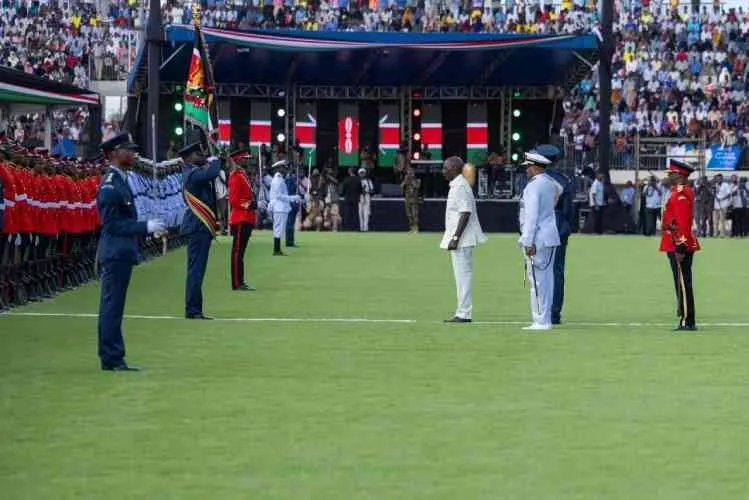
For the first time in 63 years of independence, Kenya's northern frontier took centre stage as President William Ruto apologized to residents of northern Kenya. Ruto delivered the rare and emotional apology during the 2026 Madaraka Day celebrations held at the newly constructed Wajir Stadium in Wajir County, a significant shift towards inclusive national development.
Thousands of residents, leaders, and dignitaries attended the event, which many saw as a symbolic gesture towards addressing decades of systemic exclusion and infrastructural neglect.
Poleni sana ndugu zetu. It was never meant to be this way, Ruto said, acknowledging the historical injustices affecting the region. This has been a very emotional moment for me.
The President explained that the relocation of Madaraka Day celebrations reflected his administration's commitment to ensuring no region is left behind. For the first time in 63 years of self-rule, a national celebration is being hosted here in Wajir, in the heart of northern Kenya, he said.
Ruto emphasized that the Constitution guarantees equal treatment for all citizens regardless of ethnicity, religion, or region. He reaffirmed his administration's commitment to fairness and inclusion.
Wajir Stadium Renamed
The President directed Wajir Stadium to be renamed Ahmed Khalif Wajir Stadium in honor of the late MP and former Cabinet minister, the late Ahmed Khalif Wajir. Wajir Stadium will now bear the name of the leader who contributed significantly to the region's development.
Historical Context
Madaraka Day, celebrated on June 1, marks the day Kenya gained independence from British colonial rule in 1963. The holiday is usually celebrated in major cities, but this year's event marked a significant departure from tradition.
Ruto noted that the occasion was not merely ceremonial, but a national statement of unity and equality. The event sent a powerful message that freedom and dignity are for all Kenyans, he added.
Reforms and Identity Cards
The President also defended ongoing reforms in the issuance of national identity cards, insisting they were designed to eliminate discrimination rather than weaken citizenship safeguards. He maintained that only legitimate Kenyan citizens would be issued with IDs.
Ruto cited the experiences of residents in northern Kenya, including Wajir, who have historically faced stringent vetting processes despite being citizens by birth. Every time Osman went to apply for an identity card, he was treated not as a Kenyan but as a suspect.
Ruto insisted that the reforms are necessary to stamp out the entrenched culture of suspicion and mistrust that has long plagued the issuance of national identity cards. This is not about weakening citizenship safeguards, but about making sure every Kenyan can access their rights without being treated as a second-class citizen.
Key Facts
- The 2026 Madaraka Day celebrations marked the first time in 63 years of independence that the national celebrations were hosted in Wajir County.
- The event was attended by thousands of residents, leaders, and dignitaries.
- Ruto apologized to residents of northern Kenya, acknowledging decades of systemic exclusion and infrastructural neglect.
- The President directed Wajir Stadium to be renamed Ahmed Khalif Wajir Stadium in honor of the late MP and former Cabinet minister.
- Ruto defended ongoing reforms in the issuance of national identity cards, insisting they were designed to eliminate discrimination rather than weaken citizenship safeguards.