

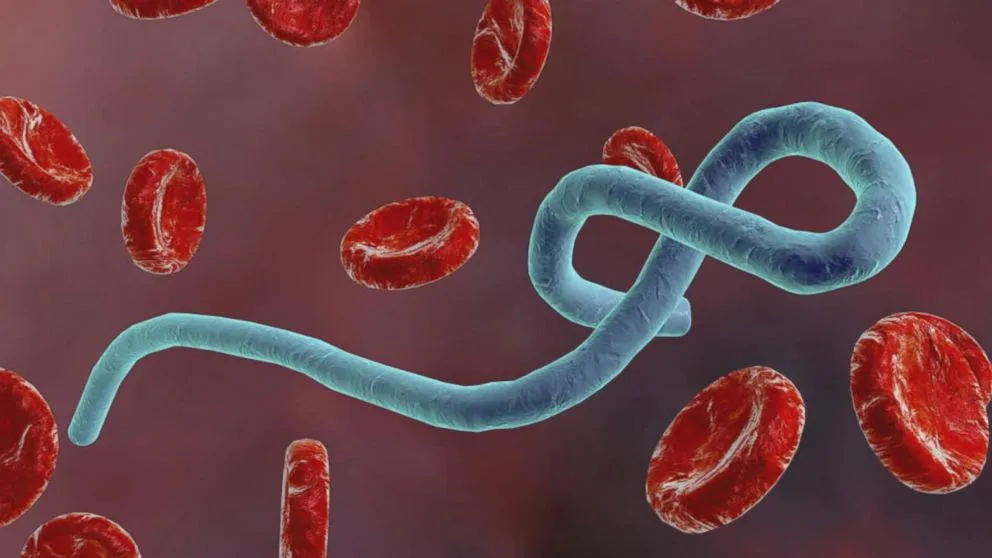
Ebola has now infected more than 1,000 people in the Democratic Republic of Congo in an outbreak that has spread to a third displacement camp and killed an 18-month-old girl. Congo's government confirmed that its death toll reached 254. The speed of its spread across three provinces of eastern Congo has prompted warnings from African health experts that the outbreak could eventually surpass the epidemic that killed more than 11,000 people across West Africa from 2014 to 2016.
A Congolese health report stated that the 18-month-old baby was tested for Ebola on June 14 in the Hungbe displacement camp and died before the positive result came back the next day. The report said the baby had developed a fever more than a week earlier and was carried on foot to two different health centres and given antibiotics before finally getting tested. At least 107 people came into contact with her, including family members, healthcare workers and people from other camps, the report added.
Dr Emmanuel Musingusi Bulemu, a Congolese health official in the surrounding Nizi zone, said there was a shortage of facilities to isolate patients. “We need to separate these patients from the community because they risk infecting others, but where can we put them?” he added. There have also been two confirmed cases in Kpangba, another displacement camp in the same area housing people who have fled decades of conflict between armed groups, militias and the army. At least 30 people have died in a camp in another displacement site in Bunia. According to preliminary data from the UN children’s agency UNICEF, so far, nearly a fifth of confirmed cases have been children. A much smaller number of cases have also been reported in neighbouring Uganda.
The Democratic Republic of Congo has struggled to contain the Ebola outbreak, with many healthcare facilities overwhelmed by the number of patients. The government has called for international assistance to help combat the disease, but so far, there has been a slow response. The outbreak has also highlighted the challenges of providing healthcare in areas where there is ongoing conflict and displacement.
The speed of the outbreak's spread has raised concerns that it could eventually surpass the 2014-2016 West Africa epidemic, which killed over 11,000 people. The Democratic Republic of Congo's neighbours, including Rwanda and Uganda, have been placed on high alert, with health officials scrambled to track the movement of people carrying the disease.
The Ebola outbreak in the Democratic Republic of Congo has been exacerbated by the presence of several armed groups and militias in the region, which have been accused of hindering the work of health officials. The conflict has also led to the displacement of many people, who are now living in overcrowded camps with limited access to basic services, including healthcare.
In a bid to contain the outbreak, the government has established several Ebola treatment centres, but many of these facilities have been overwhelmed by the number of patients. The government has also called for international assistance to help combat the disease, including the deployment of medical personnel and equipment.
The Ebola outbreak in the Democratic Republic of Congo has highlighted the need for improved healthcare infrastructure in the country, particularly in areas where there is ongoing conflict and displacement. The government has also been accused of not doing enough to address the root causes of the outbreak, including poverty and lack of access to basic services.
As the situation continues to deteriorate, the international community is being called upon to provide more support to the Democratic Republic of Congo in its fight against Ebola. The World Health Organization (WHO) has issued a warning that the outbreak has the potential to spread further, and has called for increased vigilance and preparedness.
The WHO has also emphasized the need for improved infection control measures, including the use of personal protective equipment (PPE) and the proper disposal of medical waste. The organization has also highlighted the importance of engaging local communities in the response efforts, including providing education and awareness on Ebola prevention and treatment.
In a related development, the African Union has called for a meeting of health ministers to discuss the Ebola outbreak and possible ways to contain it. The meeting is expected to take place in the coming days, with representatives from several African countries attending.
Key Facts
• Over 1,000 people have been infected with Ebola in the Democratic Republic of Congo. • The disease has killed 254 people in the country. • The outbreak has spread to a third displacement camp. • An 18-month-old girl was among the latest victims, dying before her Ebola test results came back positive. • At least 107 people came into contact with the baby, including family members and healthcare workers. • The WHO has warned that the outbreak has the potential to spread further. • The African Union has called for a meeting of health ministers to discuss the Ebola outbreak. • The Democratic Republic of Congo has struggled to contain the outbreak, with many healthcare facilities overwhelmed by the number of patients. • The government has called for international assistance to help combat the disease. • A third of confirmed cases have been children, according to preliminary data from UNICEF. • A much smaller number of cases have also been reported in neighbouring Uganda.