

The single sharpest fact in one or two punchy sentences. Who did what, where, when, and why it matters. Not a summary of everything — the one thing that makes someone stop scrolling. A reader who only reads this paragraph must understand what happened.
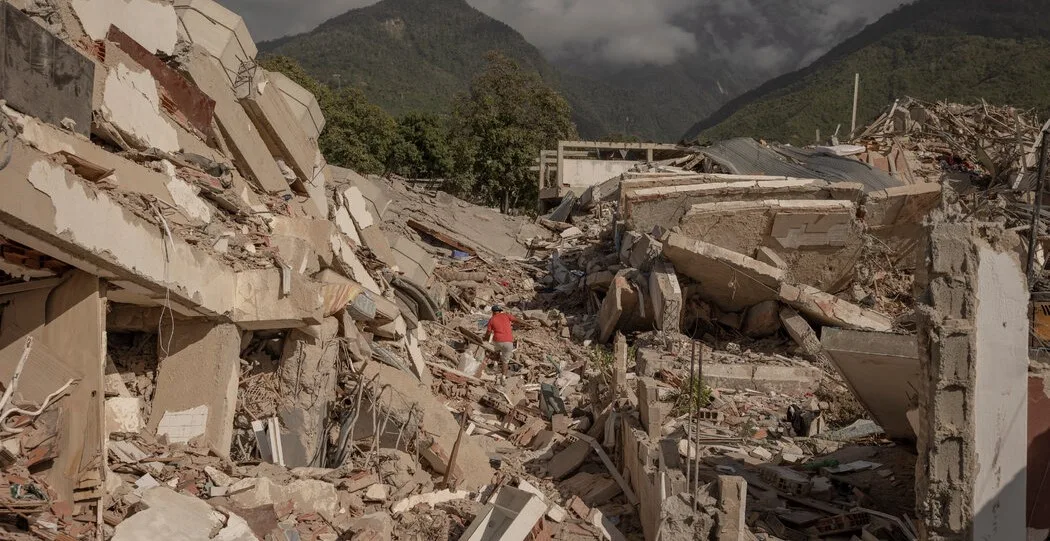
A 7.2 and 7.5 magnitude earthquake struck Caracas, the capital of Venezuela, and the southeast of Yumare last week. The disaster turned entire residential neighbourhoods into piles of rubble, trapping thousands beneath the debris. Over 10,500 people have been injured.
According to the US Geological Survey (USGS), there is a 30 per cent chance that fatalities will surpass 100,000. The agency estimates a 44 per cent probability that the death toll will exceed 10,000. It also warned of a significant risk of landslides and ground liquefaction.
The rescue team involved about 30,000 Venezuelan emergency workers and 2,700 foreign experts. Despite the efforts, authorities believe that tens of thousands of people are still missing. The USGS stated that the disaster is likely to be widespread, and strong aftershocks could still occur. Interim President Delcy Rodríguez said that operatives have recovered people alive, but operations are not being suspended.
The World Health Organisation has warned of the risk of disease outbreaks due to the massive amount of debris generated. Preliminary estimates indicate that the disaster produced around 1.2 million tons of debris. La Guaira state currently faces severe food shortages, widespread disruptions to basic services, and communications outages.
The US Geological Survey was right in warning of a 30 per cent chance that fatalities could surpass 100,000. The earthquake-induced phenomenon of ground liquefaction, which occurs when water-saturated soil loses its strength and behaves like a flowing mass, has been predicted by the agency.
According to Reuters, 24 countries have sent more than 500 tonnes of supplies, 2,700 rescue and support personnel, and 86 search teams with dogs to aid in the rescue efforts. The disaster has generated an outpouring of international assistance. The Venezuelan government and international partners are working together to provide critical aid.
The World Health Organisation also warned of the risk of disease outbreaks due to the massive amount of debris generated. Preliminary estimates indicate that the disaster produced around 1.2 million tons of debris.
In La Guaira state, where the disaster was most devastating, the state government has declared a state of emergency. The declaration gives authorities the power to impose curfews, restrict movement, and distribute aid. The state government has also established emergency shelters to provide housing for those who have been displaced.
As the rescue efforts continue, the international community remains concerned about the humanitarian needs on the ground. Aid groups and governments are working to provide emergency assistance to those affected by the disaster.
The international community has come together to provide aid to Venezuela, with over $100 million in aid pledged so far.
The death toll from the earthquake in Venezuela is expected to rise in the coming days.
La Guaira state is currently facing severe shortages. Food, water, and medical supplies are scarce. The state government has warned of a significant risk of disease outbreaks due to the lack of access to clean water and sanitation.
Aid groups are working to distribute life-saving supplies to those in need.
In the coming days and weeks, the focus will be on providing aid and support to those affected by the disaster.
The situation in La Guaira state is dire. Emergency responders are racing against time to rescue those trapped beneath the rubble.
The international community has come together to provide aid and support to Venezuela.
Interim President Delcy Rodríguez has called for calm and urged citizens to stay safe.
The situation is evolving, and we will continue to provide updates as more information becomes available.
'We have recovered people alive, and therefore operations are not being suspended,' Rodríguez said.
The US Geological Survey has issued a series of warnings and alerts throughout the crisis.