

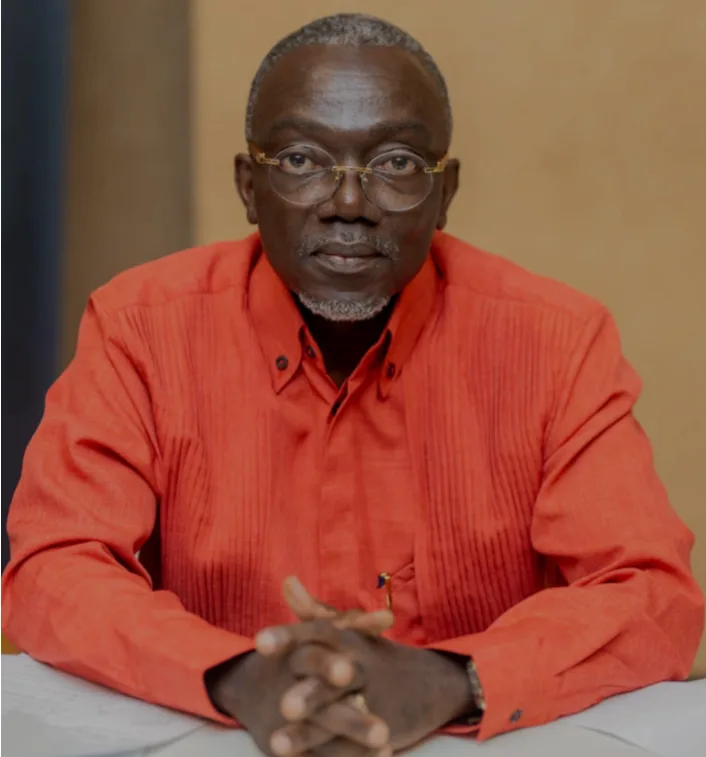
Africa's facing a crisis of impatience with nation building, according to Ing. Prof. Douglas Boateng, a renowned international industrial, manufacturing, and production systems engineer. He argues that the continent's tendency to uproot young trees because they haven't yet become forests is quietly trapping Africa in an endless journey of restarts. This journey's marked by repeated disappointments and circles that create movement without meaningful arrival.
Ing. Prof. Douglas Boateng is a Chartered Director and Chartered Engineer with a wealth of experience in governance, industrialisation, and supply chain strategy. He's also a Fellow of the Institute of Directors UK and the Ghana Institution of Engineering. His work has shaped boardroom thinking, supply chain transformation, and industrialisation across the continent and globally.
The problem, according to Ing. Prof. Douglas Boateng, is that Africans are increasingly expecting governments to resolve decades-long challenges within single election cycles. This approach is equivalent to demanding fruit before roots have fully formed. He cites the example of South Korea, which emerged from war with severe poverty and weak industrial capacity in the 1950s.
South Korea transformed itself into one of the world's largest economies through disciplined educational investments and continuity of national planning across decades.
Nations become extraordinary not because they think quickly, but because they think beyond themselves. Many successful countries deliberately invested in generations they wouldn't personally see benefit from.
Ing. Prof. Douglas Boateng notes that many African countries struggle to institutionalise national development priorities beyond electoral transitions. Projects initiated under one administration may slow under another. Long-term programmes are redesigned repeatedly. This approach leads to expensive consequences, including paused railway systems. It also leads to lost industrial momentum and stalled institutional reforms.
The solution, according to Ing. Prof. Douglas Boateng, lies in changing the mindset through which societies understand nation building. This requires a collective shift towards patience, grounded in informed understanding. Patience shouldn't mean accepting incompetence or inefficiency; rather, it means understanding that some transformations naturally require time. It's also important that progress remains visible.
Ing. Prof. Douglas Boateng also emphasizes the importance of strengthening institutions above personalities. Development often becomes excessively attached to individuals, but strong institutions sustain destinations. He cites the example of Singapore, which has become one of the world's most efficient societies. Singapore achieved this through long-term planning and institutional discipline.
In Ghana, for instance, the government has initiated several projects aimed at transforming the country's economy and improving the lives of its citizens. However, the challenge of impatience with nation building remains a significant hurdle. Ing. Prof. Douglas Boateng's warning is particularly relevant in this context, as Ghana seeks to balance its desire for rapid development with the need for patient, long-term planning.
The Ghanaian government has launched initiatives such as the One District, One Factory programme, aimed at promoting industrialisation and job creation. However, the success of such initiatives will depend on the government's ability to institutionalise national development priorities. They must ensure continuity beyond electoral transitions.
Ing. Prof. Douglas Boateng's warning about Africa's endless cycle of restarts is a timely reminder of the need for patience and long-term thinking in nation building. As Ghana and other African countries seek to develop and transform their economies, they must balance their desire for rapid progress with the need for patient, disciplined, and accountable leadership. They can't afford to prioritize short-term gains over long-term sustainability.
Key Facts
- Ing. Prof. Douglas Boateng is a Chartered Director and Chartered Engineer with experience in governance, industrialisation, and supply chain strategy.
- He's a Fellow of the Institute of Directors UK and the Ghana Institution of Engineering.
- South Korea transformed itself into one of the world's largest economies through disciplined educational investments and continuity of national planning.
- Singapore has become one of the world's most efficient societies through long-term planning and institutional discipline.
- The Ghanaian government has launched initiatives such as the One District, One Factory programme to promote industrialisation and job creation.