

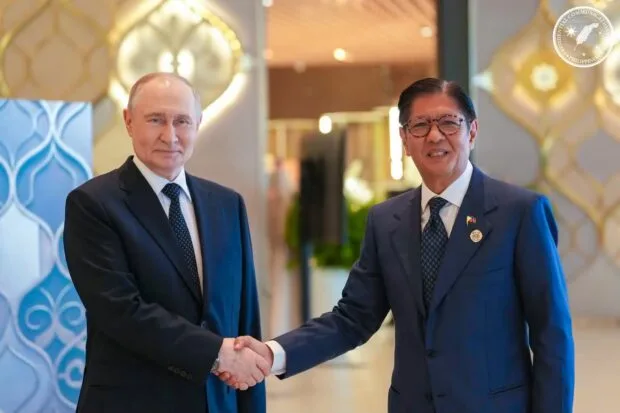
The Philippines is willing to collaborate with Russia in developing the country’s nuclear energy program, according to President Ferdinand Marcos Jr. Speaking to Russia Today (RT) during his working visit to Kazan, Russia, Mr. Marcos said that the Philippines is assessing emerging nuclear technologies, with particular interest in small modular reactors (SMRs).
“I think Russia is the most advanced, especially when we talk about small modular reactors, which is particularly interesting for the Philippines because we have 7,600 plus islands and it is impossible for us to build submarine cables to every place that needs power,” Mr. Marcos said.
SMRs, with capacities ranging from 70 to 300 megawatts, could provide sufficient power supply for a single island and remote areas and can be expanded based on future demand. This is seen as a viable option for the Philippines, which has struggled with providing reliable electricity to its remote areas.
With the Philippines looking to diversify its energy mix, the collaboration with Russia is seen as a strategic move. Russia has been at the forefront of nuclear energy development, with a proven track record of building and operating nuclear power plants.
The Philippines has been seeking to increase its use of renewable energy, particularly solar and wind power. However, the limited availability of these resources in some areas has made it difficult to provide reliable electricity.
In recent years, the Philippines has been looking to nuclear energy as a viable option to meet its increasing energy demands. The country has identified several sites for potential nuclear power plants, including the Bataan and Cebu provinces.
The collaboration with Russia is seen as a significant step in the Philippines' nuclear energy program. The two countries have been engaging in talks on the project, with Russia offering to provide technical assistance and expertise.
According to Mr. Marcos, the Philippines is eager to work with Russia on the project, and he expressed optimism about the prospects of the partnership.
Marcos said.
Key Facts
• 7,600 plus islands in the Philippines • Capacity of small modular reactors (SMRs) ranges from 70 to 300 megawatts • The Philippines has struggled with providing reliable electricity to remote areas • Russia has been at the forefront of nuclear energy development • The Philippines has identified several sites for potential nuclear power plants • The country has been seeking to increase its use of renewable energy • The Philippines has been looking to nuclear energy as a viable option to meet its increasing energy demands