

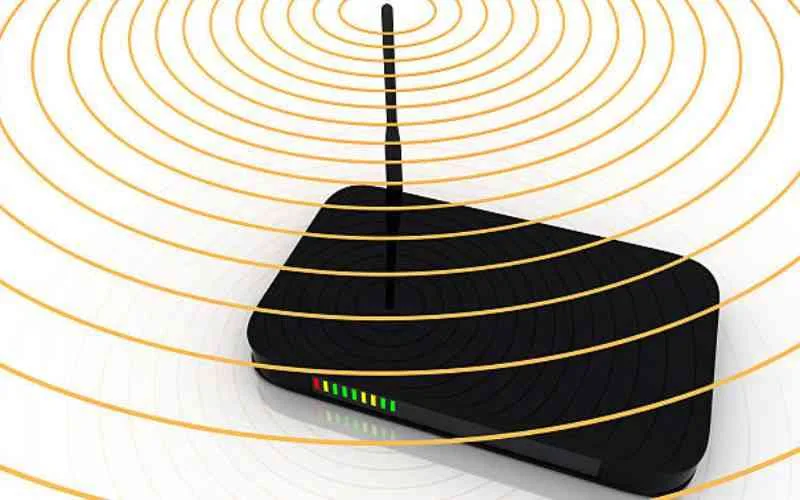
Your home or neighbourhood WiFi router may soon double as a highly accurate surveillance tool. Researchers have revealed a security loophole where hackers or governments can hijack wireless signals to identify and track people without their permission. They can do this even if those people have turned their phones completely off.
Most people think their privacy is safe as long as they toggle their Bluetooth or power off their mobile devices. That assumption is now officially dead. The signals that allow you to scroll through TikTok in your bedroom are being weaponised to create an invisible map of your body. Because these routers constantly send out radio waves to detect connected devices, they can now bounce these signals off your skin and clothes to track your presence in a room.
This technology doesn't require you to be a tech genius to deploy. Anyone with enough interest in your private business can intercept these ambient waves. It changes how we look at smart homes in estates across Nairobi. If you have a router installed in your hallway, you've essentially invited an invisible watcher into your space.
Radio frequency technology has evolved to a point where it can distinguish between the unique way different human bodies reflect signals. When you move through a room, you disrupt the signal path of your router. Software can now capture these disruptions and translate them into a high-resolution silhouette of your movement. You don't need a camera to see someone; you just need a signal that is interrupted by a human mass.
This method is terrifying because it bypasses the standard digital walls we build around our lives. We've spent years worrying about hackers stealing our M-Pesa pins or accessing our emails, but this is a physical form of intrusion. The "smart home" trend is effectively a surveillance grid that we're paying to maintain ourselves.
Security analysts suggest that this vulnerability exists because routers were built for convenience, rather than combat-grade security. The manufacturers prioritised speed and connectivity, and they've left the door wide open for these unintended signal interceptions. Fixing this isn't as simple as updating your firmware. The flaw is baked into the very way WiFi operates globally.
The ability to detect human presence through walls isn't the stuff of spy movies anymore; it's a feature of the hardware currently sitting on your bookshelf.
In the context of local security, this poses a headache for everyone from activists to high-profile business people. If your router can be used to track if you're home or how many people are in your office, the risk of targeted physical breaches increases. It turns your signal footprint into a map that can be tracked, logged, and sold to the highest bidder.
For the average Kenyan, this is just another layer of 'Nairobi ni different' where the digital tools we rely on are turning against us. We're moving toward a future where being off the grid is almost impossible. Even if you turn off your phone and wrap it in foil, the router in the corner of your house is still painting a picture of your movements to anyone listening to the frequencies.