

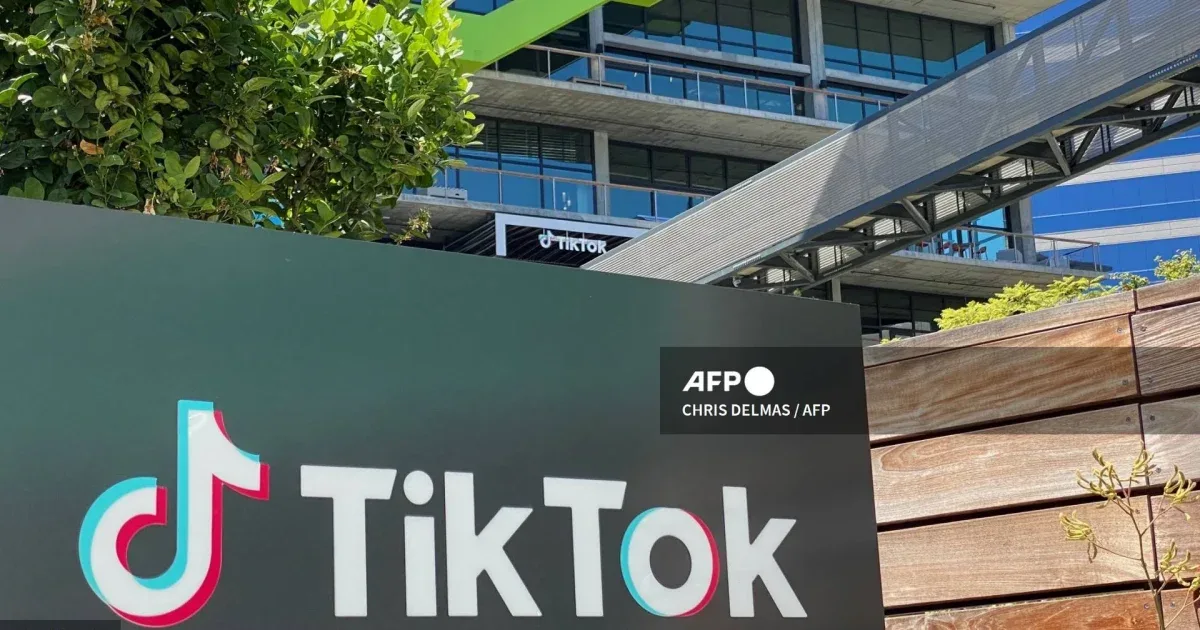
TikTok has agreed to pay Alabama at least $100 million and introduce significant restrictions for its teen users, including daily time limits and nighttime access controls. This settlement, announced on Friday, avoids a trial that was set to begin next week. The lawsuit, filed by Alabama, accused TikTok of misleading parents about the effectiveness of its tools designed to protect children from harmful content.
Alabama's Attorney General, Steve Marshall, expressed relief for parents, stating, "Tonight, they can rest easier knowing real protections are in place to shield their children from the dangers of social media addiction." The $100 million payment is a baseline, with the potential for TikTok to pay up to $300 million if other states agree to similar terms. This case is part of a larger wave of legal action across the United States targeting social media companies for the alleged harm their platforms cause young users.
This agreement with TikTok closely mirrors a recent settlement reached by Meta, the parent company of Facebook and Instagram. Meta agreed to pay $18 billion to settle claims that it designed its platforms to be addictive for children. The safety provisions mandated for TikTok include a daily time limit of two hours for teen users and a lockout from midnight to 6:00 am. Notifications will also be suspended during school hours.
The settlement also mandates stronger age verification processes, a ban on beauty filters for teenagers, and the option for young users to choose a content feed that isn't personalised. There's a conditional clause, too. If other major platforms also agree to extend their nighttime restrictions from 10:00 pm to 7:00 am, TikTok will do the same. This signifies a broader industry push for safer digital environments for minors.
In response to the settlement, a TikTok spokesperson stated, "TikTok’s priority has always been fostering a safe and positive space where people can be creative, discover what they love, and connect with their community." They added that this agreement "builds on our commitment and core objective to continually enhance our robust safety tools to protect teens."
However, this isn't the end of TikTok's legal battles. Over a dozen other states, including major ones like California and New York, are still pursuing active lawsuits against the company. TikTok has previously settled cases that were nearing trial. These included a significant lawsuit in Los Angeles brought by a young woman and a separate case involving a school district in Kentucky.
In contrast to TikTok's settlement approach, Meta has chosen to fight some legal challenges in court, often with costly outcomes. For instance, a jury in New Mexico ordered Meta in March to pay $375 million after finding that the company had misled the public about the safety of its platforms for children. In the same month, another Los Angeles jury found Meta and Google’s YouTube negligent in the case of a young woman who claimed she became addicted to social media as a child. That jury awarded her $6 million.
Going to trial would have subjected TikTok to intense public scrutiny regarding its internal safety practices. It could have potentially exposed sensitive company documents and executive testimonies in open court. Alabama first filed its lawsuit against TikTok and its Chinese parent company, ByteDance, in April 2025. The initial claim alleged that the app was designed to be as addictive as a sophisticated gambling machine.
The state later refined its case, focusing on violations of Alabama's Deceptive Trade Practices Act. The core of this narrowed claim was whether TikTok had misrepresented the true effectiveness of its safety features, such as "Restricted Mode" and "Kids Mode." According to the lawsuit's filing, despite TikTok's assurances, accounts using these modes were quickly shown content related to suicide, self-harm, eating disorders, alcohol, and sex.
- Minimum payment to Alabama: $100 million
- Potential total payment to states: Up to $300 million
- Daily time limit for teens: 2 hours
- Nighttime restriction: Midnight to 6:00 am (conditional extension to 10:00 pm
- 7:00 am)
- Lawsuit filed by Alabama: April 2025