

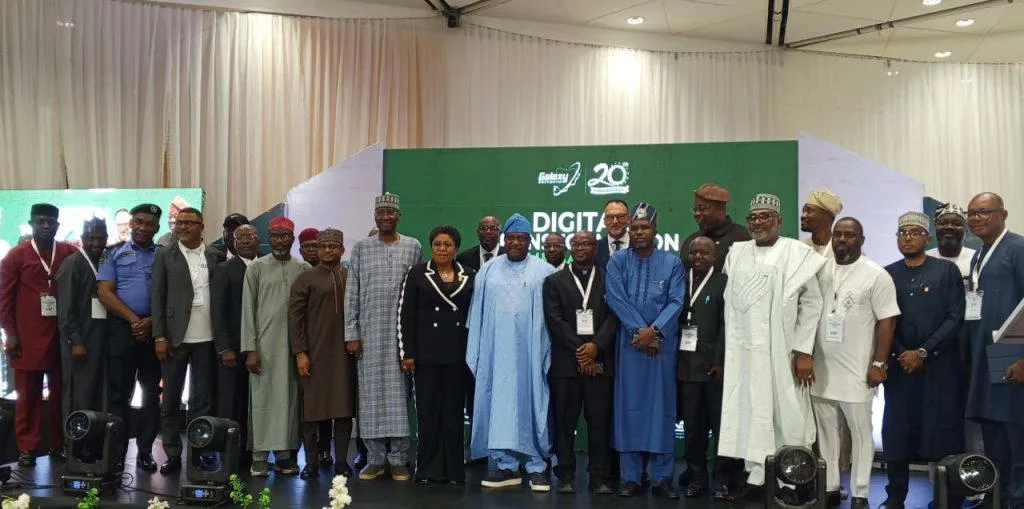
If Nigeria's digital future were a building, the foundation would still be under construction. That was the message from the Secretary to the Government of the Federation, Dr George Akume, at a summit in Abuja on Wednesday.
Speaking at the Digital Transformation Summit organised by Galaxy Backbone Limited to mark its 20th anniversary, Akume said digital infrastructure isn't optional anymore — it's the backbone of economic growth and public service delivery.
"The future of government will be digital, the future of economic competitiveness will be digital, the future of public service delivery will be digital, and the future of national prosperity will increasingly depend on how effectively we leverage technology to improve the lives of our people," he said.
The summit, held under the theme "Powering Nigeria's Digital Future," brought together government officials, private sector leaders, and tech experts to discuss the country's digital transformation journey.
Akume noted that Galaxy Backbone has evolved over the past two decades into a key national asset that supports digital services across government institutions. But he warned that vision alone isn't enough.
"Beyond vision, Nigeria's digital future requires infrastructure, collaboration, innovation and strong institutions that can deliver results at scale," he said. He urged states, agencies, and the private sector to deepen partnerships and speed up the adoption of digital solutions.
Galaxy Backbone's Managing Director and CEO, Professor Ibrahim Adeyanju, echoed that sentiment. He said digital transformation is now a core driver of economic growth and national development — not just about technology.
"Across the globe, nations are investing heavily in digital infrastructure because they recognise a simple truth: those who lead digitally will lead economically," Adeyanju said.
He added that Nigeria has strong potential because of its large population and growing innovation ecosystem. But the next phase of growth will depend on stronger collaboration among government, the private sector, and other stakeholders to build a connected ecosystem.
Senator Shuaib Afolabi Salisu, Chairman of the Senate Committee on ICT and Cybersecurity, said Nigeria's legal framework must catch up with the realities of a digital economy. He disclosed that the National Assembly is working on new legislation to give legal backing to digital records and transactions, as well as amendments to strengthen cybersecurity laws.
But Salisu also warned against fragmented systems. He urged government institutions to build an integrated digital infrastructure that allows seamless data sharing and efficient service delivery across agencies.
"The future of government will be digital, the future of economic competitiveness will be digital, the future of public service delivery will be digital, and the future of national prosperity will increasingly depend on how effectively we leverage technology to improve the lives of our people."
Galaxy Backbone was established in 2006 as a government-owned company to provide shared ICT infrastructure and services to federal ministries, departments, and agencies. Over the years, it has grown to support digital services across multiple sectors.
The summit marks a milestone for the agency, but the speakers made it clear that the real work lies ahead. Without the right infrastructure, legal backing, and collaboration, Nigeria risks falling behind in the global digital race.