

The single sharpest fact in one or two punchy sentences. Who did what, where, when, and why it matters. Not a summary of everything — the one thing that makes someone stop scrolling. A reader who only reads this paragraph must understand what happened.
Elon Musk's xAI has installed 59 unpermitted natural gas turbines near predominantly Black communities in Tennessee and Mississippi, emitting pollutants linked to lung disease. The project is part of the growing demand for AI data centers.
The xAI turbines are among scores of off-grid power plants for data centers proposed or under construction around the country. Local authorities often fast-track approvals in just weeks or months, without the years of environmental studies and public hearings typically required for such power generation projects that connect to the grid, Reuters has reported.
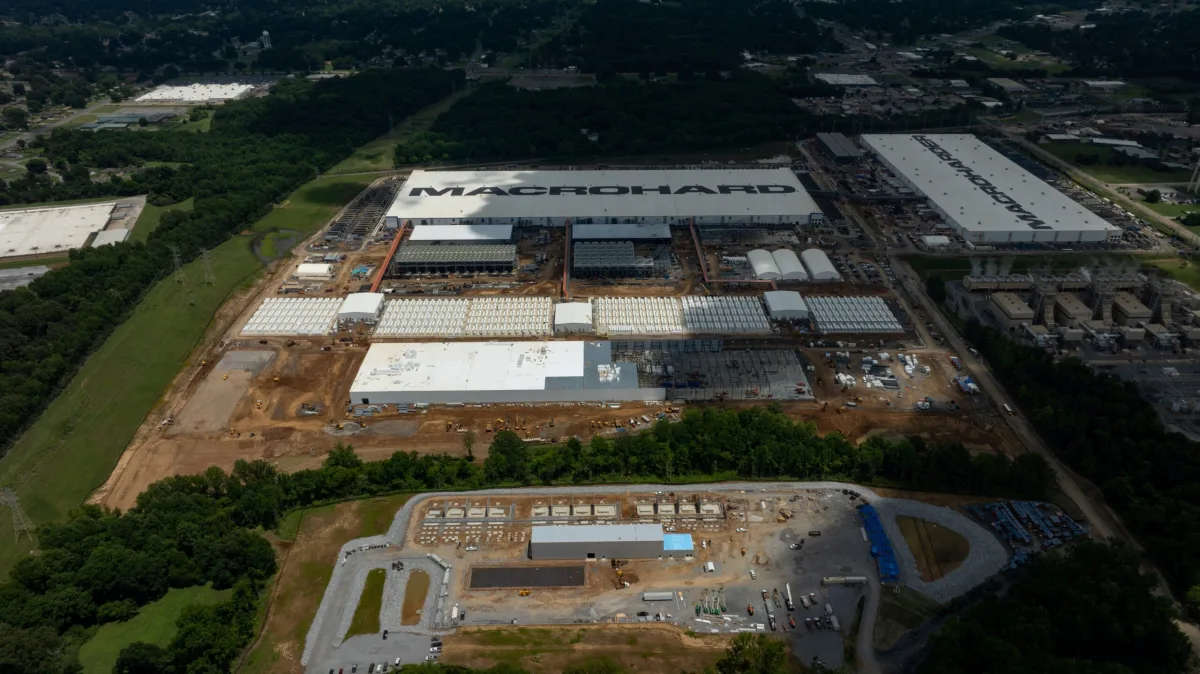
A drone view shows the xAI Colossus 2 “Macrohard” data center in Southaven, Mississippi, US, May 30, 2026. Kevin Wurm/Reuters
Mississippi regulators in March issued a permit for permanent turbines for Colossus 2, allowing construction of 41 gas-fired turbines. The approval came three weeks after the state’s only public hearing on the project.
The xAI cluster of temporary turbines in Mississippi is already among the biggest off-grid data center power projects, according to Ben King, an analyst with think tank Rhodium Group, who reviewed the Reuters analysis. “This looks to be an unprecedented level of behind-the-meter gas being installed in one place,” he said, referring to off-grid natural gas plants serving just one customer.
The communications, obtained through a Reuters public records request, included emails between Trinity Consultants, representing xAI and subsidiary MZX Tech, and the Mississippi Department of Environmental Quality (MDEQ). xAI did not respond to Reuters’ request for comment.
xAI's turbines are part of a widening environmental justice battle over whether the AI boom is adding disproportionate pollution burdens to communities of color. Civil rights groups including the NAACP and the Southern Environmental Law Center sued xAI in April to halt their operations, arguing the turbines produce emissions subject to the federal Clean Air Act and shouldn’t be operated without permits.
“They contend the turbines are polluting homes, schools and churches in historically Black communities,” Patrick Anderson, an attorney with the Southern Environmental Law Center, said in a statement. “The scale of it is astonishing,” he added. “This is an absolutely huge Clean Air Act violation that threatens public health.”
Securing a Clean Air Act permit would have exposed xAI’s project to extensive review and public comment, potentially taking years. Mississippi environmental regulators and xAI have argued in court filings that the turbines are exempt because they are “mobile” and intended to operate onsite for less than a year.
“MDEQ has determined that portable/temporary turbines do not require an air permit,” the agency said in a statement to Reuters.
The US Environmental Protection Agency said in January 2026 that even temporary turbines exceeding emissions thresholds must obtain permits. The agency, however, told Reuters it’s considering changes allowing “regulatory flexibilities” for portable units while continuing to protect public health.
The US Justice Department weighed in on the lawsuit in a June 15 filing, saying that restricting the turbines could threaten national security interests because xAI’s systems support US military operations, including operations involving Iran.
The xAI cluster of temporary turbines in Mississippi is already among the biggest off-grid data center power projects, according to Ben King, an analyst with think tank Rhodium Group, who reviewed the Reuters analysis. “This looks to be an unprecedented level of behind-the-meter gas being installed in one place,” he said, referring to off-grid natural gas plants serving just one customer.