

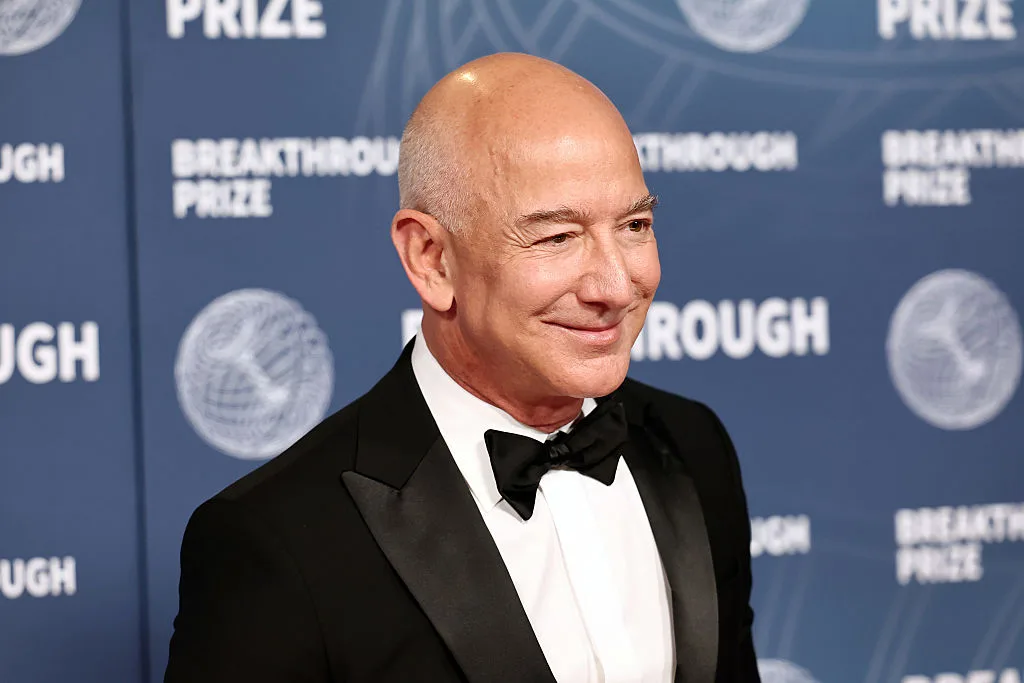
Jeff Bezos just put his money where his mouth is — again. His physical AI startup Prometheus raised $12 billion at a $41 billion valuation, the company announced Thursday.
The new funds came from Bezos himself, plus JPMorgan Chase, Goldman Sachs, and BlackRock. That's a who's who of Wall Street betting that the next big AI wave isn't in chatbots — it's in robots that can actually build and fix things.
Prometheus was co-founded by Bezos and Vik Bajaj, who previously co-founded Verily, Google's life sciences unit. The startup's goal: create what they call an "artificial general engineer" — AI that can design, build, and repair physical objects, not just generate text or images.
Think of it as ChatGPT for the physical world. Instead of writing poems, this AI would figure out how to assemble a car engine, fix a broken pipe, or design a better warehouse layout. Then it would tell a robot — or a human — exactly what to do.
$12 billion is an eye-popping amount even by AI standards. For context, OpenAI raised $6.6 billion in its last round. Anthropic raised around $8 billion. Prometheus's round is one of the largest ever for a startup, period.
But the valuation — $41 billion — suggests investors believe the company is already worth more than many publicly traded companies. That's a lot of faith in a product that doesn't fully exist yet.
The idea is that while AI has gotten great at language and images, it's still terrible at the physical world. A language model can write a recipe, but it can't chop an onion. Prometheus wants to bridge that gap.
Bezos has been investing in space, media, and AI for years. But this is his most direct bet yet on the idea that the next trillion-dollar industry will be AI that touches physical objects, not just screens.
Bajaj, meanwhile, brings deep science and health tech experience from Verily, but Prometheus is a sharp pivot into industrial automation. The company hasn't revealed a specific product yet, but the size of the raise suggests it's building something massive.
The money will likely go toward hiring engineers, building data centers, and testing robots in real factories. Prometheus hasn't said which industries it will target first, but manufacturing, logistics, and construction are the obvious candidates.
If Prometheus succeeds, it could reshape the global economy. If it fails, $12 billion will go down as one of the biggest venture capital losses in history.
Either way, Bezos is betting that the next big thing isn't a better chatbot — it's a machine that can actually build your house.