

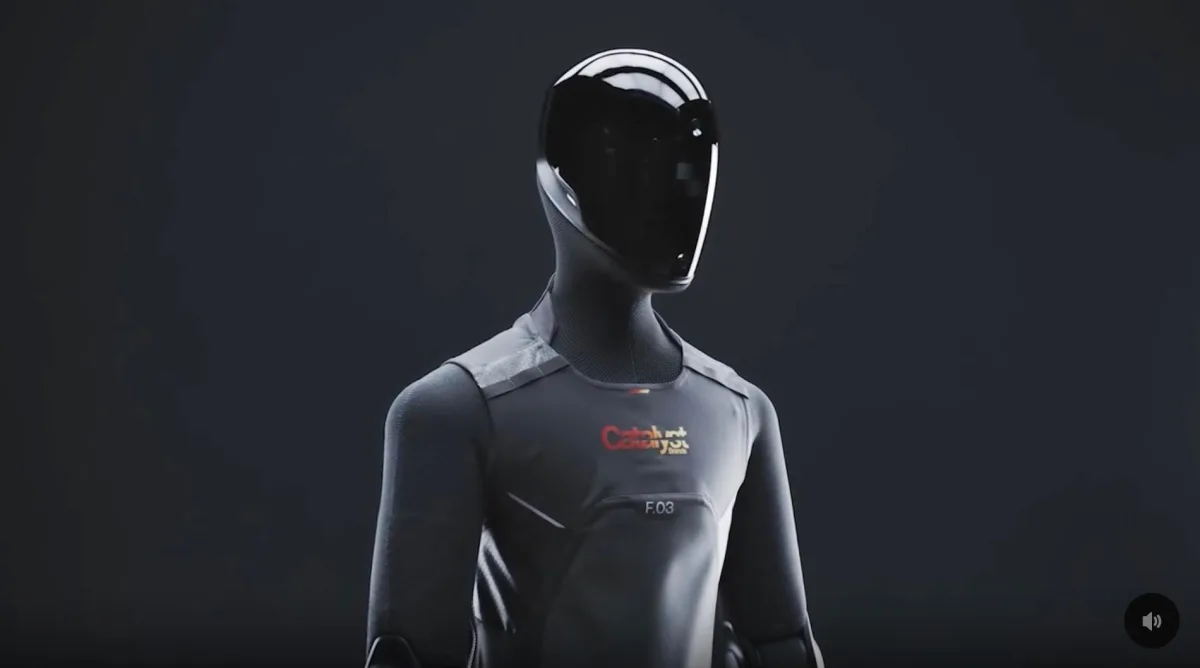
Your local JCPenney or Aéropostale might soon have a worker that doesn’t take lunch breaks, doesn’t ask for a raise, and definitely won’t complain about the air conditioning. Catalyst Brands, the parent company holding retail staples like Brooks Brothers, Eddie Bauer, Lucky Brand, and Nautica, is partnering with the robotics firm Figure to deploy humanoid robots in its massive Nevada distribution center.
This isn’t just some tech demo. Catalyst Brands pulls in around $9 billion in revenue and manages a small army of 60,000 employees. They’re essentially betting that a machine can handle the physically grueling parts of moving boxes and organizing warehouses better than a person can. Brookfield, an asset management powerhouse, owns half of Catalyst and poured money into Figure’s $1 billion Series C funding round. This deal creates a direct line from investor boardrooms to the warehouse floor.
"This agreement marks the first commercial bridge between Figure and a portfolio company of Brookfield," the robotics company stated in its official release.
Figure is moving faster than a Lagos Danfo driver in light traffic. Back in November 2024, Peggy Johnson, the CEO of Agility Robotics, told the world that her company’s robot, Digit, was the only one on the planet actually earning a paycheck. Now, we have Figure 02 machines shipping to customers and China’s Agibot G2 working on high-speed electronics lines. The race to replace human labor with steel and circuitry has officially hit top gear.
While the company insists these robots are meant for "repetitive, physically demanding tasks," the court of public opinion on platforms like Threads has already delivered a guilty verdict. Customers are threatening to boycott stores that adopt the technology. They’re comparing the shift to the hated self-checkout kiosks that forced shoppers to become unpaid cashiers. One user, Amy Kemper, put it bluntly: "I swear you learned nothing from self checkouts."
There’s a massive disconnect here. Tech companies sell these machines as tools to liberate humans from boring, back-breaking labor, allowing workers to pivot to "higher-value" roles. For the average worker who sees their job title disappearing, that transition feels more like a pink slip than a promotion. If the robots can sort clothes and stack boxes for 24 hours straight without overtime pay, the bottom line will always win over human sentiment.
- Catalyst Brands oversees roughly 1,800 physical retail locations across its various banners.
- Figure’s latest funding round valued the robot manufacturer at a staggering $39 billion.
- The deployment site in Reno, Nevada, acts as the primary hub for the company's regional logistics network.
- The exact number of robots hasn't been disclosed, but Figure confirms they can be scaled across the multi-brand portfolio instantly.
- The shift in industrial automation forces companies to balance investor appetite for efficiency against public backlash over potential mass unemployment.
Whether this actually leads to more jobs for humans in the long run is a great unanswered question. Economists often argue that new technologies eventually create more roles than they destroy. That comfort rarely helps the worker who gets replaced today. If robots end up being a net negative for the global workforce, the burden will fall on governments to decide how to support those left behind. Without a safety net, the divide between the companies owning the machines and the people left without a paycheck will grow wider as the economic transition unfolds.