

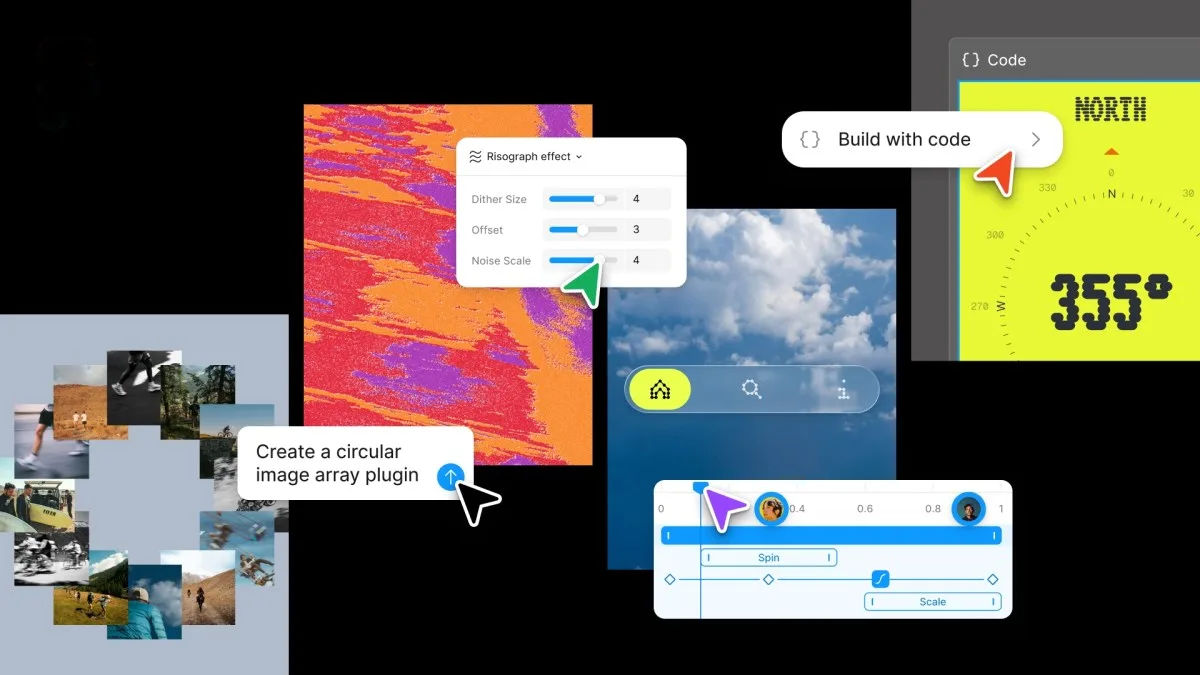
Figma, the popular design platform, has just released a major update that adds a new code layer, support for motion and shaders, and the ability to create custom plug-ins for various tasks using AI. This update marks a significant milestone in Figma's journey to make design more accessible and collaborative.
The design platform has been working on bringing code integration into its tool for a while. Last year, it unveiled an AI prompt-based prototyping tool, Figma Make, and has since launched integrations with Claude Code and Codex to improve the hand-off between coding and design.
Figma's code layer is designed to allow designers to write code directly within the Figma interface, without leaving the platform. This feature is currently available in beta and is expected to be rolled out more widely in the coming months.
One of the key features of Figma's new update is its support for animation and motion. Designers can now create animations and motion effects using a range of tools and plugins, including Figma's own motion editor.
Figma's AI-powered features are also being expanded with new integrations with popular AI tools like LLaMA and Google's AI-powered design tool, DreamFigma.
The update also includes a range of other features and improvements, including support for custom plug-ins, improved collaboration tools, and a new user interface.
While the update is primarily focused on design collaboration, it's likely to have a broader impact on the tech industry as a whole. With the growth of remote work and digital communication, design collaboration is becoming increasingly important, and Figma's update is poised to make a significant dent in this market.
Key Facts
- Figma's update includes a new code layer, support for animation, and more AI features.
- The code layer allows designers to write code directly within the Figma interface.
- Figma's AI-powered features are being expanded with new integrations with popular AI tools.
- The update includes a range of other features and improvements, including support for custom plug-ins and improved collaboration tools.
- Figma's user interface is also being updated.
Figma's update is part of a broader trend towards greater design collaboration and accessibility. With the growth of remote work and digital communication, designers are looking for tools that can help them work more efficiently and effectively, whether they're working on a solo project or collaborating with a team.
In this sense, Figma's update is not just a technical tool, but a cultural shift that's changing the way designers work and interact with each other. By making design more collaborative and accessible, Figma is helping to democratize design and make it more inclusive.