

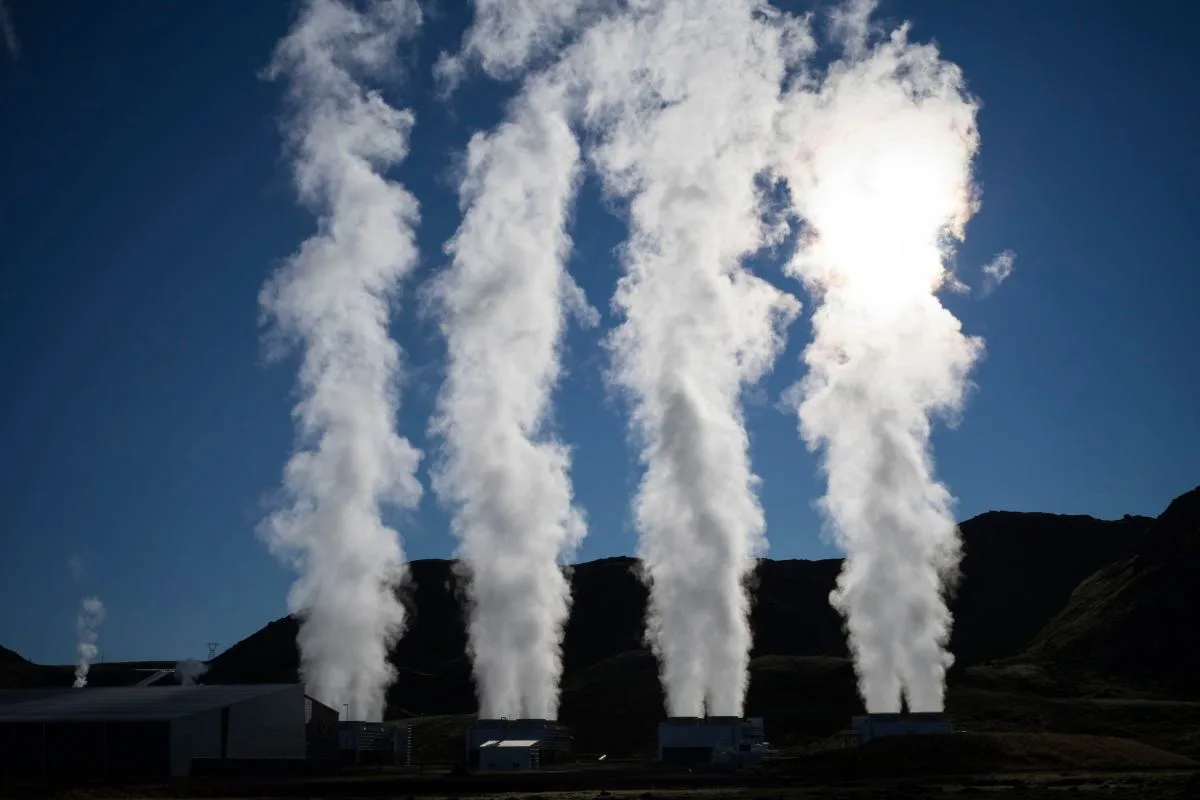
A startup founded by former SpaceX engineers just raised $22 million to do something wild: turn rocket engines into geothermal power plants.
The company, called Magma Power, plans to use high-temperature rocket combustion chambers to drill deeper and hotter than conventional geothermal rigs. Deeper means access to supercritical water — water so hot and pressurized it carries 10 times the energy of regular steam.
That matters because geothermal has been stuck for decades. Traditional drilling can only reach so far before costs skyrocket and equipment fails. Magma's approach borrows directly from rocket engineering — think combustion chambers designed to handle 3,000°F exhaust — and applies it to boring through hard rock.
The $22 million Series A was led by Breakthrough Energy Ventures, the climate fund backed by Bill Gates. Other investors include Lowercarbon Capital and Safar Partners. The money will fund a demonstration well in Nevada, where Magma has already secured drilling permits.
Geothermal's potential is enormous — the International Energy Agency estimates there's at least 42 terawatts of capacity worldwide, more than twice global energy use last year. But investment still lags far behind advanced nuclear and fusion startups.
Magma's co-founders are Dr. Elena Vasquez (former lead propulsion engineer at SpaceX) and Tom Keller (former SpaceX manufacturing director). They met at the company's Hawthorne facility in 2019 and started sketching the idea on a whiteboard during lunch breaks.
The key insight: rocket engines are already built to handle extreme heat and pressure. Why not use them to drill instead of fly? The company's prototype injects a mix of fuel and oxygen into a combustion chamber at the drill head, creating controlled explosions that fracture rock. It's like fracking, but with rocket science.
If the Nevada test works, Magma plans to scale to commercial plants by 2029. The company says its wells could produce electricity at $0.05 per kilowatt-hour — competitive with natural gas and cheaper than solar or wind when accounting for 24/7 availability.
Geothermal has one huge advantage over solar and wind: it runs all day, every day, regardless of weather. But it's also expensive to start up — drilling a single well can cost $5 million to $10 million. Magma claims its rocket-based system cuts that by 40% because the drilling is faster and the equipment lasts longer.
Critics point out that the company hasn't yet proven its technology at scale. James Park, a geothermal engineer at Stanford who isn't involved with Magma, says the company needs to show it can maintain performance over months, not just hours. "Rocket engines are designed for short, intense bursts," he notes. "Geothermal drilling requires sustained operation for weeks at a time. Those are very different engineering challenges."
Magma acknowledges the challenge but says its combustion chambers are designed for repeated use, not single flights. The company has run over 200 lab tests and says the drill head shows minimal wear after 50 hours of operation.
The US Department of Energy has taken notice. Magma received a $3 million grant from the agency's Geothermal Technologies Office in 2025. The DOE sees enhanced geothermal systems — tech that creates artificial reservoirs in hot, dry rock — as a key part of the country's clean energy future.
For now, Magma is one of several startups trying to crack geothermal's potential. Competitors include Fervo Energy (which uses horizontal drilling techniques from oil and gas) and Eavor (which builds closed-loop underground radiators). But Magma is the only one using rocket engines.
If it works, the implications are huge. Geothermal could provide baseload clean power without the waste and safety concerns of nuclear. And it doesn't need lithium, cobalt, or rare earth metals — just heat, water, and the ability to drill deep.
For now, all eyes are on a patch of desert in Nevada where a team of former rocket scientists is about to set off controlled explosions miles underground. They're not trying to reach space — they're trying to reach the center of the Earth.