

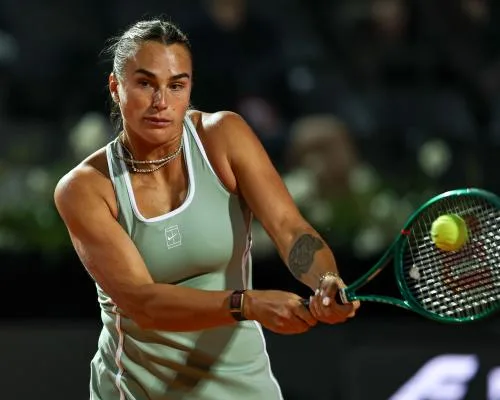
Aryna Sabalenka, the world's number one tennis player, made a drastic prediction in her press conference at the Italian Open: the top players will boycott the grand slam tournaments if their demands for a greater revenue share are not met. This statement marked an escalation in a pay dispute that has been ongoing for over a year. The players sent their first letter to the grand slam tournaments in March 2025, requesting a greater percentage of the revenues, contributions to player welfare initiatives, and closer consultation through a grand slam player council.
The grand slams have not issued substantial responses to the players' requests, leading to frustration and escalation of the situation. Sabalenka's comments were initially met with skepticism, as she had shown little interest in tackling this topic publicly before. However, the top male and female players have finally presented a strong united front, with players like Coco Gauff and Iga Swiatek explaining why the strength of the top players' voices means they are best positioned to advocate for lower-ranked players.
The prospect of the players actually progressing with any sort of boycott still seems unrealistic, given their significant earnings from the grand slam tournaments. Sabalenka will soon be the second female athlete in history to earn $50m in prize money, after Serena Williams. However, the players' concerns are valid, and the grand slams' continued refusal to address their concerns is a slap in the face. The 13-15% revenue share the players receive from the grand slams is low, and the recent prize money announcement from Roland Garros, which completely ignored the players' concerns, was a big blow.
The grand slams' success and financial status are a consequence of decades of growth, branding, and history. However, the players are the focal point of the events, and the improved infrastructure at the grand slam venues is even more beneficial to the actual tournaments. The players from countries like Belarus or Bulgaria, where they receive minimal federation support, are rightfully unmoved by the status of slams as glorified fundraisers for their national federations in wealthy western countries.
Key Facts
- The players sent their first letter to the grand slam tournaments in March 2025.
- The players are seeking a greater percentage of the tournaments' revenues, as well as contributions to player welfare initiatives.
- The grand slams have not issued substantial responses to the players' requests.
- The 13-15% revenue share the players receive from the grand slams is low.
- Sabalenka will soon be the second female athlete in history to earn $50m in prize money, after Serena Williams.
- Roland Garros's recent prize money announcement, which completely ignored the players' concerns, was a big blow.
- 90% of Wimbledon's surplus goes to the Lawn Tennis Association, the governing body for tennis in Britain.
History of the Dispute
The pay dispute between the tennis players and the grand slam tournaments has been ongoing for over a year. The players have been seeking a greater percentage of the tournaments' revenues, as well as contributions to player welfare initiatives. However, the grand slams have not issued substantial responses to the players' requests, leading to frustration and escalation of the situation. The players have tried to negotiate with the grand slams, but their efforts have been met with resistance.
The grand slams have a long history of generating significant revenues from the tournaments. The events are highly popular, and the grand slams have been able to capitalize on this popularity by selling broadcasting rights and sponsorships. However, the players feel that they are not receiving a fair share of the revenues, and that the grand slams are not doing enough to support them. The players are seeking a greater percentage of the revenues, as well as contributions to player welfare initiatives, such as pension funds.
The dispute has been ongoing for over a year, and it seems that the situation is escalating. The players are becoming increasingly frustrated with the grand slams' refusal to address their concerns, and it seems that a boycott is becoming a more realistic possibility. The grand slams have not issued substantial responses to the players' requests, and it seems that they are not taking the players' concerns seriously.
The Players' Demands
The players are seeking a greater percentage of the tournaments' revenues, as well as contributions to player welfare initiatives. They feel that the current revenue share is unfair, and that the grand slams are not doing enough to support them. The players are also seeking closer consultation through a grand slam player council, which would give them a greater say in the decision-making process.
The players' demands are not unreasonable, given the significant revenues generated by the grand slam tournaments. The events are highly popular, and the grand slams have been able to capitalize on this popularity by selling broadcasting rights and sponsorships. The players feel that they are entitled to a fair share of the revenues, and that the grand slams should be doing more to support them.
The players are not just fighting for themselves, they are fighting for the future of the sport. They want to ensure that the sport is sustainable, and that the players are able to make a living from their participation. The grand slams have a responsibility to the players, and to the sport as a whole, to ensure that the players are treated fairly and with respect.
The Grand Slams' Perspective
The grand slams have a different perspective on the situation. They feel that the players are already well-compensated, and that the current revenue share is fair. They also feel that the players are not entitled to a greater say in the decision-making process, and that the grand slams should be able to make decisions without consulting the players.
The grand slams have a long history of generating significant revenues from the tournaments. They have been able to capitalize on the popularity of the events, and have been able to sell broadcasting rights and sponsorships. However, the grand slams also have significant expenses, including the cost of hosting the events and supporting the sport as a whole.
The grand slams feel that they are already doing enough to support the players, and that the players are not entitled to a greater share of the revenues. They also feel that the players should be grateful for the opportunities that the grand slams provide, and that they should not be making demands for more money.
The Impact of a Boycott
A boycott of the grand slam tournaments would have significant consequences for the sport as a whole. The events are highly popular, and the grand slams are a major part of the tennis calendar. A boycott would likely result in significant financial losses for the grand slams, as well as for the players themselves.
The players would also suffer from a boycott, as they would be giving up the opportunity to compete in the most prestigious events in the sport. The grand slams are a major part of the tennis calendar, and the players would be missing out on the chance to compete against the best players in the world.
However, the players feel that a boycott is necessary to bring attention to their concerns and to force the grand slams to take their demands seriously. They are willing to take a stand and to fight for their rights, even if it means giving up the opportunity to compete in the grand slam tournaments.
The Future of the Sport
The future of the sport is uncertain, given the ongoing dispute between the players and the grand slams. The players are seeking a greater percentage of the revenues, as well as contributions to player welfare initiatives, and the grand slams are resisting these demands.
The sport is at a crossroads, and it seems that the situation is escalating. The players are becoming increasingly frustrated with the grand slams' refusal to address their concerns, and it seems that a boycott is becoming a more realistic possibility.
The grand slams have a responsibility to the players, and to the sport as a whole, to ensure that the players are treated fairly and with respect. They should be taking the players' concerns seriously, and working to find a solution that benefits everyone involved.
Conclusion
The dispute between the tennis players and the grand slam tournaments is ongoing, and it seems that the situation is escalating. The players are seeking a greater percentage of the revenues, as well as contributions to player welfare initiatives, and the grand slams are resisting these demands.
The players are willing to take a stand and to fight for their rights, even if it means giving up the opportunity to compete in the grand slam tournaments. The grand slams have a responsibility to the players, and to the sport as a whole, to ensure that the players are treated fairly and with respect.
The future of the sport is uncertain, but one thing is clear: the players will not back down until their demands are met. They are fighting for their rights, and for the future of the sport, and they will not be silenced.