

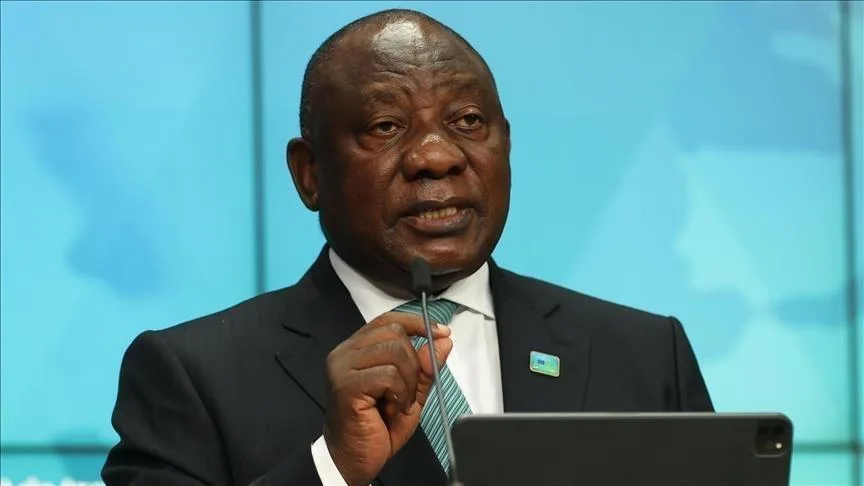
South African President Cyril Ramaphosa has vowed to crack down on illegal migration, declaring that Pretoria will not tolerate lawlessness as xenophobic protests spread across the country. He made this declaration in a live national address on June 7, 2026.
Ramaphosa, a former trade union leader who served as chair of the African National Congress (ANC) from 2012 to 2017, took office in 2018 and won a second term in 2019. In his address, he warned that the government would not accept lawlessness and threatened to deport undocumented migrants. He emphasized the importance of securing borders and deporting undocumented migrants, targeting employers who hire foreigners without the proper paperwork. Ramaphosa argued that such employers pay lower wages and exploit these workers.
He proposed the establishment of specialized courts to handle deportation cases, increased inspections by the Department of Home Affairs, and stiffer penalties for employers found guilty of hiring undocumented workers. Ramaphosa attributed the problems of xenophobia and illegal migration to the exploitation of foreign workers, saying that many South Africans travel abroad to study and work, and that migration is a global reality. However, he stressed that South Africa's immigration system needs to be strengthened and modernized to curb corruption and ensure that the country attracts global talent and investment.
The new measures announced by Ramaphosa include the expansion of biometric screening at international airports and other busy ports, the introduction of a digital registration system, and the discontinuation of the green ID book to prevent identity theft. The recent xenophobic protests in South Africa, which began in early May, have targeted foreigners and led to attacks on shops and homes. Some groups have issued a June 30 deadline for undocumented migrants to leave the country, accusing them of taking jobs from South Africans.
Ramaphosa urged South Africans not to turn against foreign nationals or each other, saying that the country must overcome challenges through peace and love, not through fear, anger, or violence. He said that many South Africans feel that foreigners are taking jobs from local workers and driving down wages, but experts argue that this is a misconception, as most foreigners work in sectors that are not directly competing with local workers. In fact, many of the jobs that foreigners fill are essential for the functioning of the economy, particularly in key sectors such as healthcare and education.
South Africa's experience with xenophobia and illegal migration is not unique. Other African countries, such as Nigeria, have struggled with similar issues. However, South Africa's case is particularly complex due to its history of apartheid and its ongoing struggles with inequality. The protests against foreigners have also highlighted the deep-seated xenophobia and racism that continues to exist in South African society.
The international community has been watching the situation in South Africa closely. The African Union (AU) has condemned the xenophobic attacks and called on the South African government to take concrete steps to protect foreign nationals. The European Union (EU) has also expressed its concerns over the situation, calling on the South African government to ensure that its laws and policies are implemented in a fair and humane manner.
Key Facts:
- South African President Cyril Ramaphosa has vowed to crack down on illegal migration.
- The government will target employers who hire foreigners without proper paperwork.
- Ramaphosa has proposed the establishment of specialized courts to handle deportation cases.
- New measures will include the expansion of biometric screening at international airports and other busy ports, as well as the introduction of a digital registration system and the discontinuation of the green ID book to prevent identity theft.
- The deadline for undocumented migrants to leave the country is June 30.
- Some groups have accused foreigners of taking jobs from South Africans.
- Ramaphosa has urged South Africans not to turn against foreign nationals or each other.
- The protests have been largely driven by economic concerns.
- Experts argue that foreigners do not directly compete with local workers.
- Many of the jobs that foreigners fill are essential for the economy.