

The single sharpest fact in one or two punchy sentences. Who did what, where, when, and why it matters. Not a summary of everything — the one thing that makes someone stop scrolling. A reader who only reads this paragraph must understand what happened.
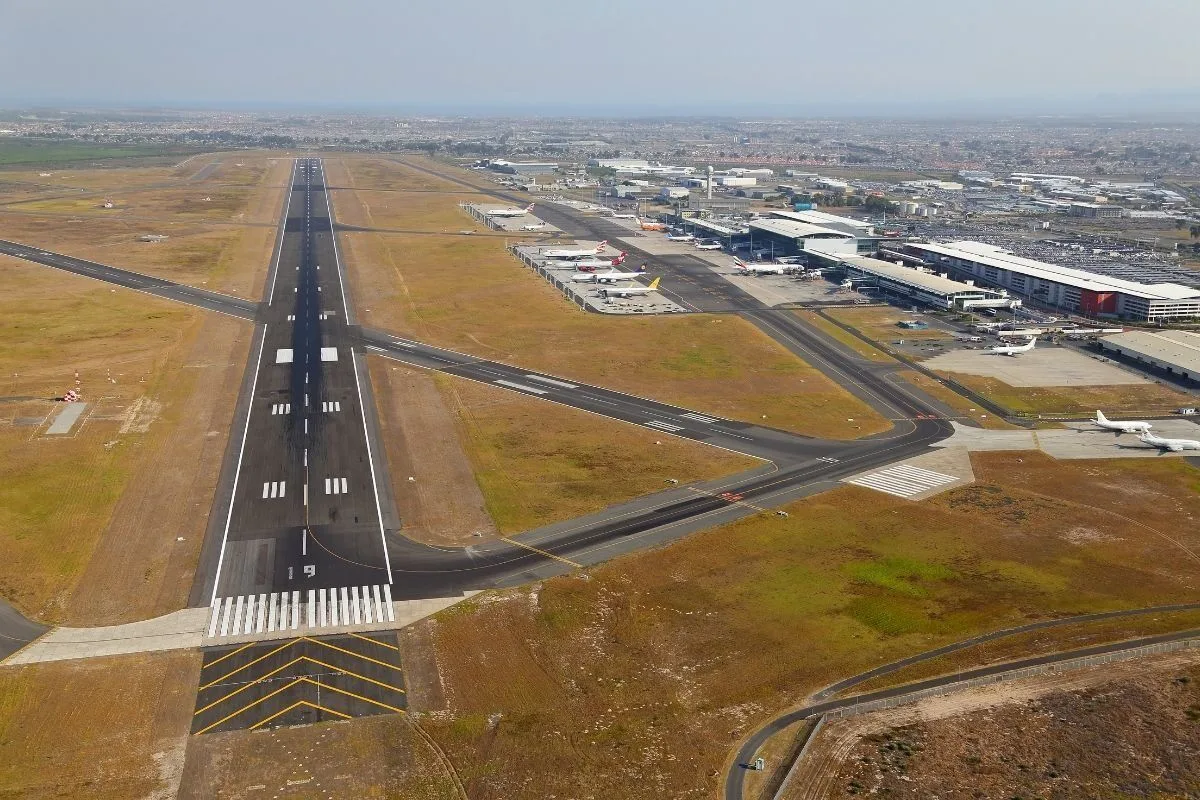
According to a new global aviation report, the air route linking Cape Town International Airport and O.R. Tambo International Airport has officially been named Africa's busiest air route. The International Air Transport Association's (IATA) latest World Air Transport Statistics (WATS) report reveals that 3.4 million passengers travelled between the two cities in 2025.
This is not surprising, given the significant travel demand between South Africa's two major economic and tourism hubs. Cape Town is one of Africa's leading tourism destinations and a major centre for finance, technology, and government, while Johannesburg remains the country's commercial and financial powerhouse.
The popularity of the route reflects South Africa's unique geography and economy. A drive between the two cities covers roughly 1 400 kilometres and can take around 14 hours, while flights typically take just over two hours.
But what really sets the Cape Town-Johannesburg route apart is the number of flights operating every day. Dozens of flights operate in both directions daily, making it one of the most competitive and convenient air corridors in Africa.
The world's busiest air route in 2025 was the domestic connection between South Korea's Jeju International Airport and Gimpo International Airport, which carried an astonishing 13.3 million passengers. In fact, the world's top 10 busiest airport pairs were almost entirely located in the Asia-Pacific region, highlighting the scale of domestic air travel across Asia.
The IATA report also highlighted the busiest routes in other parts of the world: Latin America's El Dorado International Airport to José María Córdova International Airport with 3.5 million passengers, Europe's Josep Tarradellas Barcelona–El Prat Airport to Palma de Mallorca Airport with 2.1 million passengers, and North America's John F. Kennedy International Airport to Los Angeles International Airport with 2.2 million passengers.
The popularity of the route has significant implications for travellers and the economy. With multiple airlines operating the route, there is intense competition for passengers, driving prices down and increasing convenience.
One of the airlines operating on this route is South African Airways, which offers frequent departures throughout the day. The airline has been working to increase its presence in the market, offering competitive fares and improving its service.
The Cape Town-Johannesburg route is a significant contributor to South Africa's economy. The tourism industry alone generates billions of Rands in revenue each year, and the air route plays a vital role in enabling this growth.
The demand for business travel between Cape Town and Johannesburg is also high, with many companies and officials requiring frequent travel between the two cities. This has driven the growth of the route and has made it a key destination for business travel.
Despite the high demand, the route is not without its challenges. Weather conditions, air traffic control, and other factors can affect flight schedules and prices. However, the route remains one of the most reliable and convenient in the region.
Key Facts
• The Cape Town-Johannesburg air route was named Africa's busiest air route in 2025. • 3.4 million passengers travelled between the two cities in 2025. • The route is one of the most competitive and convenient in Africa. • The world's busiest air route was the domestic connection between South Korea's Jeju International Airport and Gimpo International Airport. • The IATA report highlighted the busiest routes in other parts of the world, including Latin America, Europe, and North America.
The Cape Town-Johannesburg route is a significant contributor to South Africa's economy. The tourism industry alone generates billions of Rands in revenue each year, and the air route plays a vital role in enabling this growth.
In terms of what happens next, the demand for the route is expected to remain high. With multiple airlines operating the route, there is intense competition for passengers, driving prices down and increasing convenience.
The Cape Town-Johannesburg route is a testament to the strength of South Africa's economy and its unique geography. It is a route that will continue to play a vital role in enabling business and tourism growth in the years to come.