

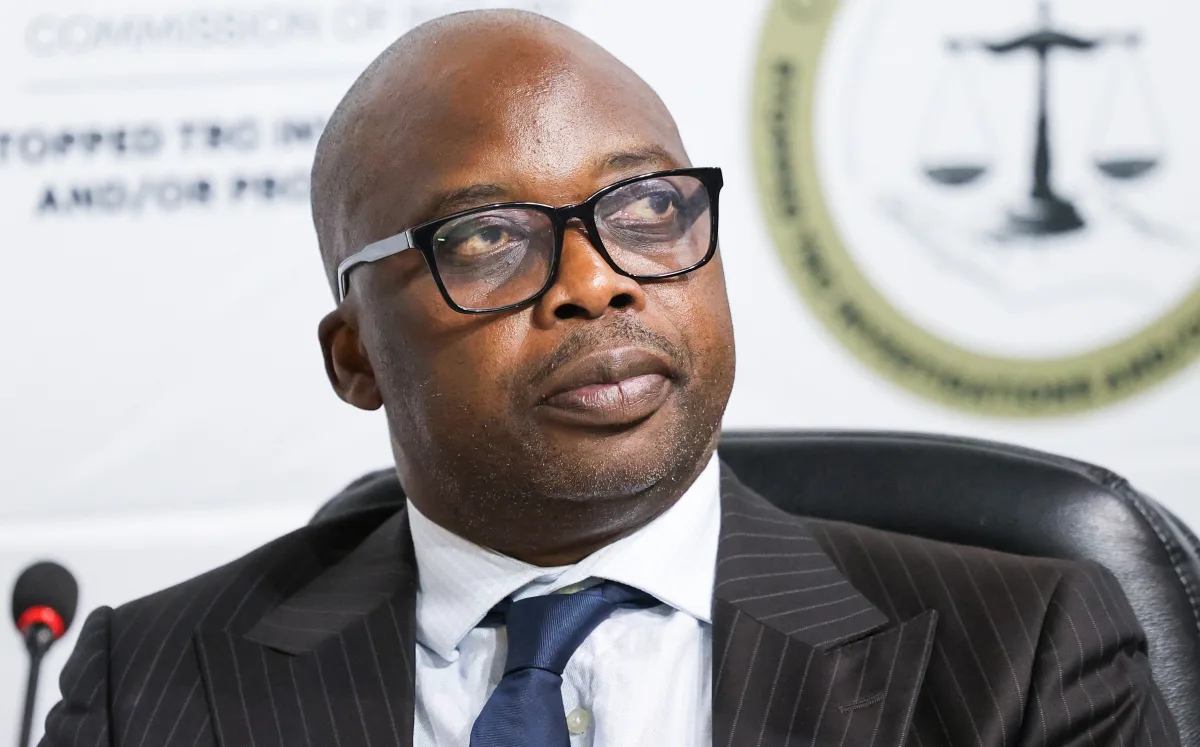
When Michael Masutha stepped into the hot seat as the Minister of Justice and Correctional Services in 2014, he didn't just inherit a desk. He inherited a ticking bomb named Eugene de Kock. Within 48 hours of taking the job, he was slapped with a court order demanding he decide on the parole of the man known across South Africa as 'Prime Evil'.
Before Masutha could even find his office stationery, the North Gauteng court wanted an answer on whether the Vlakplaas commander, who had spent years as the state’s deadliest enforcer, deserved freedom. The file on his desk claimed families of his victims had been consulted and didn't mind him walking free. Masutha sensed something was wrong, and his gut instinct proved him right. After digging, he found that statement was a complete lie, lacking a single scrap of paper to prove it.
He decided he wasn't going to rubber-stamp the release of a man whose legacy was built on blood. He convened a massive lunch for about 250 relatives of victims. They sat in a hall together, and they made it clear: nobody had asked for their input. Masutha hit the pause button on the parole process immediately. He forced the system to stop hiding behind fake paperwork and finally speak to the people who actually paid the price for De Kock’s crimes.
"There was a standalone paragraph that said that the victims’ families had been consulted and had had no objections leading up to the recommendation to release De Kock on parole."
Masutha’s testimony before the Khampepe Commission, which is currently digging into why so many apartheid-era cases simply died, paints a picture of a minister wading through a swamp. He explained that when he arrived, the National Prosecuting Authority (NPA) was a shadow of itself. The Directorate for Special Operations—the only unit with real teeth to investigate—had been scrapped years earlier. Without investigative capacity, the NPA was effectively blind and toothless. It was unable to chase down the people who did the actual killing.
He recalled the paranoia that gripped the state at the time. Former Police Commissioner Jackie Selebi was convinced the NPA was out to get him and then-President Thabo Mbeki. That fear was mostly a distraction, a story cooked up by holdovers from the old regime who were still embedded in the system. While the higher-ups were playing chess with police files, the people who actually suffered were left in the cold.
Masutha didn't try to hide the mess he found. He admitted the NPA’s track record on truth commission cases was, to put it mildly, 'not good'. When he eventually granted De Kock parole, he attached a heavy condition: the former killer had to help find the bodies of those he made disappear. It became a personal mission for the minister to preside over the handovers of those exhumed remains to grieving families.
He also shared the strange reality of what happens when a monster goes home. Almost every security agency in the country was fighting over him. Some wanted to keep him under lock and key for their own protection, and others, it seems, just wanted him gone for good. He was the only person on parole who required the protection of the State Security Agency.
Masutha, who grew up in Limpopo and started his career at Lawyers for Human Rights, maintained that he kept a 'Chinese wall' between his office and the NPA. He wouldn't order them to prosecute, but he did sign off on the reopening of high-profile inquests like those into Ahmed Timol, Dr. Neil Aggett, and Dr. Hoosen Mia Haffejee. He didn't see himself as an activist, but as someone doing the boring, necessary work of closing the state's debt to the broken families of the struggle.
The process of addressing these historical injustices continues as the commission moves forward with its investigation into the archives of the apartheid era.