

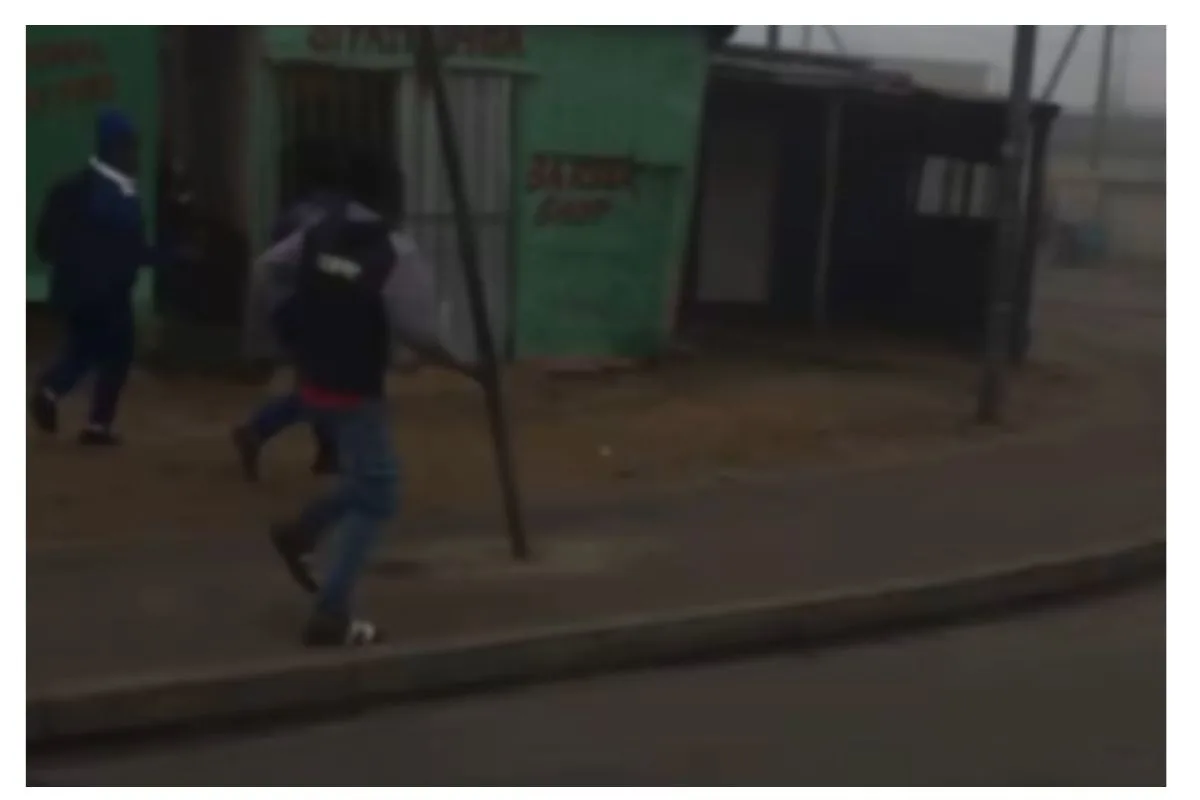
It started as a regular school day in Kraaifontein, but by 08:30 on Wednesday, the streets looked more like a battlefield. Approximately 700 learners from Masibambane High School and Hector Peterson High School ditched their textbooks to flood the area. They weren't fighting for better toilets or new facilities. They were pushing for the removal of every foreign national they could find in their classrooms and the wider community.
Things went sideways quickly. What began as a march descended into chaos as some of these children turned their frustration into physical violence, allegedly assaulting a foreign national. Eish, it didn't stop there. The group started moving like a swarm, targeting informal traders and anyone they decided didn't belong in the neighborhood.
Apparently these are school kids from Kraaifontein, marching and beating foreigners, telling them they must leave South Africa.
Motorists caught in the wrong place found themselves dodging stones thrown by the angry crowd. The destruction hit close to home for school staff too, as cars belonging to teachers and employees were damaged in the frenzy. By the time the learners reached the vicinity of the Kraaifontein police station, they were still clearing out fruit stalls and small shops along the way, leaving a trail of smashed inventory.
Western Cape police had to scramble their Public Order Police unit to bring some sanity back to the streets. The primary job for these officers was to contain the crowd and escort the learners back behind school gates, away from the traders they were terrorising. This wasn't just a random act of teenage rebellion. It’s part of a much larger, darker trend of anti-immigrant sentiment currently bubbling over across South Africa.
Groups like the 'March and March Movement' have been cranking up the heat in various provinces. They're currently pushing a hard deadline of 30 June for all undocumented migrants to pack their bags and vacate the country. They’ve even gone as far as threatening a possible national shutdown if the government doesn't bend to their demands for mass deportations.
This specific brand of nationalist rhetoric creates a powder keg in local schools, where young people are picking up on the frustrations of their parents and online influencers. The economic pressure in areas like Kraaifontein—where informal trading is a lifeline for many—often gets projected onto foreign shop owners. When high schoolers start seeing themselves as the enforcement arm for these political movements, the classroom environment suffers, and community relations reach a breaking point.
Kraaifontein has historically been a site of intense socioeconomic struggle, sitting on the northern outskirts of the Cape Town metropolitan area. Many families there rely on the informal economy, making them sensitive to shifts in local market competition. When social media platforms amplify footage of these marches, it tends to encourage copycat incidents in other districts, spreading the tension like a wildfire.
Managing this requires more than just police escorts, as the root causes are tied to deep-seated feelings of exclusion and economic anxiety among the youth. The involvement of school children specifically is a sharp turn in the recent history of these protests. It suggests that the message of 'deportation first' is finding a receptive audience among the generation that will eventually inherit these economic challenges. The community now faces the task of addressing these underlying grievances to prevent further outbreaks of violence.