

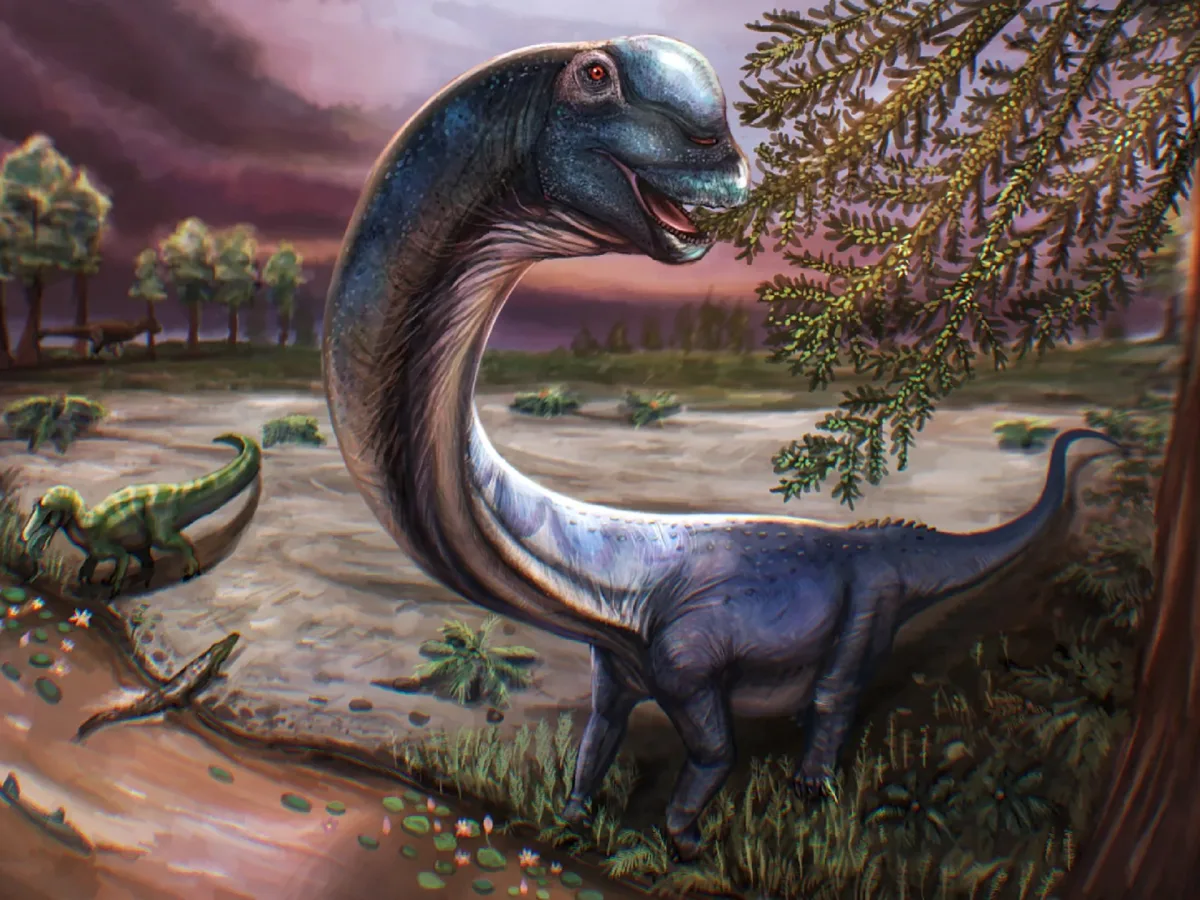
Scientists have made a groundbreaking discovery in Thailand, unearthing the remains of a massive new dinosaur species, Nagatitan chaiyaphumensis. This enormous creature is estimated to have weighed as much as nine adult elephants, making it the largest-known dinosaur from Southeast Asia. It's a discovery that sheds new light on the region's prehistoric past.
The discovery was made possible by a team of researchers led by Thitiwoot Sethapanichsakul, a University College London PhD student in palaeontology. Sethapanichsakul and his team have been studying the dinosaur's remains, which were first unearthed a decade ago by locals in northeast Thailand. They didn't complete the excavation until 2024, and the findings were recently published in the Scientific Reports journal.
Nagatitan chaiyaphumensis is a member of the sauropod dinosaur lineage, known for having long necks and tails, small heads, and four columnar legs. The herbivore stretched an impressive 27 metres in length. It weighed about 27 tonnes. Its head and teeth weren't among the fossils recovered, but researchers have a good idea of its feeding preferences based on other sauropods.
"Nagatitan was probably a bulk browser that focused on consuming high volumes of vegetation that required little to no chewing, such as conifers and possibly seed ferns," said Thitiwoot Sethapanichsakul.
The dinosaur is believed to have roamed what is now Thailand between 100 and 120 million years ago. Sauropods were some of the largest recorded land animals in Earth's history, and Nagatitan chaiyaphumensis is no exception. It's likely that this dinosaur weighed at least 10 tonnes more than Dippy the Diplodocus, a famous composite cast previously on display at London's Natural History Museum. They're two very different creatures, despite both being sauropods.
The name Nagatitan references Naga, a serpent-like being in some Asian religious traditions that is prominently depicted in various Thai temples. This new species is one of 14 known named dinosaurs from Thailand, and its discovery has shed new light on the region's prehistoric past. It's a discovery that won't be forgotten anytime soon.
A life-size reconstruction of Nagatitan chaiyaphumensis is now on display at Bangkok's Thainosaur Museum, giving visitors a glimpse into the life of this incredible creature. As researchers continue to study the dinosaur's remains, they hope to learn more about its habits. They also want to learn more about its habitat and eventual extinction. They can't wait to see what they'll discover.
The discovery of Nagatitan chaiyaphumensis is significant, not just because of its massive size, but also because it provides valuable insights into the evolution of sauropod dinosaurs. The fact that this dinosaur was found in Thailand, a region that was once a shallow sea, highlights the complex geological history of Southeast Asia. It's a history that's still being written, and this discovery is a big part of it.
As the scientific community continues to learn more about Nagatitan chaiyaphumensis, it's clear that this discovery will have a lasting impact on our understanding of the ancient world. The story of this incredible creature is one that will continue to fascinate and inspire us. It's a story that offers a glimpse into a world that existed millions of years ago. It's a world that's very different from our own, but it's still worth exploring.
- Nagatitan chaiyaphumensis is the largest-known dinosaur from Southeast Asia
- The dinosaur weighed as much as nine adult elephants
- It stretched 27 metres in length and weighed about 27 tonnes
- The herbivore is believed to have roamed what is now Thailand between 100 and 120 million years ago
- A life-size reconstruction of Nagatitan chaiyaphumensis is on display at Bangkok's Thainosaur Museum