

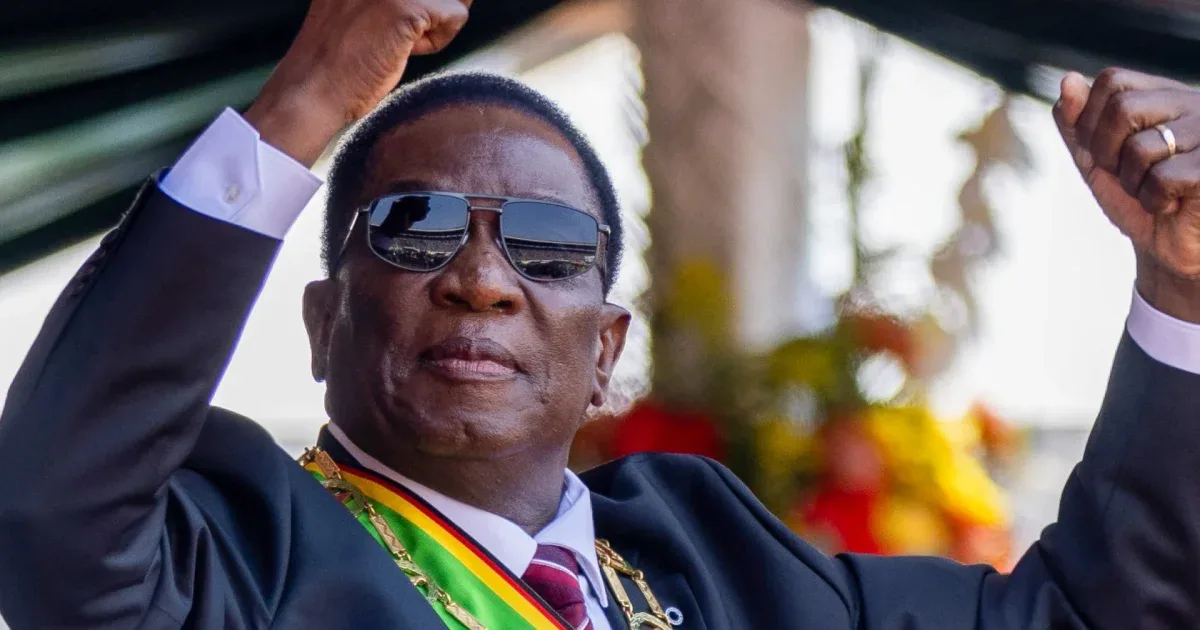
Zimbabwe's Senate on Wednesday overwhelmingly approved constitutional amendments that would keep President Emmerson Mnangagwa in office until 2030. The amendments, which sailed through the national assembly on June 18, would extend the presidential and parliamentary terms from five to seven years.
The Senate president, Mabel Chinomona, said 75 senators voted in favour of the amendments and four against. The bill must now be signed by Mnangagwa to pass into law. Critics have labelled the changes a 'constitutional coup', pointing out that they will allow Mnangagwa to rule beyond the end of his second five-year term.
Mnangagwa, 83, came to power in 2017 after a military-backed coup that ousted Robert Mugabe. Despite this, Mnangagwa was re-elected for a second term in 2023. Human Rights Watch has accused authorities of using violence and intimidation against opponents of the amendments. 'Over the last few months, the police and unidentified armed men have threatened, harassed, and beat up several people who are opposed to the proposed constitutional amendment,' it said in a statement.
The amendments also give parliament the power to appoint the president, rather than holding direct presidential elections as is currently the case. This has sparked concerns that Zanu-PF will be able to maintain its grip on power in the long term.
Mnangagwa, who has been nicknamed 'The Crocodile' due to his reputation for ruthlessness, has claimed that extending his term will allow for 'continuity and stability' in the country. However, opposition groups have accused him of attempting to cling to power for personal gain.
The situation in Zimbabwe has been tense in recent months, with protesters taking to the streets to voice their opposition to the proposed amendments. Despite the violence, activists have vowed to continue pushing for change. 'We will not be silenced by intimidation and violence,' said one activist.
The fate of the amendments now lies in Mnangagwa's hands. If he signs the bill, it will likely face a backlash from the international community, which has already expressed concerns about the country's human rights record.
Zimbabwe has a long history of authoritarian rule, with Mugabe ruling the country for 37 years before his ousting in 2017. Despite Mnangagwa's promises to reform, the country remains one of the most repressive in the world.
Key Facts
- The Senate voted 75-4 in favour of the amendments.
- The bill must be signed by Mnangagwa to pass into law.
- The amendments would extend the presidential and parliamentary terms from five to seven years.
- The changes would allow Mnangagwa to rule beyond the end of his second five-year term.
- The amendments would give parliament the power to appoint the president.