

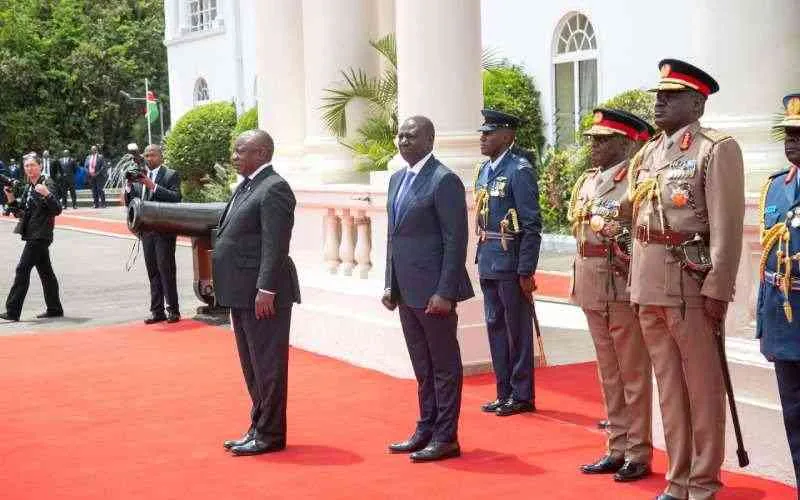
The diplomatic dance in Tshwane
President William Ruto is taking his international charm offensive to South Africa next week. Between June 3 and June 5, 2026, he will be hosted by President Cyril Ramaphosa for a high-level state visit at the Union Buildings in Tshwane, the administrative heart of the South African government. This is a classic diplomatic maneuver aimed at strengthening the economic ties that have historically bound East Africa to the southern tip of the continent.
The two nations have enjoyed a cordial, mutually beneficial relationship since they re-established ties in 1994. Pretoria views Nairobi as a strategic anchor for the East African region, while Kenya sees the Rainbow Nation as a gateway for investment. The trip is specifically designed to deepen bilateral cooperation, with both leaders looking to show that their countries are more than just neighbors on a map—they are serious economic partners.
The business of business
The schedule is packed with more than just ceremonial welcomes. Once the pleasantries at the Union Buildings are done, the two presidents will sit down for formal bilateral talks. The real action, however, happens at the business forum that follows. This session is the main event for those interested in the bottom line, as it aims to unlock trade barriers and create new partnerships in strategic sectors. Officials have made it clear that the focus is on expanding market access and investment.
The business forum is the key to unlocking trade barriers and creating new partnerships, making it a vital component of the visit. Officials are remaining tight-lipped on the specific contracts, but the energy is high as both leaders try to revive the momentum that followed their last major meeting in November 2022. During that visit to State House, Nairobi, the two leaders successfully scrapped visa requirements for Kenyans traveling to South Africa, proving that these state visits can produce tangible results.
A pattern of international scouting
President William Ruto hasn't been staying in Nairobi lately; he's been on a mission to explore new markets. This South African trip comes hot on the heels of his first-ever presidential visit to Kazakhstan, where he spent two days trying to find new homes for Kenyan tea and scouting for better deals in ICT and energy. It's clear that the strategy is to aggressively look for markets outside the usual suspects to cushion the domestic economy.
When Kenya and South Africa talk, the rest of the continent tends to listen, as their policies often ripple across borders. Whether it's tech infrastructure or manufacturing, the push is to harmonize how these two powerhouses do business, making it easier for the average Kenyan to access cheaper goods and find more jobs. However, there's a gap between a signed memorandum and a fatter wallet in Nairobi that's frustratingly wide.
South Africa values Kenya as a strategic partner in the East African region and on the continent.
Historical context and future shifts
Nairobi is a different city when it comes to international diplomacy these days, with the government pivoting toward a more transactional foreign policy. The 1994 re-establishment of relations marked the start of the modern era between the two nations, shifting from the tension of the previous decades to a partnership based on common interests. Since the 2022 agreement, there has been a steady increase in people-to-people exchanges, which is the soft power that keeps these diplomatic channels flowing.
The success of this visit will be measured by how many concrete investments come out of the business forum. If they can move past the usual rhetoric and actually clear the bottlenecks that frustrate cross-border trade, it might just be worth the flight. The two leaders will need to deliver tangible results to prove that these state visits are more than just symbolic gestures. Otherwise, it will remain another entry in the diary of a president who is clearly obsessed with making his mark on the global stage.