

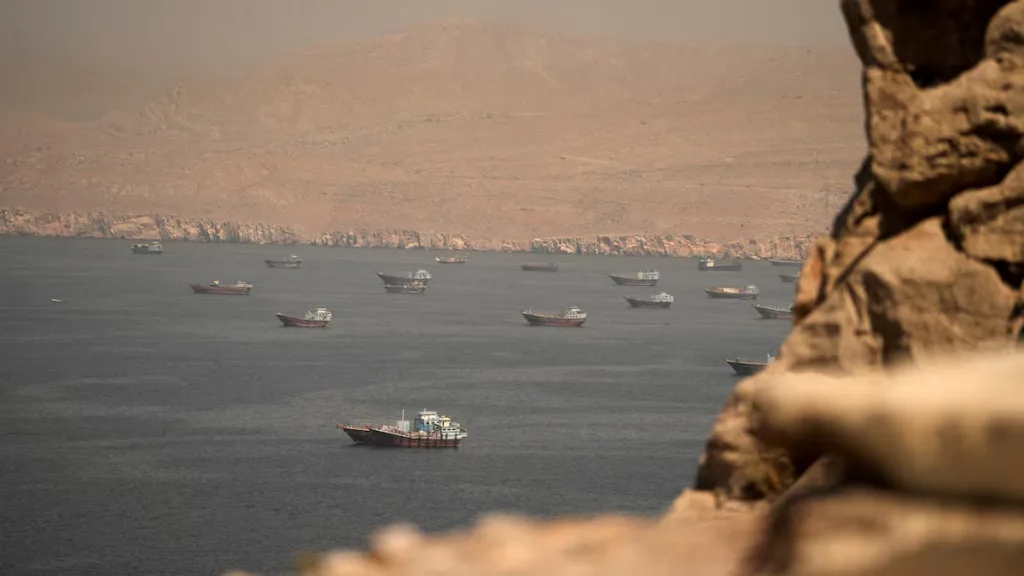
US President Donald Trump threatened to strike Iran's bridges and power plants if the country didn't return to talks.
The US has launched a new wave of strikes against Iran for a sixth night in a row, targeting the Strait of Hormuz and key cities. The escalation comes after US President Donald Trump threatened to strike Iran's bridges and power plants if the country didn't return to talks.
The US military said the strikes were intended to further degrade Iranian military capabilities. The Iranian military has been responding with similar strikes, and the Strait of Hormuz remains shut.
Iran's national security depends on maintaining control of the Strait of Hormuz, said Mohammad Bagher Ghalibaf, Iran's top negotiator. He added that Iran has no reason to abide by an agreement that doesn't benefit the country.
The US Central Command (Centcom) said marines had boarded an oil tanker in the Gulf of Oman as part of the renewed US blockade of Iran's ports. Centcom also said it had boarded a vessel as part of its blockade of the Strait of Hormuz.
US forces have disabled nine ships and redirected more than 140 under its previous blockade of Iranian ports between 13 April to 18 June. The US has also redirected 3 commercial vessels trying to run the blockade.
According to Iran's state media, the US has launched strikes against cities including Qeshm, Bandar Abbas, and Bushehr - the site of a nuclear power plant. Two bridges in Hormozgan province were also hit, and the BBC has verified an attack on one bridge.
US President Donald Trump said on Thursday that he remained open to talks with Iran but would not allow them to fire on ships in the strait without consequences. The White House press secretary added that Iran expressed its desire to make a deal with the US, but the president will not allow them to violate the blockade.
Iran has responded to the US strikes by saying it had struck US military bases in Jordan, Kuwait, and Bahrain. However, the US said it had inflicted a six-hour wave of strikes on multiple locations in the strait.
The Strait of Hormuz has been a key point of contention in the conflict between the US and Iran. The waterway is a critical trade route, with over 20% of the world's oil passing through it. The shutdown has had significant impacts on global oil markets and economies.
The US has also imposed sanctions on Iran in an effort to pressure the country to return to negotiations. Iran has said it will not abide by any agreement that doesn't benefit the country.
The international community has been trying to mediate the conflict between the US and Iran. However, the escalation of strikes and the standoff over control of the Strait of Hormuz remains a pressing issue.
Key Facts
- The US has launched a new wave of strikes against Iran for a sixth night in a row.
- The strikes targeted the Strait of Hormuz and key cities including Qeshm, Bandar Abbas, and Bushehr.
- Two bridges in Hormozgan province were hit, and the BBC has verified an attack on one bridge.
- The US has disabled nine ships and redirected more than 140 under its previous blockade of Iranian ports.
- Iran has said it will not abide by any agreement that doesn't benefit the country.
This escalating conflict has far-reaching consequences for global trade and economies. The shutdown of the Strait of Hormuz has significant impacts on oil markets and economies, while the US sanctions imposed on Iran have further strained the situation.
The US has remained open to talks with Iran, but with conditions. White House press secretary Karoline Leavitt said the president will not allow Iran to violate the blockade without consequences.
Iran's national security depends on maintaining control of the Strait of Hormuz, and the country has no reason to abide by an agreement that doesn't benefit it, said Mohammad Bagher Ghalibaf, Iran's top negotiator.
The situation remains volatile, and it is unclear what the next steps will be. However, one thing is certain: the consequences of this conflict will be felt globally.