

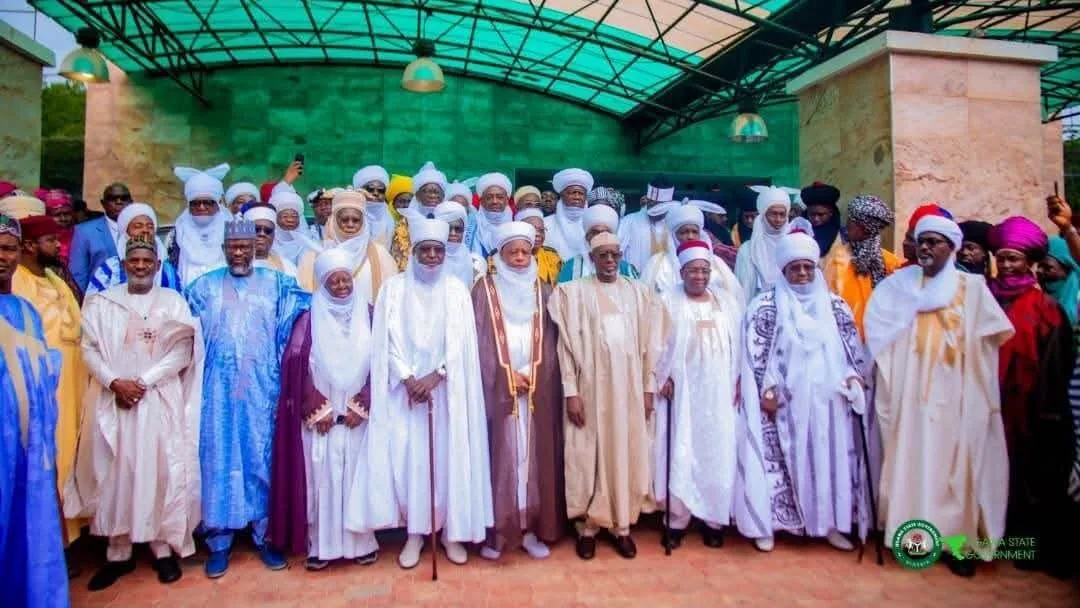
President Bola Tinubu has thrown his weight behind a deeper working relationship with traditional rulers across Northern Nigeria, pitching the alliance as a key tool for improving security and accelerating development in the region.
The President's position was delivered by the Minister of Information and National Orientation, Mohammed Idris, at the 8th Executive Committee Meeting of the Northern Traditional Rulers' Council (NTRC) on Monday in Dutse, Jigawa State.
Tinubu's message to the gathering of monarchs and stakeholders was clear: traditional rulers aren't ceremonial figureheads — they're frontline partners in governance. The government wants them more involved in shaping policy and maintaining peace in their domains.
This isn't the first time the Tinubu administration has courted traditional institutions. Since taking office in May 2023, the President has held several closed-door meetings with northern emirs and chiefs, seeking their input on security challenges including banditry, kidnapping, and farmer-herder clashes.
The NTRC is the umbrella body for all first-class traditional rulers in the 19 northern states and the Federal Capital Territory. Its executive committee includes some of the most influential monarchs in the country, such as the Sultan of Sokoto, the Emir of Kano, and the Emir of Zazzau.
These traditional rulers command deep respect and grassroots influence — often more than elected politicians in rural areas. The government sees them as crucial allies in gathering intelligence, mediating conflicts, and mobilising communities for development projects.
Security remains a major headache for the Tinubu administration. Banditry, kidnapping for ransom, and insurgent attacks have ravaged large parts of the North-West and North-East. In the North-Central, farmer-herder clashes have claimed hundreds of lives.
By bringing traditional rulers into the fold, the government hopes to tap into their local knowledge and authority. Traditional rulers often know who the troublemakers are in their domains and can help de-escalate tensions before they turn violent.
The meeting in Dutse also touched on development issues — education, healthcare, infrastructure. Traditional rulers are expected to help drive government programs at the community level, where federal and state officials often struggle to reach.
Critics have pointed out that previous governments also made similar promises to work with traditional rulers, but the results were mixed. Some monarchs have been accused of being too close to politicians or even complicit in banditry. But the Tinubu administration appears determined to try a different approach.
Minister Idris didn't announce any new funding or specific programs at the meeting. But the message was clear: the President wants traditional rulers to be seen and treated as partners, not just recipients of government decisions.
For the people living in northern communities, this could mean more direct involvement of their traditional leaders in security arrangements and development projects. Whether it translates into real change on the ground remains uncertain — but the government is betting that the chiefs can deliver.