

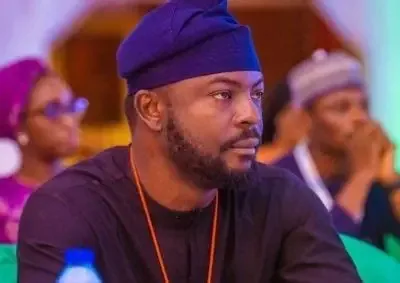
The Olodo uprising on social media has reached a fever pitch, with many criticizing First Lady Oluremi Tinubu's recent empowerment initiatives targeting micro-traders. According to Dada Olusegun, Special Assistant to President Bola Tinubu on Social Media, these critics are driven by ignorance of the First Lady's record and the importance of Nigeria's informal economy.
Olusegun made his defense in a statement shared on Monday, describing the backlash as a 'performative circus of selective amnesia.' He argued that critics had ignored the numerous interventions carried out by the Renewed Hope Initiative across healthcare, women's empowerment, support for military widows, and persons living with disabilities.
Under the Renewed Hope Initiative, the First Lady has made several interventions, including donating ₦1 billion to the National Cancer Fund for cervical cancer screening and another ₦1 billion for tuberculosis diagnostic equipment in Abuja in 2025. Additionally, she has disbursed ₦250,000 each to 1,709 widows and orphans of fallen military personnel in 2023, as well as ₦200,000 business grants to persons living with disabilities across the 36 states and the Federal Capital Territory.
The initiative has also partnered with the Tony Elumelu Foundation to target 18,500 women nationwide with ₦50,000 grants and the distribution of equipment, including industrial grinding machines, freezers, and generators. Olusegun criticized what he described as an 'Olodo uprising' on social media, accusing critics of reacting to trends without researching the facts.
'This entire controversy perfectly mirrors what is now happening with the broader 'Olodo uprising' across our social platforms,' Olusegun said. 'We live in an era where people jump on trending hashtags and soundbites without dedicating a single minute to researching context. Memes are manufactured in seconds; accurate history takes time to read.'
According to Olusegun, empowering small-scale traders should not be viewed as 'weaponising poverty.' He argued that the informal sector contributes over 50% of Nigeria's GDP and accounts for over 80% of employment. When you give a micro-grant or operational tools to an akara seller, you are not validating poverty, but rather reducing immediate operational capital friction, securing food chains at the grassroots, and expanding household income.
'Mocking these initiatives as 'petty' shows a deep-seated contempt for the actual working class of Nigeria,' Olusegun said. He also defended the political value of grassroots empowerment, saying such interventions create trust among beneficiaries.
Olusegun cited the TraderMoni and MarketMoni programmes introduced during former President Muhammadu Buhari's administration under then Vice President Yemi Osinbajo as examples of initiatives that directly impacted market traders. 'The opposition often wonders why the poorest segments of the population continually familiarise themselves with the All Progressives Congress during elections. The answer is simple: the party meets them at their point of immediate need,' he said.
Olusegun added that Tinubu's record as former First Lady of Lagos State, a three-term senator, and now First Lady of the Federation shows a consistent commitment to structured empowerment programmes. 'She will not be distracted by digital static from doing what she has mastered over decades: empowering the poorest among us, one structured intervention at a time,' he said.
'This entire controversy perfectly mirrors what is now happening with the broader 'Olodo uprising' across our social platforms.'
The First Lady's interventions have been ongoing for years, but the recent backlash on social media has raised questions about the effectiveness and impact of these initiatives.
The Renewed Hope Initiative has received widespread criticism for its focus on micro-traders, with many arguing that the money could be better spent on more pressing issues. However, Olusegun argues that these interventions are crucial for empowering the working class and reducing poverty in Nigeria.
'Empowering small-scale traders is not about 'weaponising poverty,' but rather about reducing immediate operational capital friction, securing food chains at the grassroots, and expanding household income,' he said.
The government's decision to focus on grassroots empowerment has also raised questions about the role of the informal sector in Nigeria's economy. According to the Nigerian Bureau of Statistics, the informal sector accounts for over 80% of employment in the country.
'The akara fryer, the kulikuli processor, and the petty trader are not just marginal actors; they are the literal shock absorbers of our micro-economy,' Olusegun said.
The ongoing debate about the First Lady's empowerment initiatives highlights the complexities of poverty reduction in Nigeria.
Key Facts
- ₦1 billion donated to the National Cancer Fund for cervical cancer screening
- ₦1 billion donated for tuberculosis diagnostic equipment in Abuja in 2025
- ₦250,000 each disbursed to 1,709 widows and orphans of fallen military personnel in 2023
- ₦200,000 business grants disbursed to persons living with disabilities across the 36 states and the Federal Capital Territory
- Partnership with the Tony Elumelu Foundation to target 18,500 women nationwide with ₦50,000 grants
- Distribution of equipment, including industrial grinding machines, freezers, and generators