

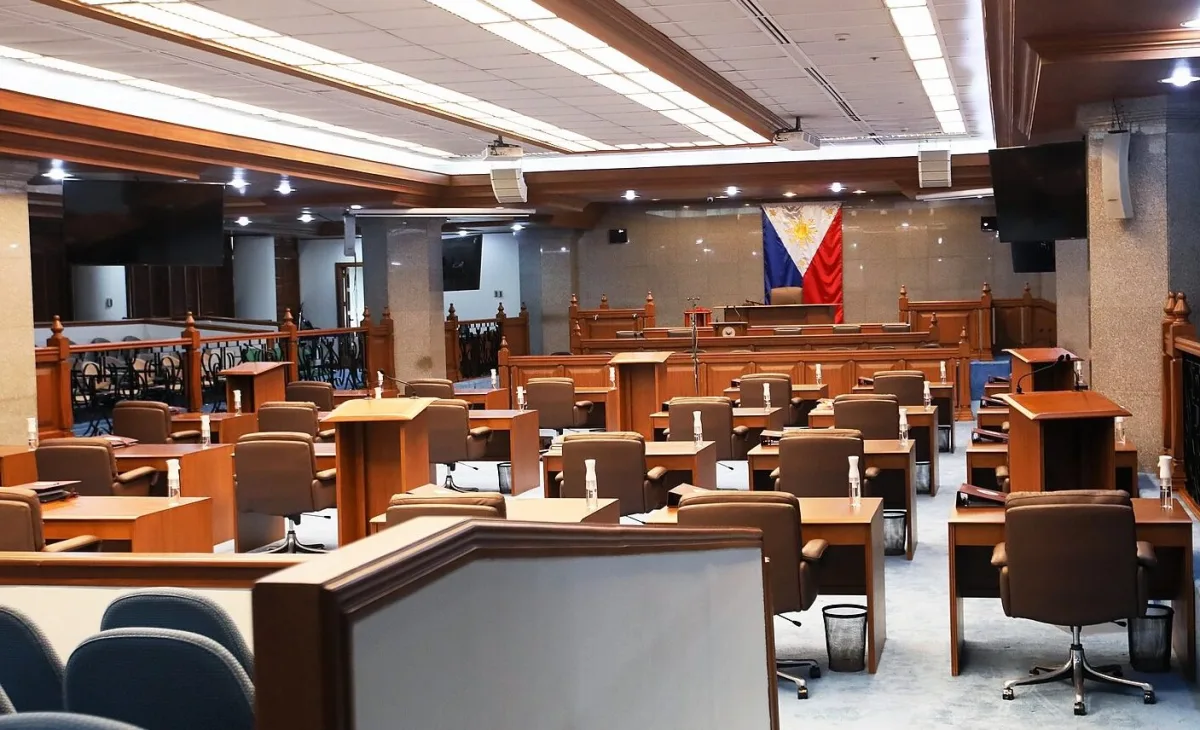
The Philippine Senate holds a special session on Wednesday, June 17, amid a leadership dispute between senators Alan Peter Cayetano and Sherwin Gatchalian.
The special session comes after President Ferdinand Marcos Jr. on Monday, June 15, called on Congress to “urgently consider” the passage of several bills. The President’s request was seen as a move to end the deadlock in the Senate, which had been paralyzed by the leadership dispute since last week. Cayetano’s allies did not show up in the upper chamber during the scheduled sessions before Congress adjourned sine die, effectively paralyzing Senate proceedings due to the lack of a quorum. The lack of a quorum meant that no business could be conducted in the Senate, and the passage of several bills was stalled.
Senator Cayetano, who was then Senate president, said the move was meant to ensure that his bloc would retain control of the chamber. However, his claim was disputed by the Gatchalian bloc and legal experts, who cited a Supreme Court ruling on quorum. The Supreme Court had held that the quorum required for the Senate to conduct its business is 11 members, and that the absence of a quorum would not be considered a valid excuse for not passing bills.
The dispute between the two senators had been brewing for weeks, with both sides accusing each other of being illegitimate. Cayetano had been ousted as Senate president after his ally, Senator Chiz Escudero, joined the opposing faction that installed Gatchalian as acting Senate president and Senate president pro tempore. Cayetano, however, continued to insist that he remains the “legitimate” and “moral” Senate president, arguing that there was no quorum during the leadership change.
The Commission on Appointments will also act on pending appointments to key positions in the Cabinet, military, and foreign service during the special session. The processing of some appointments had been stalled amid the leadership dispute in the Senate. Cayetano’s allies had refused to recognize the appointments made by Gatchalian, saying that they were null and void.
Cayetano and his allies had been demanding that Gatchalian step down as Senate president, citing a supposed breach of Senate rules. Gatchalian, however, had insisted that he was the legitimate Senate president and that Cayetano was merely trying to grab power.
The special session will be closely watched by observers and the public, who are eager to see an end to the leadership dispute in the Senate. The dispute has caused a lot of tension in the Senate, with some senators accusing each other of being power-hungry and corrupt.
The special session will also allow the Senate to act on several measures that had been pending due to the lack of a quorum. These measures include the passage of several bills, the confirmation of appointees to key positions, and the adoption of the Senate’s budget. The Senate had been unable to conduct its business due to the absence of a quorum, and the passage of several bills had been stalled.
The dispute between Cayetano and Gatchalian has also raised questions about the legitimacy of the Senate leadership. Some have accused Gatchalian of being a power-hungry senator who is trying to grab power. Others have accused Cayetano of being a senator who is willing to go to great lengths to maintain control of the Senate.
The special session will be a critical moment for the Senate and will determine the fate of the leadership dispute. Will the Senate be able to act on the pending measures, or will the dispute continue to cause tension in the chamber?
Key Facts:
- The Senate special session is being held on Wednesday, June 17.
- The session will allow the Commission on Appointments to act on pending appointments to key positions in the Cabinet, military, and foreign service.
- The processing of some appointments had been stalled amid the leadership dispute in the Senate.
- Cayetano and his allies had refused to recognize the appointments made by Gatchalian, saying that they were null and void.
- The special session will also allow the Senate to act on several measures that had been pending due to the lack of a quorum.