

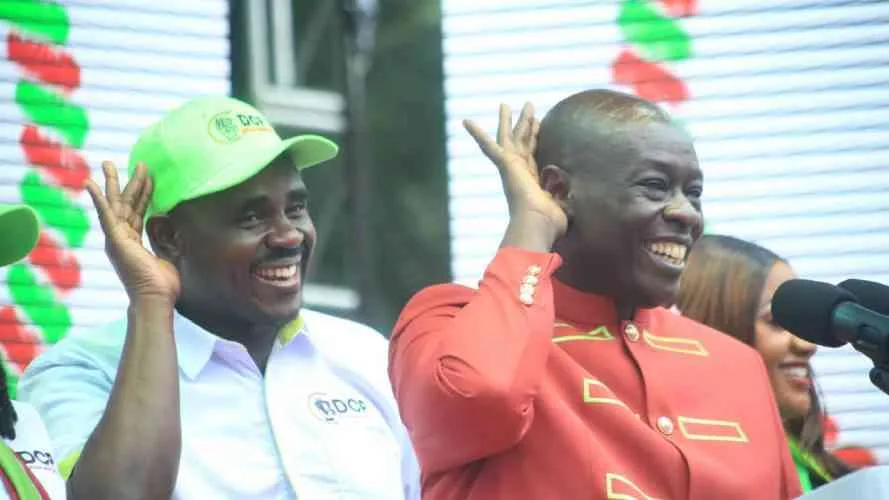
The house that Rigathi Gachagua built is starting to leak, and the roof might just blow off if the current weather in his Democracy for Citizen’s Party (DCP) is anything to go by. The vehicle he once envisioned as a tight-knit operation has turned into a theatre of war, with the former deputy president at the centre of a messy tug-of-war that has left his inner circle bruised and bitter.
At the heart of the drama is the friction between Rigathi Gachagua and his deputy party leader, Cleophas Malala. The core problem is the accusation that the former DP has turned the party into a one-man show, pushing through decisions that bypass the leadership structure entirely. This has become the classic Nairobi political script: once you think you’ve built a fortress, you realize the locks have been changed without your key.
Cleophas Malala is reportedly at his wit's end. Having built his career on being the loud, public face of political movements, being sidelined in a party he is supposed to help lead is exactly the kind of ngori that sets his fans on edge. He feels his input is being treated like a suggestion in a room where only one voice matters.
But it isn't just the big names catching heat; the base in Mt. Kenya is starting to grumble loudly. Rigathi Gachagua is accused of playing favorites, picking his preferred candidates and clearing the path for them while telling others to take a hike. This culture of exclusion is killing the spirit of competition that supporters were promised. When you shut the door on young talent to protect your hand-picked loyalists, it's no surprise they decide to burn the house down instead of sitting quietly.
This isn't just about party etiquette; it’s about survival. For Rigathi Gachagua, maintaining a firm grip on his home turf is his only leverage in the brutal ecosystem of Kenyan national politics. If he loses control of the DCP, his ability to negotiate or stand as a kingmaker in future elections shrinks faster than the price of a plate of chips in a posh Westlands joint.
The anatomy of the DCP crisis
The internal friction is driven by what insiders describe as the "exclusionary policy" being applied to party aspirants who aren't in the former DP’s inner circle. Decisions are also being made behind closed doors, often excluding officials mandated by the party constitution to participate.
The relationship between Rigathi Gachagua and Cleophas Malala is broken, with the latter reportedly feeling sidelined in critical party deliberations. Regional leaders within the Mt. Kenya bloc are beginning to signal their dissatisfaction by threatening to abandon the party’s nomination process if the field isn't opened to free competition.
The fallout has already started to bleed into local politics, where aspirants are now looking for alternative political vehicles or threatening to go independent to avoid the perceived bias of the DCP headquarters. In an environment where every vote counts, a house divided essentially becomes an invitation for rivals to move in and take the furniture.
Nairobi is different, and those who try to run a party like a private business often find that the voters are far less patient than shareholders. If the leadership doesn't find a way to reconcile these divergent interests, they risk entering the next election cycle with a divided house.