

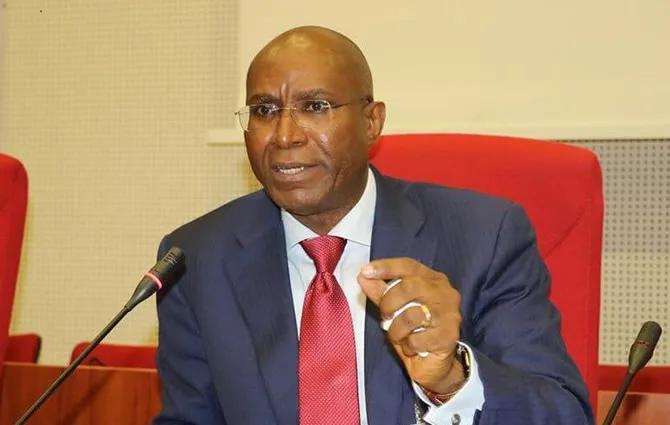
It’s the kind of political chess move that keeps Abuja insiders awake at night. On Wednesday, Senator Ovie Omo-Agege officially cut ties with the All Progressives Congress (APC). By Thursday morning, he had already found a new home in the New Delta Congress (NDC), bringing the kind of weight and, frankly, the kind of baggage that shifts the entire board in the South-South region.
He claims he's doing it for the people of Delta Central, but any seasoned observer knows this is a desperate play to reclaim the relevance he lost when his APC senatorial ticket evaporated.
"Across all these engagements, one truth stood out, the people of Delta want leadership that listens first, acts with integrity, and delivers results that can be seen and felt in daily life."
Omo-Agege didn't just walk into the party; he arrived with a shopping list of high-profile backers. He specifically name-dropped former Governor Peter Obi, the party's presidential hopeful, and Rabiu Musa Kwankwaso, the man who runs the Kwankwasiyya Movement. He also gave a nod to Senator Seriake Dickson, who founded the movement, and National Chairman Senator Moses Cleopas. The NDC is trying to cobble together a coalition of political heavyweights to challenge the status quo, even if these figures have historically been at odds in the messy world of Nigerian party politics.
His reasoning for the move is textbook political messaging. He wants you to believe that the APC was a place where things were decided in "closed rooms," while the NDC is a bastion of grassroots participation and true federalism. He complains that while federal allocations pour into Delta State, the roads remain death traps and primary health centers are little more than empty shells. He’s painting a picture of a state left behind, and he’s positioning himself as the only one who can navigate the system to fix it. Of course, he was part of the establishment for years, but he’s betting that voters have short memories.
The Roadmap to 2027
- Omo-Agege is targeting the Delta Central Senatorial seat in the 2027 general elections.
- He is tasking his supporters to start registering immediately at the ward level.
- The strategy includes scouting candidates for governorship who can actually pass the "character" test.
- He is pushing for universal possession of the Permanent Voter’s Card as the ultimate political weapon.
- The NDC is banking on a grassroots mobilization drive to outmaneuver opponents who rely on state machinery.
This isn't just about Omo-Agege's career, though that is clearly front and center. He is promising to deploy the same grassroots muscle he used to build the APC in Delta to now dismantle it. He claims he made the APC a force where people said it was impossible, and he’s suggesting he can do the same magic trick for the NDC. Whether or not his former allies in the APC will let that happen without a bruising fight is for another day. For now, the focus is on consolidating a platform that he argues is a real alternative to the status quo.
The defection signals a thinning of the APC's grip in the South-South, or at least a crack in the armor. When a former Deputy Senate President, a man who knows how the legislative game is played, decides his future lies elsewhere, it usually means the party structure in his home state has become either too toxic or too crowded for his ambitions. His mention of the "hostile environment" for small business owners in Delta reads like a direct dig at the current state administration. It is clear the battle lines for the next election are being drawn long before the INEC official clocks start ticking.