

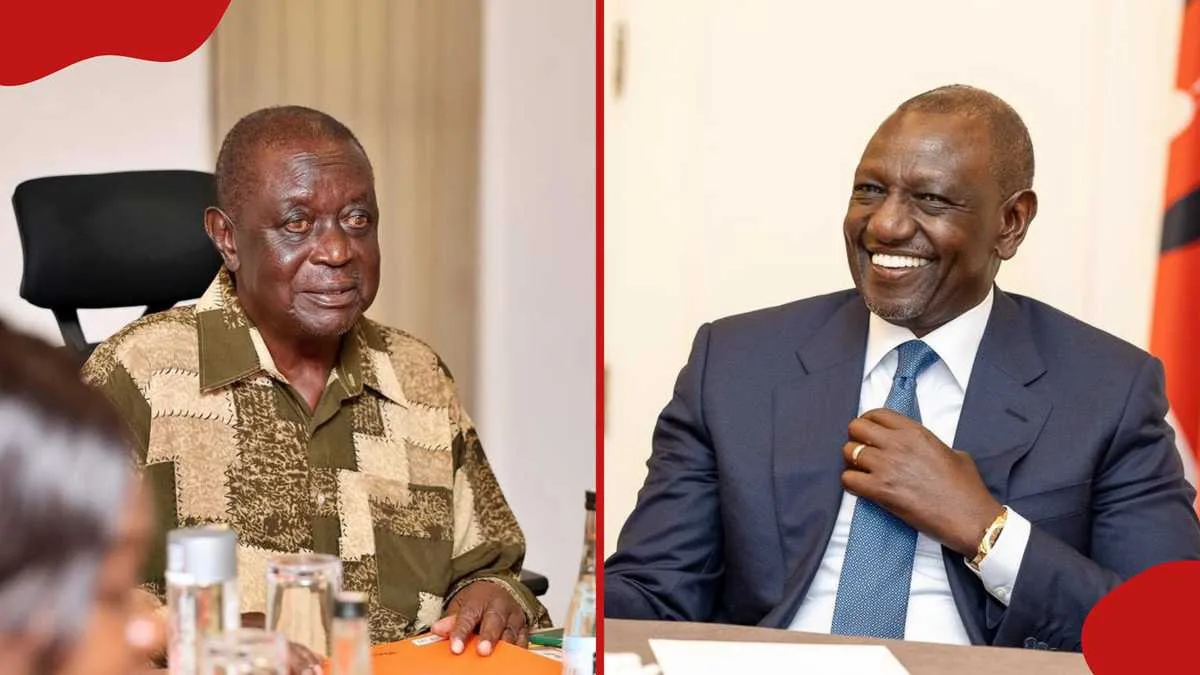
Nairobi is a city that loves a good political twist, and this week, the script took a turn that left many tongues wagging. Oburu Oginga, the elder statesman of the Orange Democratic Movement, decided it was time to signal his presidential ambitions for the 2027 polls. He chose the airwaves of Ramogi TV to drop the news, barely seven days after confirming he would seek to retain his current position as the Siaya Senator.
For those who haven’t been tracking the movements of the Oginga family, Oburu isn't exactly a newcomer to the corridors of power. He’s spent decades navigating the murky waters of Kenyan politics, often serving as the strategic bedrock for his younger brother, the veteran opposition leader Raila Amolo Odinga. When Oburu talks, the party faithful usually listen, if only to guess what the next grand move might be.
"I will only vie for the presidency if the Orange party backs my bid," Oburu explained, setting a clear condition for his potential candidacy.
This declaration isn't just about his ego; it’s a calculated play that has sent ripples through Siaya county. Other politicians eyeing the Senate seat were already drawing up their manifestos, hoping to fill the vacuum if the incumbent decided to move on. Now, those hopefuls are back to the drawing board. They’re forced to wonder if they’re going up against a man who might be busy running for the highest office in the land instead.
He’s playing a dual game, and if you know how Kenyan politics works, you know there’s usually a Plan B. If the party decides not to field him or anyone else for the presidency, he’s ready to double down on his Senate bid. It’s the kind of insurance policy that keeps a veteran in the game for years. This strategy ensures that even if the presidency remains a dream, he’s still got his hands on the levers of power in his home turf.
Beyond his own ambitions, Oburu touched on the hot-button issue of President William Ruto’s administration. There’s a noisy debate going on about whether the current government should be a 'one-term' or 'two-term' affair. Many opposition figures are quick to demand a single term for the UDA-led government. Oburu, however, is taking a surprisingly measured approach.
He argues that jumping into the fray and taking a hardline stance right now could be a major mistake. There are ongoing talks between ODM and the ruling United Democratic Alliance party. He doesn't want to burn those bridges before they’ve even been built. Whether this is genuine caution or just a way to keep his options open for a coalition deal, it shows he’s still thinking like a grandmaster.
His approach here is a reminder that in our politics, everything is negotiable until the ballot boxes are sealed. The relationship between ODM and the government has been a rollercoaster. For a party that prides itself on being the voice of the people, navigating these power-sharing discussions is a delicate balance. If they get too close to the administration, they risk alienating their base. If they stay too far, they risk isolation.
Local competition exists that he must face. A Gen Z aspirant has already come out swinging, openly challenging the Senator and promising to 'whitewash' him in the polls. For a younger generation that is increasingly impatient with the old guard, the entry of new faces into the Siaya race is a signal that the status quo is under pressure. Oburu knows the landscape is changing, and his response is to remind everyone that he’s still very much in the arena.
As 2027 draws closer, the internal dynamics of the Orange Democratic Movement will dictate who stands where. If the party machinery decides to throw its weight behind a fresh face or a different alliance, we might see the Senator quietly recede to his base in Siaya. He’s currently holding the cards, waiting to see how the deck is shuffled before he shows his full hand.