

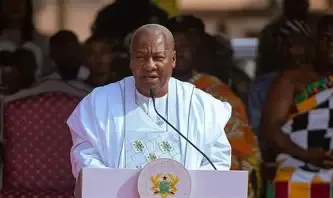
President John Dramani Mahama has set his sights on the streets of Ghana’s Zongo communities, announcing that a major road construction and rehabilitation drive is about to sweep through these often-overlooked areas. He broke the news during the Eid-ul-Adha celebrations held in Accra this Wednesday, giving a much-needed morale boost to the Muslim community during their festivities.
The project isn't just about pouring asphalt and painting lines; it’s designed to fundamentally change how people move and trade in these densely populated hubs. By targeting the Zongo settlements—traditionally home to vibrant markets and close-knit networks—the government is positioning this as a pillar in its national infrastructure agenda. If you’ve ever navigated a bumpy, unpaved road in these areas during the rainy season, you already know the scale of the relief this could bring.
Very soon, construction and rehabilitation of roads and other infrastructure projects will begin in several Zongo communities across the country. We are starting with the Koforidua Zongo area; the road network and similar projects will be replicated in other Zongo communities.
Koforidua, the capital of the Eastern Region, has been named as the pilot site for this intervention. Choosing this location is a strategic move, as it sits at a critical intersection for regional commerce. Once the machines finish in Koforidua, the plan is to move the construction crews to other Zongo enclaves nationwide. Improving the roads lowers the cost of transport for traders. This action keeps food prices in the market more stable for the average Ghanaian household.
For those who haven't followed the political discourse on infrastructure, this move reflects an attempt to balance development equity. Many Zongo communities have historically felt left out of major urban renewal projects, often relying on community-led efforts for basic maintenance. By bringing central government funding directly to these doorsteps, the administration is pushing for inclusive growth. It’s the kind of project that keeps people talking at the local tea shop, especially given how much weight road networks carry in national economic productivity.
Beyond just the paving, the broader plan includes secondary infrastructure enhancements meant to support the main road works. The President didn’t list every single facility, but the mention of 'other infrastructure' points to drainage systems and street lighting. These features are just as essential for safety as the roads themselves. The success of this rollout will depend on the pace of the contractors and the efficiency of the oversight teams sent to monitor the sites.
The process will likely unfold in phases to avoid stretching the national budget too thin at once. After the initial work in Koforidua, the Ministry of Roads and Highways will have to coordinate with local municipal assemblies to identify which specific communities are next in line. Local leaders and community elders will have to be active in keeping the project on track once the heavy machinery arrives in their respective areas.
Charley, it’s a big promise to make. The public will be watching closely to see if the work actually reaches the areas that need it most or if it stays trapped in the planning stages. With the current economic climate, delivering high-quality, durable roads will be the test of whether this initiative serves the people or turns into another forgotten campaign pledge. For now, the people of Koforidua Zongo are the first to get the chance to witness the change.