

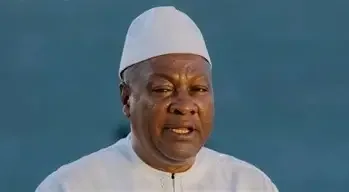
Standing before a sea of people at Independence Square today, President John Dramani Mahama pivoted from the usual political rhetoric to deliver a sermon-like lecture on character. As Muslims across the country celebrated Eid al-Adha, the President decided that the best gift he could offer the youth wasn't a promise of jobs or cash, but a stern nudge toward discipline and personal accountability.
He argued that the nation's progress is stalling not just because of policies, but because the next generation of builders needs to re-learn the art of patience. It’s the kind of message you expect from an elder at a family gathering, yet here it was, delivered on a national stage during one of the most significant days in the Islamic calendar. He wasn’t just asking for good behavior; he was pushing for a cultural shift toward entrepreneurship and skills training.
We are blessed to have the enduring example of our revered National Chief Imam Sheikh Osman Nuhu Sharubutu, whose life continues to inspire all Ghanaians through his humility, his compassion, his simplicity, his tolerance, and his peacebuilding. Let us emulate these noble virtues in our daily lives.
Sheikh Osman Nuhu Sharubutu, at over 100 years old, remains one of the few figures in the country who commands respect from across the religious and political divide. By anchoring his speech to the Chief Imam, the President reminded everyone that true power isn't found in aggressive political posturing, but in the quiet, steady influence of a man who has lived through decades of national transformation without ever losing his cool.
This call for moral leadership comes at a time when many young Ghanaians are looking for ways to survive in an economy that feels increasingly unforgiving. The President pointed to education and service as the only sustainable ladders out of poverty, warning that chasing quick fixes could derail their ambitions entirely. He essentially told the youth that if they want to sit at the table where decisions are made, they have to put in the work that earns them a seat.
Independence Square, where this address took place, serves as the symbolic heart of the nation’s independence struggle. Its use for Eid celebrations underscores the government's attempt to bridge the gap between religious identity and state loyalty. Historically, this location has been the site of major military parades and political rallies. Today, it was transformed into a space for reflection on how personal integrity fuels national stability.
In the context of the West African sub-region, where instability often ripples across borders, the emphasis on peacebuilding carries extra weight. Ghana often prides itself on being an island of stability, and the President’s focus on the Chief Imam’s tolerance is a deliberate nod to that unique social cohesion. This isn't just about religion; it's about maintaining a society where people of different faiths don't just tolerate each other, but actually value one another's contributions to the national pot.
The challenge remains for the youth to find tangible paths to success. While the government speaks on skills development, the actual implementation—the availability of technical schools and startup grants—represents the true test of this vision. If the President’s words are to be more than just a fleeting holiday sentiment, they must be backed by infrastructure that turns raw potential into economic reality. For the 15-year-old student or the 30-year-old entrepreneur listening in the crowd, the message was clear: stay focused, stay disciplined, and find a way to contribute before the opportunity slips away.