

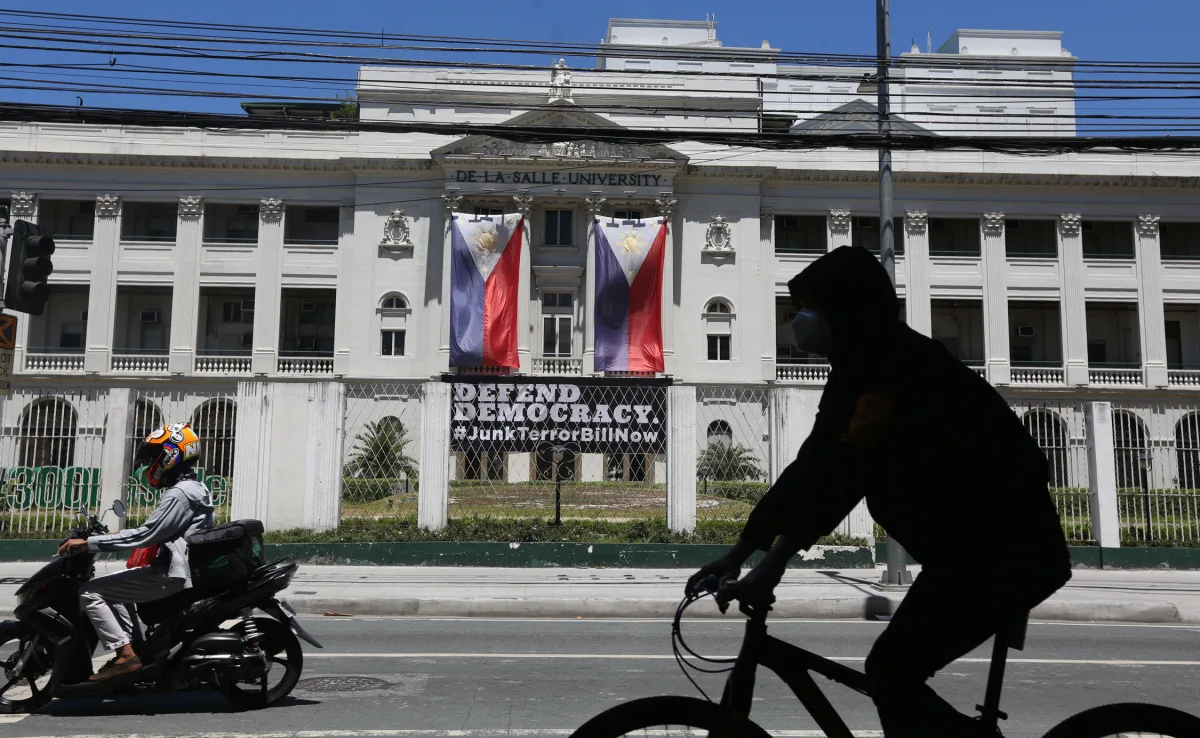
The De La Salle community, a network comprising some of the country's most prestigious learning institutions, has officially called out the Philippine Senate. Their statement on Wednesday was a direct rebuke to legislators, accusing them of allowing government agencies to be weaponized for the protection of a powerful few. For years, the Lasallian brand has stood for 'Religio, Mores, et Cultura,' but today, its leaders are moving from the lecture hall to the frontlines of political discourse.
"We decry the normalization of the use of state institutions to protect a powerful few from accountability," the statement read.
The warning comes at a time when the Senate is locked in various investigations, many of which have left Filipinos wondering if the truth is being buried under layers of political theater. These schools, including the flagship campus in Taft Avenue, Manila, are known for producing influential alumni who walk the halls of power themselves. By speaking out, the school heads are essentially telling their former students that they have lost their way. The Lasallian leaders, who value integrity and moral character, are now using their platform to highlight the Senate's failures.
This isn't just about moral posturing but a response to specific trends observed over recent legislative cycles where Senate hearings often devolve into grandstanding rather than actual fact-finding. Many citizens feel that the machinery of the state—the same ones paid for by the taxes of common commuters in Pasig or sari-sari store owners in Cebu—is being hijacked. Instead of providing answers on budget utilization or controversial projects, the legislative process often seems designed to shield allies from scrutiny. The Senate's focus on protecting its friends and allies has undermined the integrity of the legislative process.
Historically, the Philippine Senate has been the chamber of record where the loudest debates happen. However, the influence of political dynasties and party-switching has clouded its reputation. When La Salle—an institution that isn't typically seen as a rabble-rouser—steps up to issue a formal warning, it suggests that the institutional patience of the educational sector has completely run dry. They are worried that if the normalization of immunity for the elite continues, the next generation will grow up thinking that being above the law is a normal perk of winning an election.
The Roots of the Tension
The Senate currently comprises 24 members who are elected at-large, meaning they represent the entire country rather than a specific district. This structure is meant to keep them focused on national policy, yet it also makes them powerful magnets for national political maneuvering. When these senators prioritize the needs of their patrons over the public, they distort the intent of the 1987 Constitution, which envisions the legislature as a check and balance against the executive branch.
The recent controversies involving alleged misuse of confidential funds and the sudden quietness regarding high-profile corruption cases have provided the fuel for this fire. La Salle's leadership, which spans campuses from Bacolod to Dasmariñas, represents a significant bloc of the academic elite. Their involvement often precedes broader social movements, similar to how university student councils have historically mobilized during major political shifts in Philippine history.
For the average Filipino trying to make ends meet with the rising cost of rice and fuel, the spectacle of senators protecting their friends is more than just a nuisance; it's a direct insult. The warning from the school heads implies that the government's failure to deliver justice in high-level cases is spilling over into the daily life of the common man. It challenges the Senate to prove that their loyalty lies with the people, not with the powerful brokers who bankroll their expensive, multi-month campaign runs.