

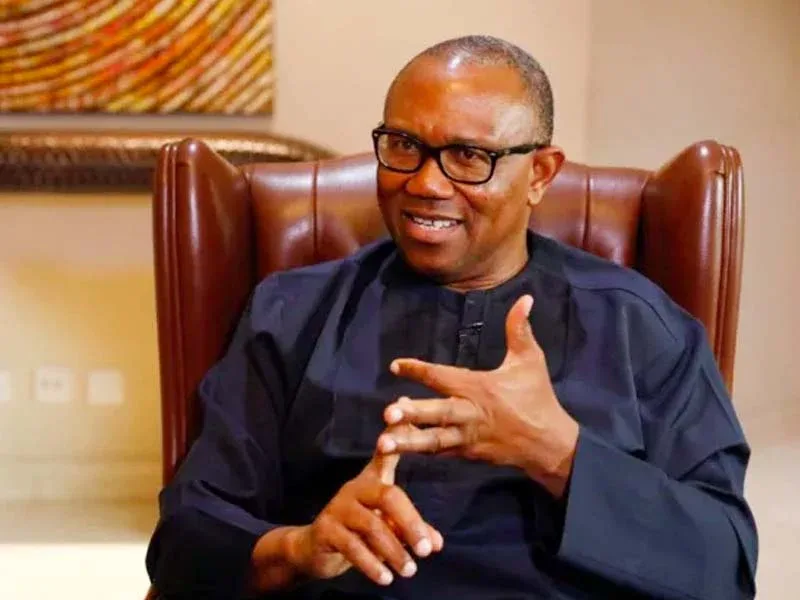
The Indigenous People of Biafra (IPOB) has knocked Anambra State Governor Chukwuma Soludo over his aide's attack on Peter Obi for calling for the release of IPOB leader Nnamdi Kanu.
In a statement on Monday, IPOB spokesman Emma Powerful accused Soludo of inconsistency and political hypocrisy, alleging that the governor had previously supported calls for Kanu's release.
IPOB referenced Soludo's reported visit to Kanu in the custody of the Department of State Services in January 2023, during which he allegedly called for his release and expressed willingness to stand as surety for him.
The group also cited comments attributed to state officials suggesting ongoing efforts to secure Kanu's freedom.
"What changed is your ambition," the statement read, accusing the governor of political inconsistency and betrayal of the Igbo cause.
The controversy started after Obi reiterated his call for Kanu's release during an interaction with Nigerians in Washington, D.C., United States, insisting that there was no justification for the continued detention of the IPOB leader.
Reacting to Obi's comments, Soludo's Special Adviser on Media, Ejimofor Opara, described them as a "major slap" not only on the Nigerian judiciary but also on the judiciary in Finland, where Simon Ekpa, whom he described as Kanu's protégé, was tried, convicted and is currently serving a six-year jail term for terrorism-related offences.
Kanu is currently serving a life imprisonment sentence following his conviction on terrorism-related charges by a Federal High Court in Abuja in November 2025. The court found the IPOB leader guilty on multiple counts bordering on terrorism, incitement, membership of a proscribed organisation and offences linked to separatist activities in the South-East.
He was sentenced to life imprisonment on the major counts, with additional prison terms on other counts to run concurrently. Prosecutors had sought the death penalty, but the court opted for life imprisonment.
Kanu has since rejected the judgment and filed an appeal, challenging both his conviction and sentence. His legal team described the verdict as a "travesty of justice" and maintained that the prosecution failed to establish the allegations against him beyond a reasonable doubt.
The IPOB leader was first arrested in 2015 over charges linked to his separatist agitation and was granted bail in 2017. He later fled Nigeria following a military operation at his family home in Abia State and was re-arrested in Kenya in 2021 before being returned to Nigeria. That move sparked legal and diplomatic controversy.
His prosecution and continued detention have remained subjects of intense public debate, with supporters describing him as a political prisoner, while the Federal Government insists he must answer for alleged acts of terrorism and violence linked to the separatist campaign.
IPOB defended its long-standing demand for Kanu's release, insisting that it's a matter of justice rather than political negotiation. The group said its position is supported by "well-meaning Nigerians across ethnic and religious lines" who have continued to demand Kanu's freedom.
Reiterating its stance, IPOB called for the "immediate and unconditional release" of Kanu, describing his continued detention as unjust.